Upadhayula Lakshman Rao
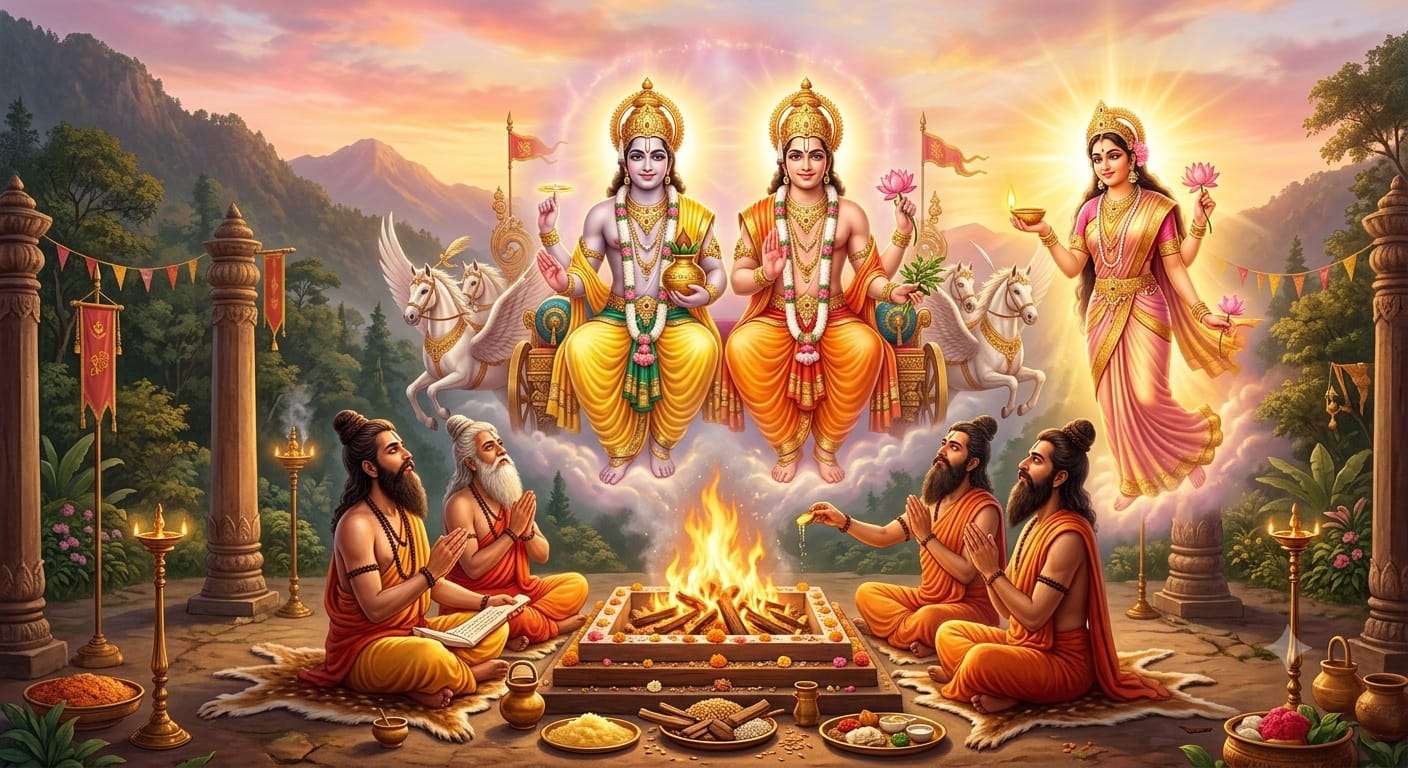
The sage Puruchhepa, standing in the luminous stream of Vedic revelation, raises his contemplative voice in the Athi Sārvari chandas of the Rigvedic hymns, invoking the divine guardians Mitra and Varuna, who uphold order, truth, and the unseen law that binds the cosmos. His prayer is not merely an act of devotion but a profound inquiry into the methods and mysteries of Soma, the sacred elixir, whose extraction reflects both spiritual insight and disciplined observation. With humility and precision, the sage unfolds the many pathways through which Soma is sought, gathered from diverse regions, under varying conditions of time, climate, and terrain, revealing that though the approaches are manifold, the مقصد remains singular—the realization of divine essence and vitality.
The Soma creeper, delicate yet potent, alters its properties in response to the rhythms of nature, demonstrating that truth itself is dynamic, shaped by context yet anchored in unity. The seers, endowed with an experimental mind and an explorative spirit, did not confine themselves to passive reverence but engaged actively with the elements, observing, testing, refining, and perfecting. Their knowledge was not accidental but born of meticulous attention to detail, through which they discerned the interwoven relationship between man, nature, the universe, and the cosmic principle. In this harmonious alignment, they discovered not only the utility and curative potency of Soma but also its rejuvenating influence upon body, mind, and spirit.
Such penetrating intellect enabled the sages to reach the precise point of operation, where intention meets execution and where the unseen becomes manifest. Their brilliance lay in the ability to channel energies through disciplined processes, transforming raw substance into divine offering. This act of churning, both literal and symbolic, speaks of an ever-renewing consciousness, characterized by continuous learning, adaptation, refinement, and eventual stabilization into perfected form. It is a testament to a civilization that valued both inquiry and realization, where knowledge was lived as much as it was contemplated.
Within this sacred framework, the division of roles is clearly articulated, preserving order and purpose. The gods, the priests, the patrons, the devotees, and the practitioners each assume their rightful place in the grand design, ensuring that the ritual is not an isolated act but a coordinated expression of cosmic harmony. The Soma is crushed with care, its juice extracted through deliberate effort, and then blended with pure milk and curds, enhancing its potency and richness. This mixture, prepared with devotion and precision, symbolizes the union of natural elements refined through human endeavor.
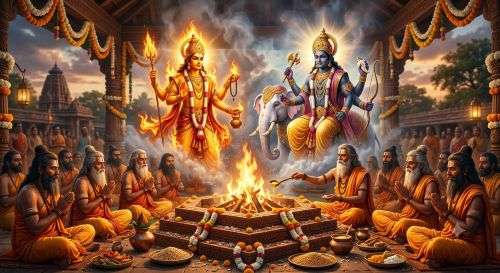
At the break of dawn, under the gentle rays of Ushas, the Soma is pressed once more, sanctified by light and intention. The sage proclaims with reverence that this dear elixir, pleasing in taste and elevating in effect, is prepared especially for Mitra and Varuna. It is offered in the sanctified precincts of the yajna, where sacred fire and sacred thought converge. The invitation extended to the deities is not merely ceremonial but deeply heartfelt, calling them to partake in the essence of immortality distilled through devotion and knowledge.
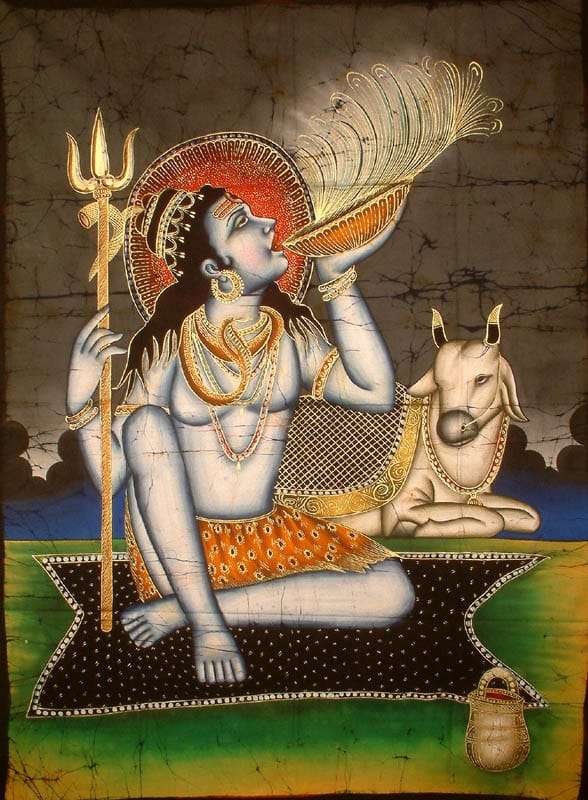
The extraction of Soma is likened to the milking of a fertile cow, a nurturing act that yields sustenance and vitality. Pure and sanctified water is sprinkled, further consecrating the offering, and the elixir is made ready upon the sacred altar. In this serene and harmonious setting, the gods are invited to drink, to partake, and to bless the ritual with their presence. Thus, the hymn of Puruchhepa stands as a luminous bridge between the spiritual and the scientific, revealing a tradition where observation, experimentation, devotion, and cosmic alignment converge into a single, resplendent act of sacred realization.