Lakshmanrao Upadyayula
The sage Vishwamitra, chanting in the sacred Gayatri Chandas of the Rigvedic hymns, invokes the mighty Indra, the fulfiller of noble aspirations and the bestower of divine abundance. With reverence and devotion, the sage invites him to partake of the purified Soma, carefully prepared according to the eternal ordinances of the yajna. This Soma, rich in nourishment and sanctified through sacred rites, symbolizes not merely a ritual offering but the refined essence of life itself. In Vedic understanding, Soma represents the elevation of consciousness, the awakening of inner vitality, and the harmonious union of material sustenance with spiritual illumination. Thus the offering becomes an expression of humanity’s aspiration to establish communion with the cosmic powers that sustain existence.
Indra, praised by countless worshippers across the worlds, is invited to receive the cherished Soma that enhances wisdom and sharpens intelligence. The Vedic seers perceived knowledge not merely as intellectual accumulation but as a luminous awakening of insight. Soma therefore becomes a symbol of enlightened perception, enabling the mind to transcend limitations and behold deeper truths. Through this sacred act, the yajamana and the priests seek divine inspiration, praying that Indra may fill them with courage, discernment, and strength, just as he filled the ancient seers with creative vision and spiritual vigor.
The hymn further portrays Indra partaking of the Soma that grants profound satisfaction and fullness. This imagery reflects a deeper spiritual principle. In Vedic symbolism, the divine acceptance of an offering signifies the successful alignment of human effort with cosmic order. The filling of Indra’s stomach with Soma represents the nourishment of divine energies through righteous action and sincere devotion. When the forces of nature are honored through sacrifice, gratitude, and disciplined living, harmony prevails between humanity and the universe. The Vedic sages recognized that prosperity arises when human conduct reflects reverence for the sustaining principles of creation.
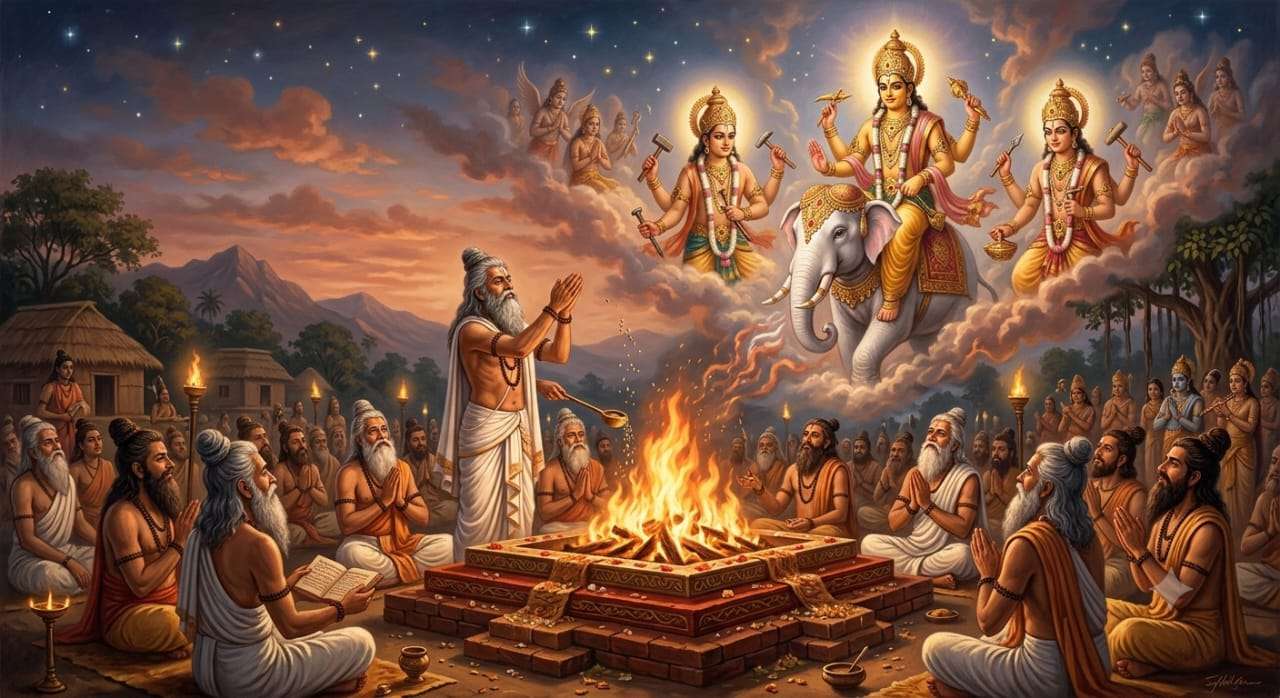
Indra is revered as the lord associated with the life-giving winds and dynamic forces that move through the cosmos. Along with all the worshipful deities, he is invited to the sacred yajna where offerings are placed into the consecrated fire. The yajna is not merely a ritual performance but a profound representation of cosmic reciprocity. Fire transforms material offerings into subtle forms, carrying them symbolically to the divine realms. From a scientific perspective, this reflects an ancient awareness of transformation, where matter changes form yet remains part of an interconnected cycle. The Vedic worldview consistently emphasized that all existence participates in a vast network of exchange and renewal.
The clear, pleasant, and cherished Soma offered to Indra is described as entering and adorning him. Such language expresses the intimate union between divine consciousness and sacred offering. The Soma desired by many becomes radiant within Indra and remains associated with the heavenly realms. This luminous imagery points toward the Vedic understanding that purity of intention elevates both the giver and the offering. Just as light pervades space without losing its essence, spiritual merit generated through righteous actions expands beyond immediate perception and becomes part of the eternal treasury of cosmic harmony.
Indra, the lover of sacred praise, is pleased by the flowing streams of Soma offered with devotion. The sages recognize that divine grace manifests where sincere gratitude and disciplined effort coexist. The food and prosperity nurtured by Indra are prayed to return abundantly to the worshippers. Here the Vedic vision reveals a profound ecological and spiritual insight: nourishment originates from the balanced interaction of natural forces, human labor, and divine blessing. Rain, sunlight, fertile earth, and responsible stewardship together sustain life. Thus gratitude toward the cosmic powers becomes an acknowledgment of humanity’s dependence upon the larger order of existence.
The priests offer crystal-clear, shining, and imperishable Soma accompanied by complete oblations. Their offerings rise through the sacred fire toward Indra, who flourishes through the power of Soma. This flourishing signifies the strengthening of divine order within the universe and within the human heart. The ritual reflects the Vedic conviction that purity, discipline, and knowledge generate subtle influences that uplift individual and collective life. The yajna becomes a sacred laboratory where spiritual principles are practiced, observed, and integrated into daily existence.
Finally, the hymn calls upon Indra, the slayer of Vritra, to come from every direction—whether near, distant, or intermediate—and hear the heartfelt prayers of his devotees. Vritra symbolizes obstruction, stagnation, and the forces that hinder the free flow of life. By invoking Indra, the worshippers seek the removal of all barriers to growth, wisdom, and prosperity. The invitation transcends physical distance, emphasizing that sincere devotion reaches the divine regardless of place or circumstance. The sacred precincts of the yajna become a meeting point between heaven and earth, where human aspiration rises upward and divine grace descends in response.
Thus Vishwamitra’s Gayatri hymn stands as a profound expression of Vedic spirituality, revealing a vision in which ritual, nature, knowledge, and devotion are woven into a single harmonious reality. Through the offering of Soma and the invocation of Indra, the hymn teaches that true prosperity arises when human beings align themselves with cosmic order, cultivate purity of thought and action, and participate consciously in the eternal rhythm of creation. In this sacred harmony, spiritual illumination and practical wisdom unite, guiding humanity toward both inner fulfillment and collective well-being.