Upadhyayula Lakshman Rao
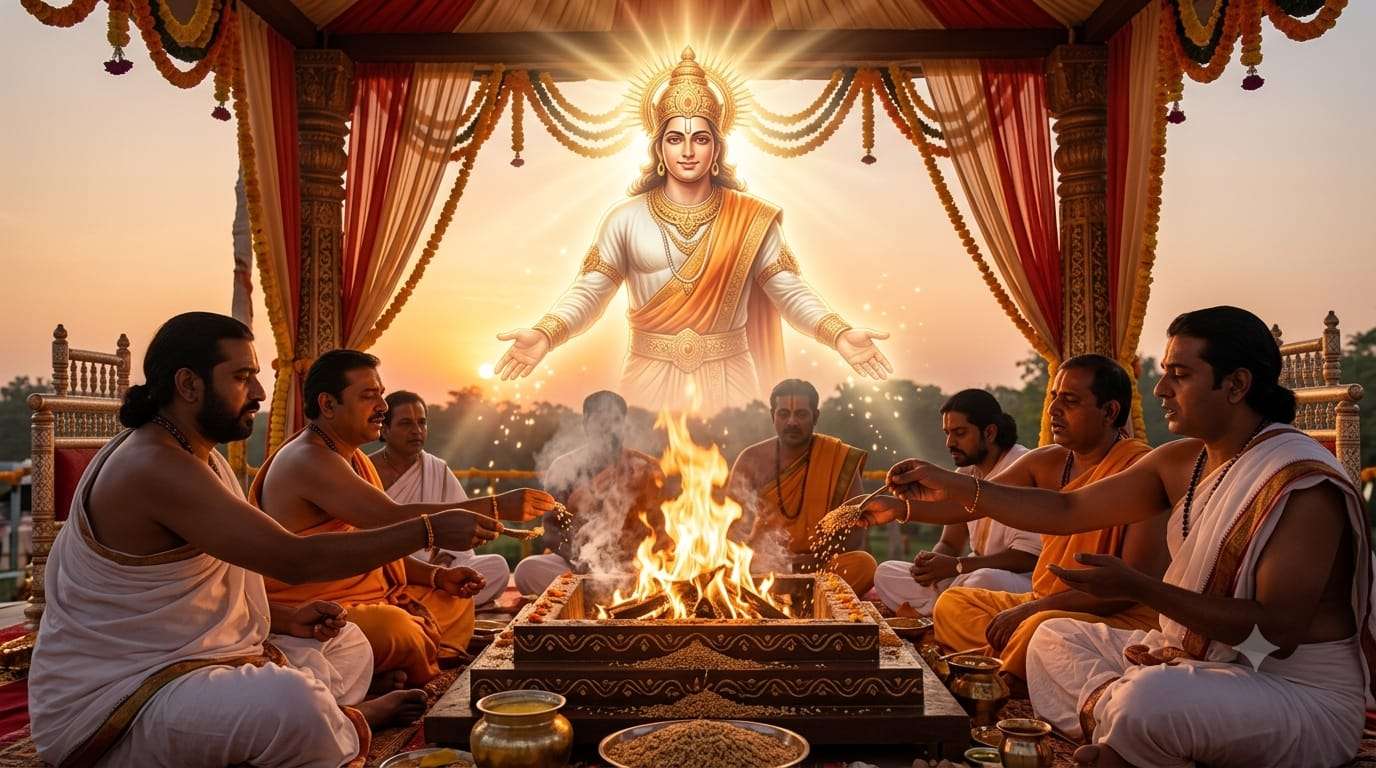
The sage Agastya, immersed in the rhythmic cadence of Trishtup meters within the Rigveda, raises a profound invocation to Indra, the luminous sovereign of divine grace and cosmic vitality. In this sacred utterance, Indra is envisioned not merely as a celestial ruler, but as an intimate benefactor of humanity, one who responds to aspiration with benevolence and fulfills the subtle and manifest desires of the people. The hymn unfolds as an offering of welcome, a deliberate act of inviting the divine presence into the human sphere, wherein the chants themselves become bridges between the mortal and the eternal.
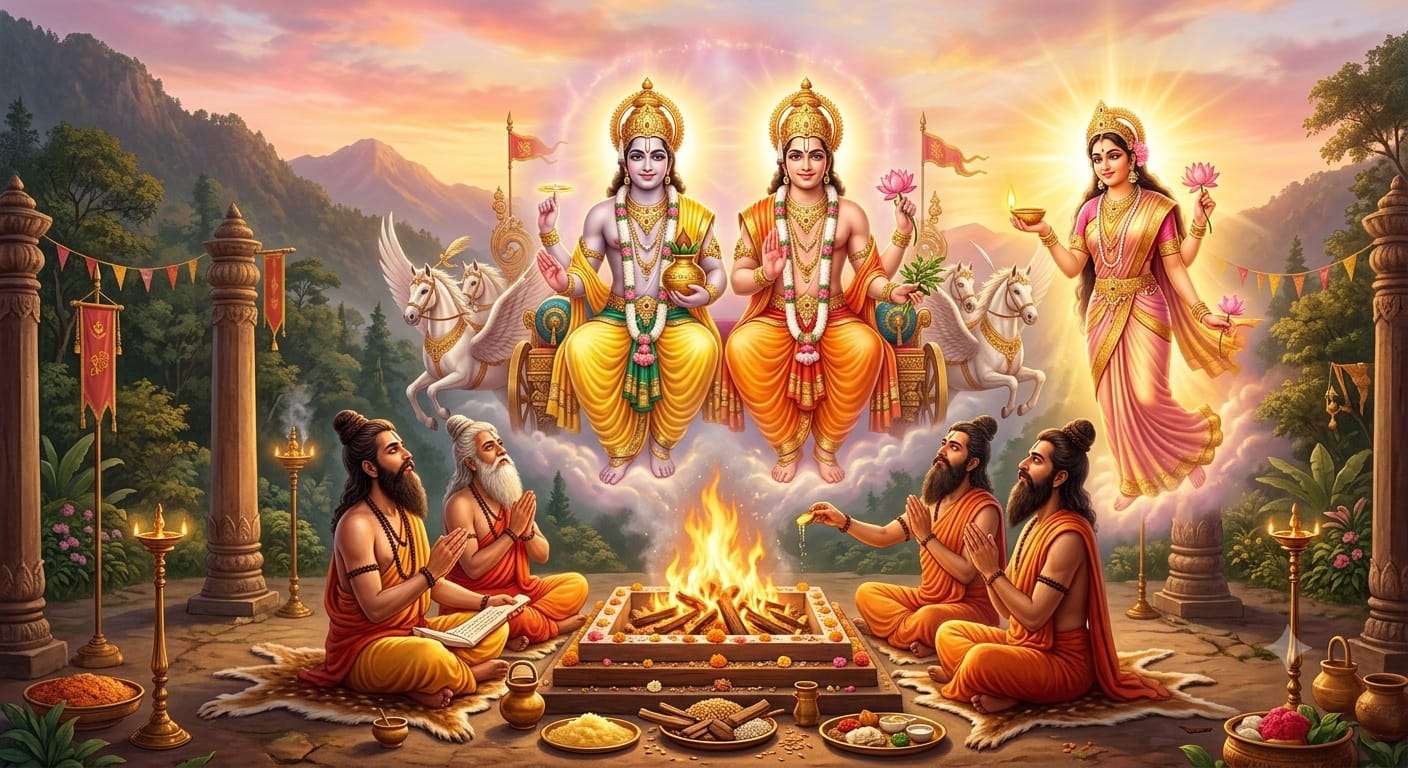
The youthful Ashvins, embodiments of vitality and healing, are invoked as companions of Indra, borne upon a radiant chariot that symbolizes both motion and transformation. This chariot, sanctified by sacred sound vibrations, reflects an early Vedic understanding of resonance—where sound, intention, and matter converge to create a field of sacred energy. The invocation of horses yoked with precision and timeliness subtly echoes a proto-scientific awareness of synchronization and order, much like the harmonized forces that govern natural phenomena.
The soma elixir, described as heart-enlivening, and the clarified butter, refined through deliberate human effort, together represent both spiritual ecstasy and biochemical nourishment. These offerings signify a synthesis of inner consciousness and material sustenance, suggesting that the Vedic ritual was not merely symbolic but also an experiential engagement with altered states of awareness. The swift arrival of Indra, drawn by the Hari horses, illustrates the dynamic interplay between devotion and response, akin to the principle of causality where action invokes reaction within a structured cosmos.
The yajna, conducted with precision and reverence, emerges as a microcosmic model of universal order. The sacred grass seat, the soma, and the ritual space together form a carefully constructed system, reflecting an early scientific temperament rooted in observation, repetition, and disciplined execution. Indra is invited to partake in this system, to sit, to drink, and to engage, symbolizing the integration of divine intelligence within human-designed frameworks of order and meaning.
The chanting of hymns, imbued with measured rhythm and tonal accuracy, serves not only as praise but as a form of vibrational alignment. In this, one may perceive an intuitive grasp of acoustic science, where sound frequencies influence both psyche and environment. The supplication for shelter, nourishment, strength, and longevity reflects a holistic understanding of well-being, encompassing physical survival, social stability, and spiritual continuity.
A subtle assertion arises within the hymn, where the devotee seeks parity with the divine in terms of abundance and prosperity. This is not mere material desire but an articulation of the Vedic ideal of shared cosmic wealth, where the energies of the universe are not hoarded but distributed in alignment with dharma. The continuity of day and night, personified as sisters, is acknowledged as part of an unbroken natural order that must harmonize with ritual activity rather than disrupt it.
Indra’s strength, derived from oblations, suggests a reciprocal relationship between the divine and the human, where offerings sustain divine potency, and divine grace sustains human existence. This reflects an early systems-thinking approach, recognizing interdependence as fundamental to stability. The invocation of nourishment, friendship, and protection further underscores the social dimension of Vedic spirituality, where the divine is both protector and सहभागी—an active participant in human welfare.
In the context of warfare, Indra, accompanied by the Maruts, represents organized force guided by intelligence and responsiveness. The attentive listening to hymns even amidst conflict reveals an ideal where power remains anchored in awareness and ethical responsiveness. The patron, offering oblations, becomes a co-creator in this dynamic, aligning material resources with spiritual intention to invoke prosperity and victory.
Ultimately, Indra is portrayed as a just ruler who responds to varied invocations with discernment and generosity. The plea to dispel the perception of helplessness among enemies reflects an understanding of psychological strength as a dimension of power. The repeated invocation for riches, nourishment, strength, and longevity encapsulates the Vedic aspiration for पूर्णता—completeness in all aspects of life, achieved through harmony between human effort, natural law, and divine grace.