Lakshanrao Upadhyayula
In the sacred tradition of the Rigveda, the venerable sage Śaunaka Gṛtsamada invokes Lord Indra in the majestic cadence of Triṣṭubh chandas, a metre reserved for lofty spiritual insight and heroic revelation. The hymn is not merely a prayer for material success, but a profound meditation on the cosmic power that overcomes darkness, disorder, and limitation. Indra, the lord of luminous strength, is celebrated as Dhanañjaya, the conqueror of wealth; Svargajaya, the winner of heaven; Mānavajaya, the protector and victor among humanity; Viśvajaya, the sovereign over the universe; Aśvajaya, the lord of dynamic energy symbolized by the horse; Gojaya, the recoverer of the radiant cows of knowledge; Jalajaya, the master of the life-giving waters; and Sarvajaya, the one whose victory extends over all realms of existence.
The repeated invocation of these titles reveals the Vedic understanding that true conquest is not domination over others, but mastery over the inner and outer forces that bind consciousness. Wealth signifies not mere possessions, but the abundance of virtues. Heaven symbolizes the ascent to higher states of awareness. Victory among humans denotes ethical excellence, while universal conquest reflects harmony with cosmic law. Horses represent vitality and purposeful motion, cows signify rays of spiritual illumination, and waters embody the flowing energies of life and intuition. Thus, the hymn teaches that the seeker who aligns with Indra gains comprehensive victory in every sphere of existence.
The soma offered to Indra is the essence of exalted consciousness. In Vedic symbolism, soma is the distilled delight born of disciplined thought, pure action, and contemplative insight. To “bring soma to Indra” means to elevate one’s highest aspirations and offer them to the divine intelligence that governs transformation. Indra, strengthened by this offering, destroys every hostile force. These enemies are not external beings alone, but the subtle adversaries of ignorance, fear, inertia, and false perception. Through the awakening of inner power, all obstruction is overcome.
The seers praise Indra as invincible, all-enduring, and supremely creative. He is the consumer of all offerings, the one who assimilates every experience into a greater order. His well-developed neck symbolizes the strength to bear the burden of worlds and the capacity to articulate truth through thunderous speech. He is perfectly ordered, hidden from superficial vision, yet unmistakably present to the illumined mind. His progress is perpetual, for consciousness itself is ever-expanding toward greater integration and awareness.
The repeated utterance of “Namaḥ” is an act of surrender. By bowing to Indra, the seeker relinquishes egoic resistance and opens to a higher power. This reverence is not passive submission, but intelligent cooperation with the forces that sustain truth. Indra is therefore the beloved of warriors—those who strive courageously in the battle for self-mastery. He drinks the soma of inspired thought, humbles the arrogant, torments destructive tendencies, and governs the collective life of humanity with sovereign wisdom.
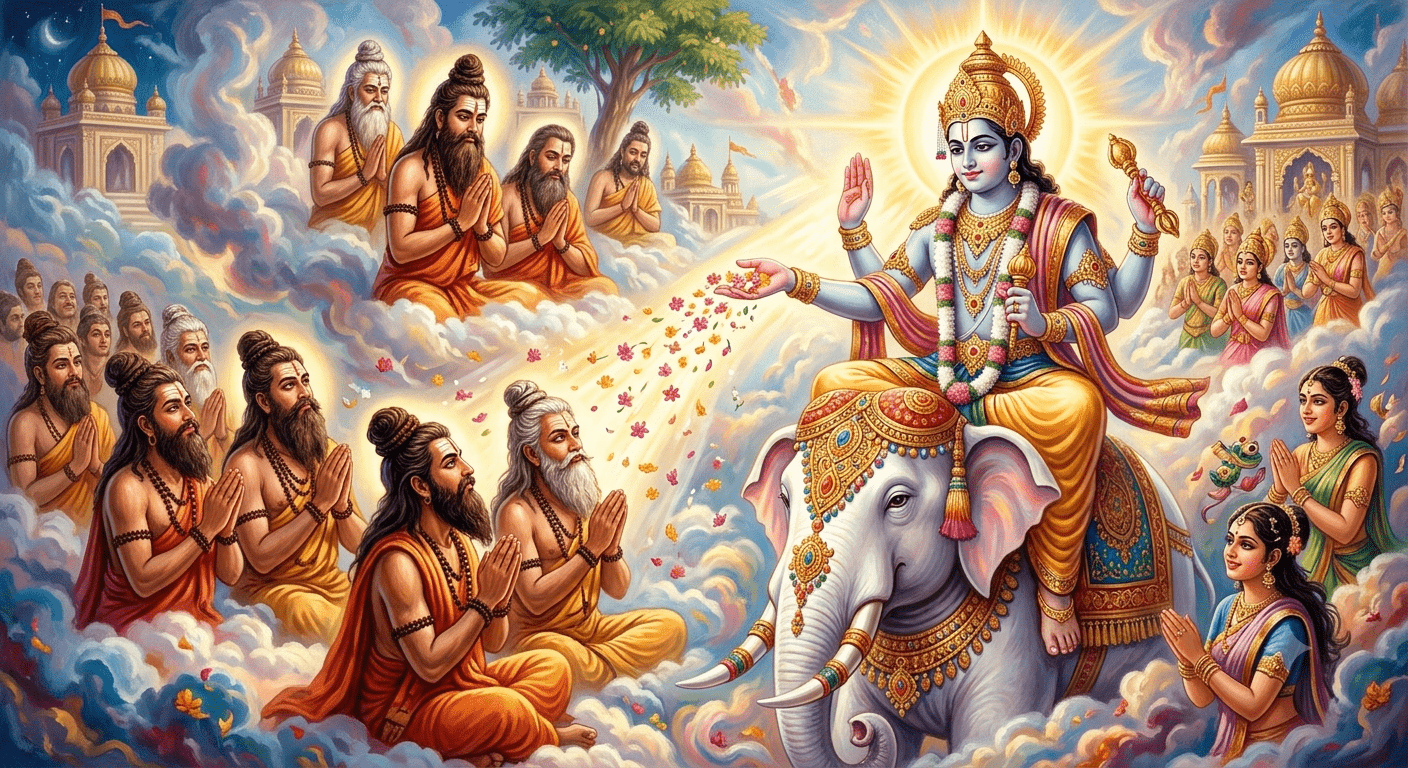
Indra is extolled as the strongest among the strong and the giver beyond measure. His generosity is like rain descending upon fertile earth. In response to sincere prayer, he showers blessings of strength, insight, and abundance. He is terrible to the hostile and majestic to the faithful. Visible in the splendour of lightning and in the clarity of awakened understanding, he remains undefeated in action. He inspires the many, energizes communities, and consumes the strength of all forces opposed to righteousness.
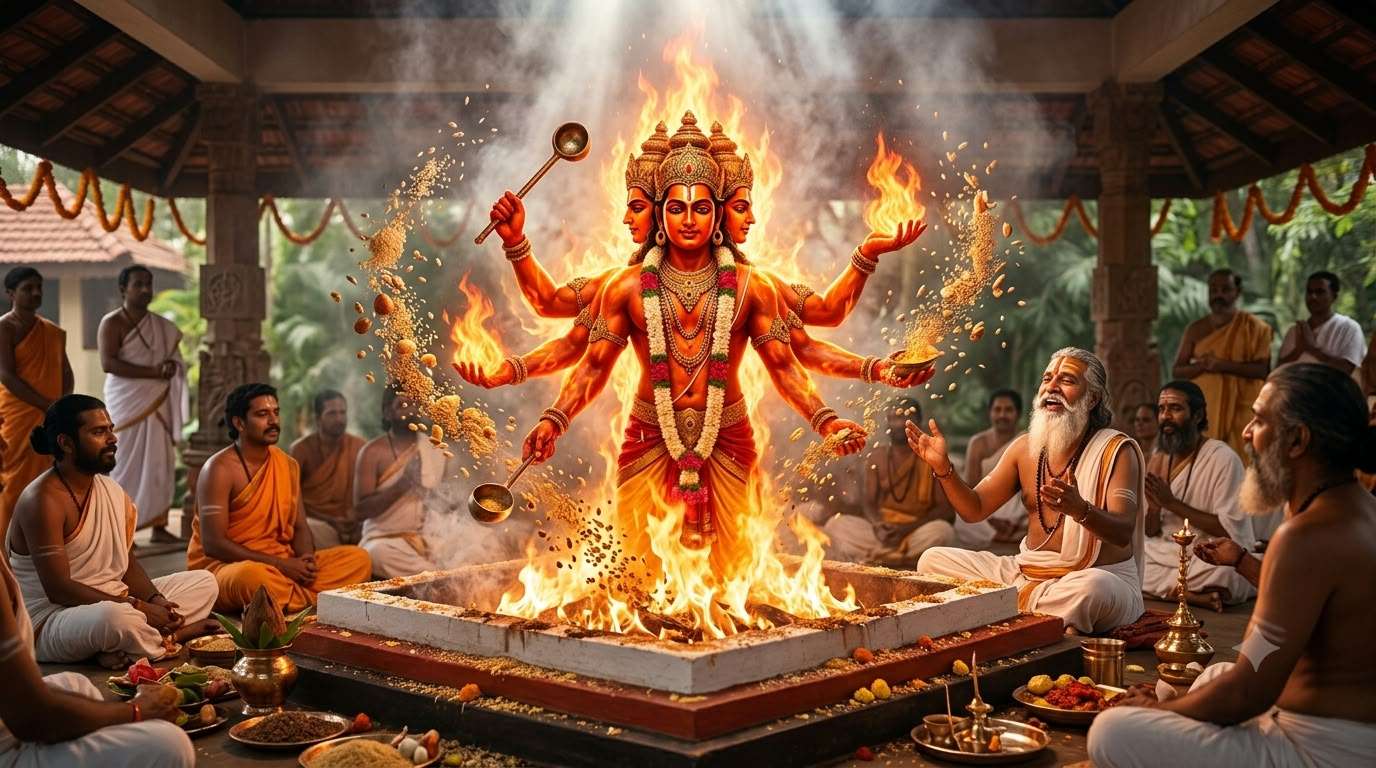
The Vedic poets describe Indra as universally diffused, fully embodied, and the foremost recipient of beautifully ordered yajña. In this context, yajña signifies the principle of sacred reciprocity. Every noble action, disciplined thought, and selfless offering becomes a participation in the cosmic sacrifice. Indra responds to this alignment by releasing hidden energies and opening pathways to growth. He is both the divine power invoked and the awakened force within the human spirit.
One of Indra’s most celebrated deeds is the bringing forth of the Sun from the embrace of Dawn. Spiritually, this symbolizes the emergence of full illumination from the first stirrings of awareness. Uṣas, the dawn, represents the awakening of intuition; Sūrya, the sun, signifies the complete radiance of truth. Scientifically, the image reflects the observable transition from twilight to daylight, when increasing solar energy reveals the world in clarity. The Vedic seers transformed this daily phenomenon into a profound metaphor for the ascent from partial understanding to direct knowledge.
The Angirasas, ancient seers of penetrating insight, performed yajña for Indra and were instructed in the means of recovering the stolen cows. These cows, hidden by powers of darkness, symbolize rays of wisdom obscured by ignorance. With Indra’s aid, the Angirasas discovered the concealed riches and restored them to humanity. Their success teaches that truth is uncovered through disciplined inquiry, inspired prayer, and unwavering perseverance.
Having gained Indra’s protection, the sages acquired abundant herds and treasures. In Vedic language, these riches denote intellectual clarity, moral strength, social prosperity, and spiritual fulfillment. The hymn therefore culminates in a universal prayer: “O Indra, grant us the finest wealth, profound skill, and enduring prosperity. May our resources increase. Protect our bodies with strength and health. Sweeten our speech with truth and kindness. May each day become golden with wisdom, harmony, and divine grace.”
This final aspiration beautifully unites spirituality with scientific temperament. The prayer for bodily protection reflects concern for health and resilience. The request for dexterity honours cultivated skill and practical intelligence. The desire for sweetness in speech emphasizes constructive communication and psychological balance. To wish that every day turn to gold is to seek transformation of ordinary experience into enlightened living. Gold, in both alchemical and Vedic symbolism, represents the perfected state of consciousness.
Thus, the hymn of Śaunaka Gṛtsamada to Indra stands as a timeless declaration of human aspiration. It portrays the universe as an ordered and responsive reality in which divine power and disciplined effort cooperate. Indra is the force that liberates light, releases hidden potential, and bestows comprehensive victory. When invoked with sincerity, knowledge, and devotion, he leads the seeker from fear to strength, from obscurity to illumination, and from fragmented striving to the splendour of universal triumph.