


Bhandaru Srinivasa Rao
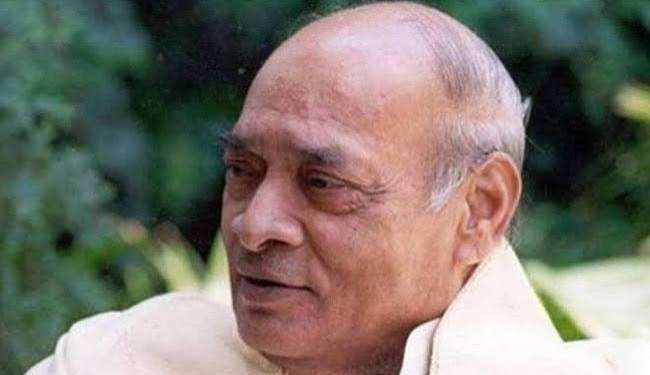
History remembers Shri P. V. Narasimha Rao as the Prime Minister who transformed India’s economy, a scholar fluent in numerous languages, an accomplished writer, and one of the country’s most astute political minds. But beyond the statesman stood a remarkably simple human being whose humility, extraordinary memory, and insatiable curiosity left lasting impressions on everyone fortunate enough to know him.
I count myself among those fortunate few.
My interactions with Shri P. V. Narasimha Rao were brief and scattered over the years. Yet each encounter revealed a different facet of a man who never allowed power to overshadow his humanity.
A few months before his passing, Mr. Rao was staying at the Raj Bhavan Guest House in Hyderabad as a former Prime Minister. Having seen him during his years in power, I expected the familiar scene—security personnel, politicians waiting endlessly for an audience, admirers, officials and well-wishers crowding every available space.
Instead, there was silence.
My senior colleague from All India Radio, R. V. V. Krishna Rao, and I happened to pass by the guest house after finishing an assignment. Out of curiosity, we asked a security officer whether we could meet the former Prime Minister.
To our surprise, he simply motioned us inside.
There sat P. V. Narasimha Rao alone, dressed in a simple lungi and vest, quietly watching a football match on television.
We hesitated, wondering whether we were intruding.
As soon as we introduced ourselves, he looked at me and asked with complete naturalness,
“How is your elder brother Parvathala Rao doing?”
For a moment, I was speechless.
More than three decades earlier, when Mr. Rao briefly served as Chief Minister of undivided Andhra Pradesh, my elder brother Bhandaru Parvathala Rao had worked as his Public Relations Officer in the Information Department.
He had remembered.
Not merely the name, but the person.
For someone who had gone on to become India’s Prime Minister, handling matters of national and international importance, remembering a former PRO after so many years spoke volumes about the man.
That was P. V. Narasimha Rao.
My second memorable meeting with him took place in New Delhi.
I was preparing to leave for Moscow on deputation to Radio Moscow from All India Radio. Before leaving India, I wished to seek his blessings. By then, he was serving as Union External Affairs Minister.
His official residence was unusually quiet.
After asking someone outside, I was directed to a room where Mr. Rao sat alone reading.
I introduced myself and informed him that I was leaving for Moscow.
Without looking surprised, he smiled gently and remarked,
“People come only when you are in a position to get something done for them.”
It was a simple observation, but one born of long political experience.
Then came a series of questions.
“Why Moscow? Aren’t there radio assignments elsewhere? It is a very cold place. How will your wife and children manage there?”
- V. Narasimha Rao was known as a man of few words. Yet during those few minutes, he spoke not like a senior politician addressing a journalist, but like an elder genuinely concerned about a younger acquaintance embarking on a difficult assignment.
Years later, I met him again at the National Institute of Rural Development in Hyderabad, where he was attending a seminar after demitting office.
As journalists surrounded him during lunch, my colleague Krishna Rao and I stood quietly at a distance.
It was Mr. Rao who noticed us.
“Krishna Rao,” he called out, “what happened to my tapes?”
He was referring to the numerous Telugu radio talks he had delivered during his tenure as Chief Minister.
Then, turning towards me, he asked,
“Your brother Parvathala Rao is living in Puttaparthi these days, isn’t he? What is he doing?”
I replied that my brother was writing books on the Narasimha Avatar.
Instantly, another question followed.
“Then ask him to clear one doubt of mine. Why does Narasimha have the head of a lion and the body of a human being? A lion is physically stronger than a man. Why wasn’t it the other way round?”
Even after occupying the country’s highest office, his mind remained that of a lifelong student—constantly questioning, constantly learning.
That intellectual curiosity perhaps defined him as much as his political brilliance.
Another incident, narrated by Mr. Rao himself, reflected his affection for people he admired.
As Prime Minister, he decided that the celebrated Telugu poet Kaloji Narayana Rao deserved the Padma Vibhushan.
Knowing Kaloji’s fiercely independent nature, however, he feared the poet might reject the honour.
Unable to reach him directly because Kaloji was travelling through remote parts of Warangal district, officials eventually traced him and brought him to a police station where a telephone connection had been arranged with New Delhi.
When Kaloji came on the line, the two old friends exchanged pleasantries before Mr. Rao made his request.
“Kaalanna,” he said, “I am going to ask you something, but first you must promise not to refuse.”
Finally he revealed the request.
“I want you to accept the Padma Vibhushan.”
Kaloji hesitated.
Mr. Rao persisted with characteristic warmth.
“I will not be satisfied until you say ‘I agree’ three times.”
Eventually, Kaloji relented, but not without adding,
“Even if I accept the award, don’t expect me to stop criticizing the government.”
Mr. Rao laughed and accepted the condition without hesitation.
Years later, while addressing a felicitation function for Kaloji in Hyderabad, he fondly recalled this entire episode himself.
That was P. V. Narasimha Rao.
He never measured people by their position. He valued friendships that endured beyond politics, remembered individuals long after they had disappeared from public life, and remained intellectually curious till the very end.
India remembers him today as the architect of economic reforms and one of the finest Prime Ministers the country has produced.
I remember him differently.
As a man sitting alone in a simple lungi, watching a football match.
As a leader who remembered my brother after decades.
As a scholar who sought answers to philosophical questions with the curiosity of a student.
Behind the towering statesman was an even greater human being.
Those memories remain among the greatest privileges of my journalistic life.


Great to read about the real statesman Prime Minister.
A rare thing Bharat experienced for being Governed by a scholarly gentleman. A Rajayogi indeed.
Personal experiences really appeal everyone.
🙏🙏