Lakshmanrao Upadhyayula
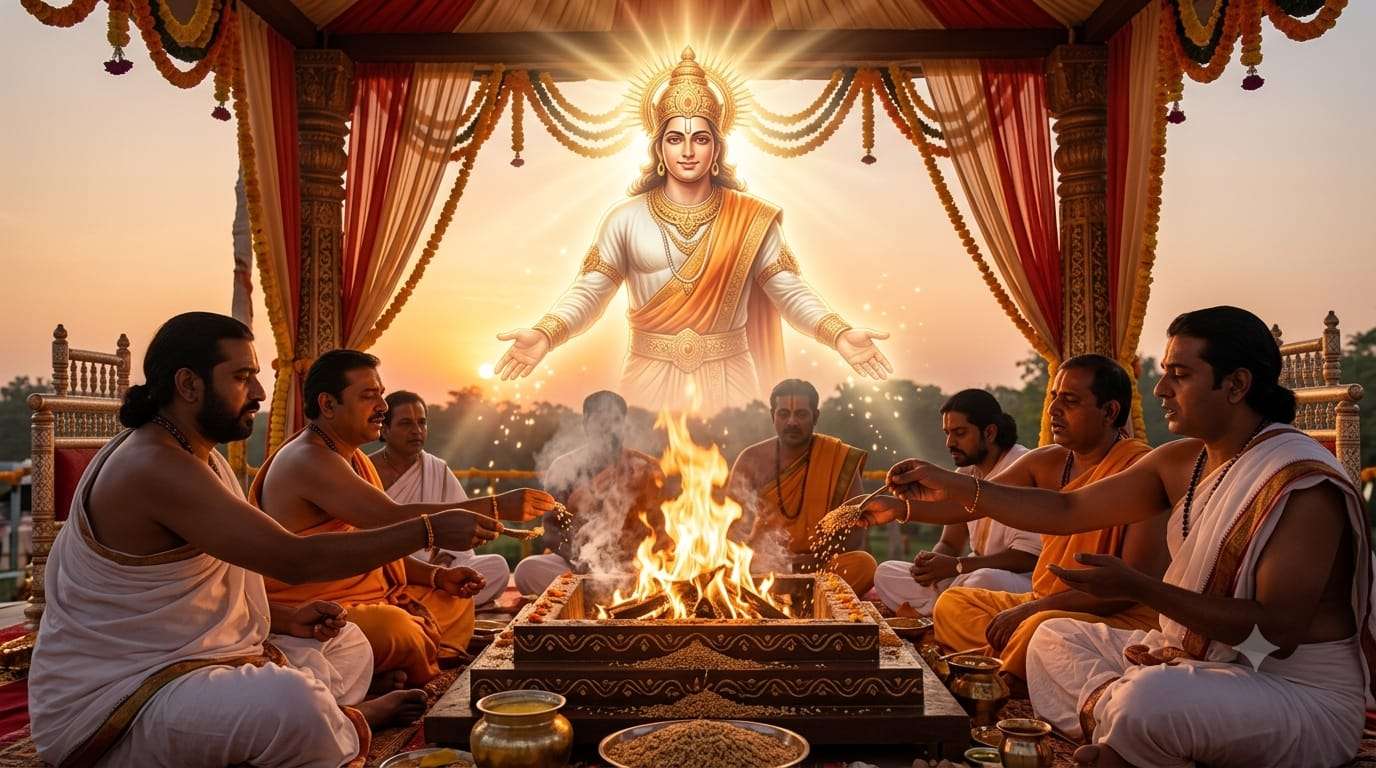
The venerable sage Śaunaka Gṛtsamāda, immersed in the spiritual radiance of Vedic contemplation, invoked the mighty Indra through the majestic metres of Jagatī and Triṣṭubh found within the sacred Rigveda. These hymns do not merely celebrate a celestial deity; they reveal a profound vision of the universe governed by harmony, energy, sacrifice, and interdependence. In the Vedic understanding, Indra is the dynamic force that sustains cosmic rhythm, releases the waters of life, protects the movement of nature, and establishes the balance between heaven, earth, and living beings. The hymns shine simultaneously as spiritual revelations and as intuitive observations of natural law, reflecting the scientific temperament embedded within early Vedic wisdom.
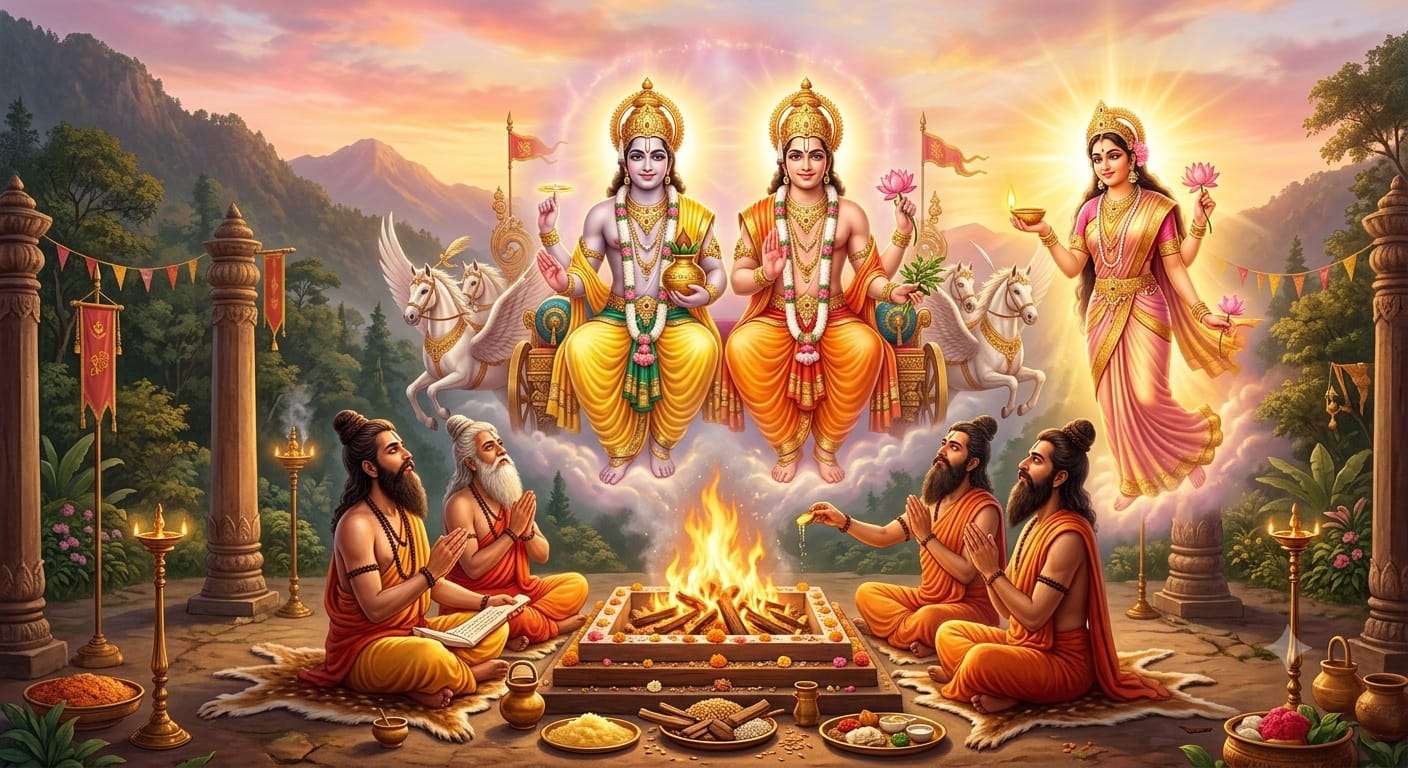
The rainy season is glorified as the nurturing mother of the sacred Soma creeper, whose birth and growth arise from the union of water, earth, and celestial vitality. Soma, revered both as a divine principle and as a life-sustaining botanical essence, matures amidst flowing waters and fertile landscapes. The sages perceived in Soma the mysterious elixir of vitality, purification, and illumination. Through ritual preparation, Soma became the sanctified oblation offered unto Indra, symbolising the transformation of raw natural substance into spiritual energy. This imagery also reveals a subtle ecological awareness: rain nourishes vegetation, vegetation sustains life, and life in turn becomes part of sacred reciprocity through sacrifice and gratitude. Thus, the Vedic seers recognised the cyclic continuity between atmosphere, water systems, plant life, and human consciousness.
The hymns further describe the rivers that flow ceaselessly in the four directions, nourishing the vast ocean that shelters all reservoirs of water. Such imagery reflects a remarkable intuition regarding the hydrological cycle, where rivers emerge from higher terrains, merge into oceans, and eventually return through rain-bearing clouds. The sages attributed the governance of these cosmic movements to Indra, who established the ordained pathways of the waters and maintained their eternal circulation. The rivers, though separated in their courses, ultimately unite within one oceanic womb, symbolising both physical unity and spiritual integration. In Vedic contemplation, the movement of waters mirrored the journey of existence itself: all beings emerge from one divine source and ultimately return to that same eternal reality.
The hymns also unfold profound reflections upon charity, social ethics, and human conduct. A generous patron inspires others to imitate noble deeds, just as one pure stream may cleanse impurities while another may become destructive if left uncontrolled. The sages compared righteous giving to the life-giving flow of beneficial waters. The householder who welcomes guests, nourishes the needy, and shares wealth without selfishness becomes an earthly reflection of divine abundance. In the sacrificial fire, offerings made by patrons are consumed by the sacred flames and transformed into subtle spiritual merit. The Vedic worldview perceived giving not merely as social duty, but as participation in the cosmic order of exchange, where prosperity circulates and expands only through selfless action.
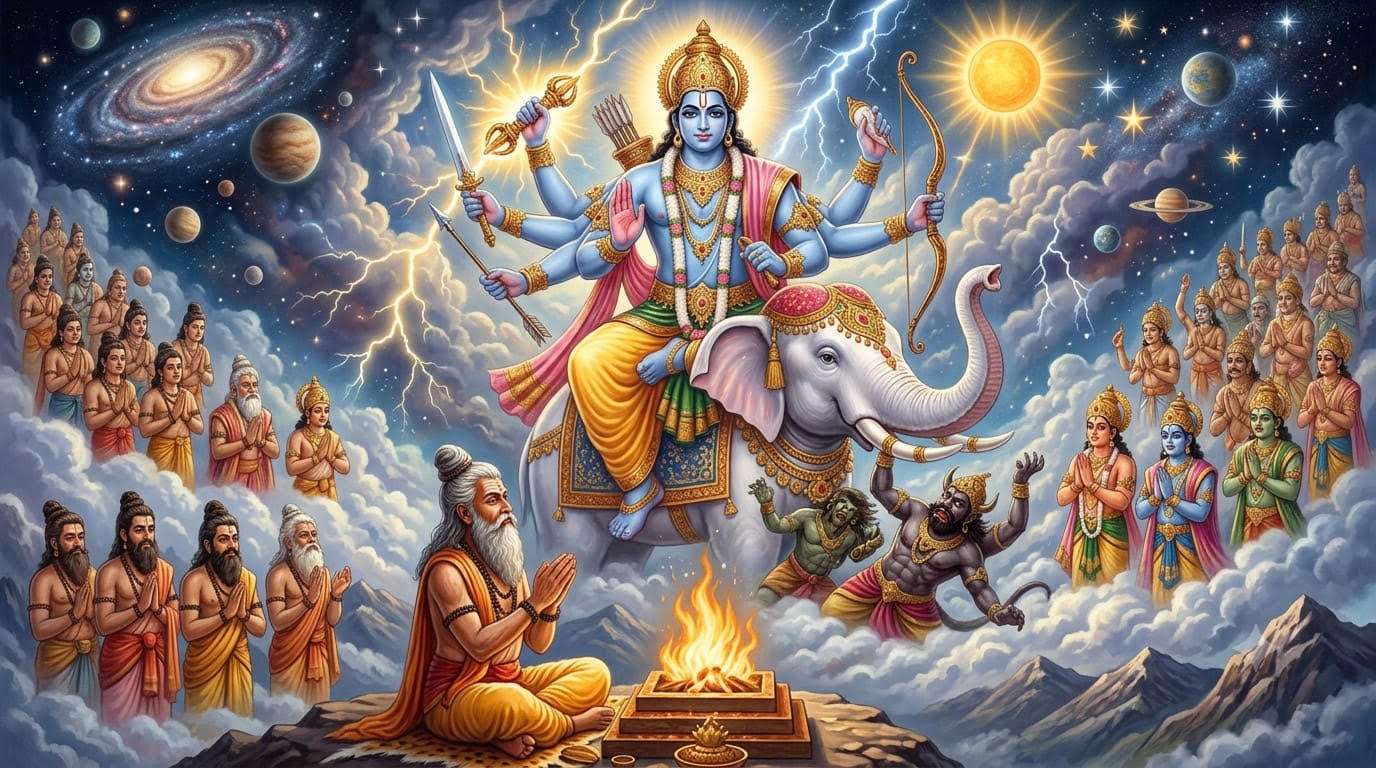
Indra is praised as the power who made the earth visible beneath the vastness of the heavens and who established the pathways through which rivers descend across the land. His celebrated destruction of Vṛtra symbolises the release of restrained waters and the victory of order over stagnation. Spiritually, Vṛtra represents ignorance, fear, and obstruction within consciousness, while Indra signifies awakened force and liberating wisdom. Scientifically interpreted, the myth also reflects ancient recognition of seasonal rains overcoming drought and restoring agricultural fertility. The imagery of horses being refreshed by water further demonstrates the Vedic sensitivity toward the dependence of animals, agriculture, and civilisation upon natural resources. Just as water satisfies the exhausted horse, hymns and sacrifices nourish the divine powers sustaining existence.
The hymns celebrate Indra as the giver of riches, fertile crops, nourishment, and delightful agricultural abundance. Dry and lifeless trees, once stripped of vitality, flourish again with green foliage under the influence of rain and seasonal renewal. This observation reveals the Vedic understanding of regeneration within nature, where decay itself becomes a precursor to rebirth. The patron devoted to Indra receives prosperity not as arbitrary favour, but as the fruit of alignment with cosmic harmony and righteous conduct. Indra stands incomparable within the universe because he embodies the active force through which life continually renews itself. Through sacred rituals and divine governance, herbs, flowers, fruits, and medicinal plants are protected and nourished upon the earth, revealing the deep botanical awareness of Vedic civilisation.
The radiant sun itself is poetically described as adorned by Indra with countless blazing hues that illumine the heavens. Such imagery reflects the Vedic admiration for solar brilliance as the source of energy, vision, growth, and cosmic order. The sages perceived sunlight not merely as physical illumination, but as a manifestation of divine intelligence pervading the universe. By sustaining the animate world through strength and celestial regulation, Indra becomes worthy of eternal praise. Here the hymns reveal a holistic worldview in which astronomy, ecology, spirituality, and ethics are inseparably interwoven into one cosmic fabric.
Indra is further honoured as the protector of sacrificial rites and the guardian of sacred offerings. To preserve righteousness and spiritual order, he destroys hostile forces symbolised by the Dasyus, who represent chaos, ignorance, and obstruction of truth. Armed with the thunderous Vajra, Indra defeats adversaries such as the son of Nrumara and others who oppose divine harmony. These symbolic battles portray not merely physical warfare, but the eternal struggle between illumination and darkness within both society and the human mind. The thousand horses prepared for Indra signify immense vitality, motion, and royal power. His protection of the sage Dabīti and his destruction of lawless beings reveal the Vedic conviction that divine power ultimately safeguards wisdom, devotion, and truth.
The rivers themselves are said to follow the strength and command of Indra, while patrons continue to offer nourishment and wealth in his honour. Human beings adorn themselves with prosperity granted through divine favour, recognising that material abundance must remain connected to sacred responsibility. The hymns proclaim that Indra established six great realms or principles: heaven, earth, day, night, waters, and healing herbs. This classification reflects an early cosmological attempt to organise existence into interconnected domains governed by universal law. Indra rules not through tyranny, but through the maintenance of balance among these realms, ensuring continuity of life and order within creation.
The courage and irresistible strength of Indra are applauded by all beings. In a single decisive act, he conquers hostile powers and acquires their riches for the benefit of the righteous. The mighty protector Jatustidu receives nourishment and support through Indra’s grace, while rituals themselves flourish under his divine supervision. The hymns emphasise that all sacred activity ultimately depends upon cosmic cooperation between humanity and divine forces. Sacrifice, agriculture, rainfall, morality, and social welfare are all viewed as interconnected expressions of one universal order sustained by sacred consciousness.
The concluding verses portray Indra as the compassionate guide who opened pathways across dangerous waters for Turvītu and Vayya, enabling safe passage where obstacles once prevailed. He is also remembered for protecting the lame and blind Parāvṛju, revealing that divine strength is inseparable from compassion and guardianship of the vulnerable. Such narratives demonstrate that Vedic spirituality did not glorify power alone, but revered strength guided by justice, wisdom, and mercy. Through these deeds, Indra attained undiminishing glory celebrated eternally in the sacred hymns of the seers.
Thus, the hymns of Śaunaka Gṛtsamāda present far more than ritual praise. They embody a grand synthesis of spirituality, ecology, astronomy, ethics, social philosophy, and observational insight into the workings of nature. The Vedic sages perceived the universe as a living sacrificial order in which rivers, rains, plants, celestial bodies, human actions, and divine energies participate in one interconnected reality. Indra emerges not merely as a mythic warrior, but as the symbol of awakened cosmic intelligence that releases life, preserves harmony, destroys obstruction, and sustains the eternal rhythm of existence.