



Tanginath Dham is situated on a hill near Majhgaon village in Dumri Block of Gumla District, Jharkhand. Surrounded by forests and hills, it is one of the most important Shiva pilgrimage centers in eastern India.
The temple complex is believed to be more than 1,000 years old. Archaeological remains, ancient sculptures, inscriptions, temple ruins, and numerous Shiva Lingams found across the site indicate that it flourished between the 7th and 12th centuries CE under regional dynasties, including the Nagvanshi rulers. The entire hilltop is considered an important archaeological heritage site of Jharkhand.
The presiding deity is Lord Shiva, worshipped as Tanginath Mahadev. The temple is especially famous for its massive iron Trishul-like weapon embedded in the ground. Local devotees worship this sacred object along with the Shiva Lingam. More than a hundred Shiva Lingams and numerous images of Hindu deities are scattered throughout the complex, making it a unique Shaiva center.
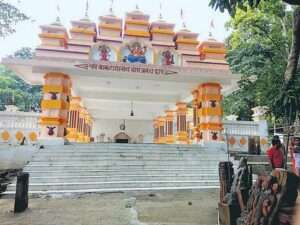
Tanginath is not merely a single shrine but a vast temple complex spread across a large hilltop area. The site contains remains of ancient stone temples, carved sculptures, broken pillars, Surya idols, Vishnu images, Devi sculptures, and countless Shiva Lingams. The architecture reflects early medieval North Indian temple traditions. A sacred Surya Kund and the famous giant Trishul are among the major attractions of the complex.
Tanginath has been revered as a major Shaiva center for centuries. Historical evidence suggests that it was patronized by local rulers and served as an important religious and cultural center. The site contains inscriptions connected with the Nagvanshi kings of Chotanagpur and other regional dynasties. Archaeological discoveries have revealed numerous ancient sculptures and artifacts, confirming the historical significance of the shrine. Even today, thousands of devotees visit the temple during the Shravana month and the Mahashivaratri.
The most widely accepted and traditionally preserved Sthalapurana of Tanginath Dham is associated with Lord Parashurama, the sixth incarnation of Lord Vishnu. According to local tradition, after completing his divine mission of destroying unrighteous kings and restoring dharma, Parashurama sought spiritual peace and atonement. He arrived at this remote hill and performed severe penance to Lord Shiva for many years. Pleased with his devotion, Lord Shiva appeared before him and granted him divine blessings.
After receiving Lord Shiva’s darshan, Parashurama is believed to have planted his divine axe (Parashu) into the earth as a symbol of surrendering his pride and dedicating his life entirely to spiritual pursuits. In the local dialect, an axe is called a “Tangi.” Because of this sacred event, the place came to be known as Tanginath, meaning “Lord of the Tangi.”
Over the centuries, the sacred weapon remained embedded in the ground and became an object of worship. Local devotees believe that the visible portion of the weapon resembles Lord Shiva’s Trishul and symbolizes the divine connection between Shiva and Parashurama. The massive iron weapon continues to stand at the site even today and is regarded as one of the temple’s greatest sacred treasures.
Another long-standing belief among devotees is that Lord Shiva chose this hill as one of his divine abodes after blessing Parashurama. The hill gradually became a center of Shaiva worship, and numerous Shiva Lingams were installed by sages, saints, and devotees over many centuries. This is why the temple complex contains a remarkable number of Shiva Lingams spread throughout the sacred area.
A local folk tradition also states that Lord Shiva himself wandered through these forests carrying a tangi (axe) and later installed his divine weapon on the hilltop. While several versions of the legend exist, the association of the shrine with Parashurama’s penance and the sacred axe remains the most widely accepted and revered Sthalapurana among devotees.
Mahashivaratri is the most important festival celebrated at Tanginath Dham and attracts a huge number of devotees from Jharkhand and neighboring states. Special pujas and abhishekams are conducted throughout the day and night. The holy month of Shravana is also observed with great devotion, while Makar Sankranti and Kartik Purnima are celebrated on a smaller scale. A large annual fair is held during Mahashivaratri, making it one of the biggest religious gatherings in the region.

