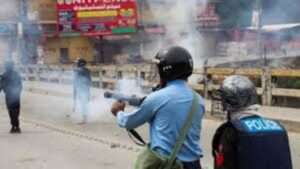
When human rights become selective, they lose their moral force. A tragedy in one corner of the world cannot evoke outrage while a similar tragedy elsewhere is met with silence. Yet that is precisely the uncomfortable question emerging from the latest reports of violence in Pakistan-occupied Kashmir (PoK). For months, Indian Muslims, like many others across the world, have expressed anguish over the suffering of civilians in Gaza. Many participated in protests, issued statements, and demanded accountability for the deaths of innocent Palestinians. Such concern for human life is both legitimate and commendable. But if the killing of civilians in Gaza deserves condemnation, why should the reported killing of protesters in PoK not evoke the same moral outrage? The same question may also be asked of political parties and organisations in India that have been vocal on Gaza. Why has there been little or no visible expression of concern from parties such as the Congress, AIMIM, and the Indian Union Muslim League over reports of civilians being killed while protesting in Pakistan-occupied Kashmir? If human rights are truly universal, then the principle must apply equally, irrespective of whether the alleged violator is Israel, Pakistan, or any other state. Reports indicate that Pakistani security forces opened fire on protesters in Rawalakot and other parts of Pakistan-occupied Kashmir, leaving several people dead and dozens injured. The demonstrations were reportedly driven by economic grievances, inflation, unemployment, taxation, and demands for greater political accountability. Even observers in the United Kingdom expressed concern and urged their government to raise the issue with Pakistan. The matter has now attracted international attention beyond South Asia. The central question is simple: when citizens protest for their rights, does their right to life depend on the identity of the government confronting them? For decades, Pakistan has projected itself as a champion of Muslim causes across the globe. Its leaders routinely speak about the rights of Muslims in Palestine, Kashmir, and elsewhere. Yet when people in territories under its own control raise their voices, the response often appears far less compassionate. Reports from PoK describe a heavy-handed crackdown on demonstrators demanding basic economic and political rights.
The hypocrisy becomes even starker when one looks at Balochistan. Human rights organizations and activists have repeatedly alleged enforced disappearances, arbitrary detentions, and extrajudicial killings. Various reports have documented hundreds of disappearances and killings, while families continue to protest in search of missing relatives. Whether the actual number of missing persons is 3,000, 10,000, or somewhere in between remains a matter of dispute. What is beyond dispute is that the issue exists and has persisted for years. Families of the disappeared continue to seek answers, and human rights groups continue to raise an alarm. The silence surrounding these issues is revealing. Many self-appointed guardians of minority rights who are quick to condemn Israel, India, the United States, or European governments often become remarkably restrained when confronted with allegations against Pakistan. Human rights, however, are not a buffet where one chooses causes based on political convenience. Some observers have also pointed to the complex sectarian landscape of Pakistan. While it would be simplistic to reduce every conflict in PoK or Gilgit-Baltistan to a Shia-Sunni divide, sectarian tensions have historically influenced politics and governance in several parts of the region. That reality only reinforces the need for greater scrutiny and transparency rather than less. The real issue here is consistency. If the death of a Palestinian child deserves grief, so does the death of a Kashmiri protester. If state violence in Gaza must be condemned, then allegations of state violence in PoK and Balochistan must also be condemned. If enforced disappearances are unacceptable in one country, they are unacceptable everywhere. Human rights cease to be universal when they are filtered through ideology, religion, or geopolitics. The test of moral courage is not speaking against one’s adversaries. The test is speaking against injustice even when it is committed by that one considers allies. The people of PoK and Balochistan deserve that consistency. Their suffering is no less real. Their rights are no less important. And their voices should not be drowned out by selective outrage.