


Rath Yatra Special
Wishing everyone a blessed and joyous Rath Yatra!
જય જગન્નાથ ॥
Jai Jagannath!
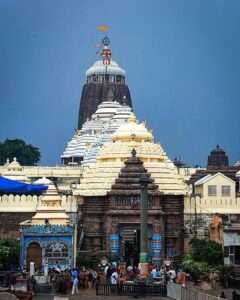
Shri Jagannath Temple is located in the sacred coastal city of Puri in Odisha. Situated on the famous Grand Road (Bada Danda), the temple is one of the Char Dham pilgrimage sites established by Adi Shankaracharya and is also counted among the Sapta Puris, the seven holiest cities of Hinduism. Overlooking the Bay of Bengal, it has been one of the most revered centres of Vaishnavism for centuries. Every year, millions of devotees from India and abroad visit this sacred shrine to seek the blessings of Lord Jagannath, especially during the world-famous Rath Yatra.
The present temple was built during the 12th century CE by King Anantavarman Chodaganga Deva of the Eastern Ganga dynasty and was later completed by his successor, King Anangabhima Deva III. Although the existing temple is about 900 years old, the worship of Lord Jagannath at Purushottama Kshetra is believed to be much older. Ancient scriptures such as the Skanda Purana, Brahma Purana and Padma Purana mention this sacred kshetra, making it one of the oldest continuously worshipped pilgrimage centres in India.
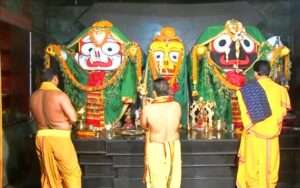
The presiding deity is Lord Jagannath, worshipped as the Lord of the Universe and revered as a form of Lord Vishnu and Lord Krishna. Alongside him are his elder brother Lord Balabhadra, his sister Devi Subhadra, and the sacred Sudarshana Chakra.
One of the most unique features of this temple is that the deities are carved from sacred neem wood, known as Daru Brahma, instead of stone or metal. The idols are ceremonially replaced during the sacred Nabakalebara festival, generally once every 12 to 19 years, when the mysterious divine essence known as Brahma Padartha is transferred from the old idols to the newly carved ones through highly secret rituals performed only by selected temple priests.
The temple follows elaborate daily rituals from early morning until late at night. Every offering made to the Lord is distributed as Mahaprasad, which is regarded as one of the holiest sacred foods in Hinduism. The Mahaprasad is prepared in the temple kitchen using age-old traditional methods and is shared by devotees without any distinction of caste or social status.
The temple is one of the finest examples of Kalinga style architecture. The majestic main tower rises to nearly 65 metres and is crowned by the sacred Neelachakra, an eight-spoked wheel made of Ashtadhatu (an alloy of eight metals). The temple complex is enclosed by massive stone walls and has four grand entrance gates, with the Singha Dwara (Lion Gate) serving as the main entrance. It is also home to the world’s largest functioning temple kitchen, where Mahaprasad is prepared every day in traditional earthen pots over wood-fired stoves.
Jagannath Temple has remained the spiritual heart of Odisha for over nine centuries. The Eastern Ganga and Gajapati kings considered themselves servants of Lord Jagannath and dedicated themselves to preserving the temple and its traditions.
Over the centuries, the temple faced several invasions. During such times, the temple priests safely shifted the deities to secret locations to protect them and later ceremonially reinstalled them. Despite these challenges, the ancient rituals and traditions have continued uninterrupted, making Jagannath Temple one of the greatest living centres of Sanatana Dharma.
According to the Skanda Purana, King Indradyumna of Malwa was an ardent devotee of Lord Vishnu. His greatest desire was to have the divine darshan of the Lord in his most sacred form. One night, Lord Vishnu appeared in the King’s dream and instructed him to travel to Nilachala, the sacred hill at present-day Puri, where he wished to be worshipped as Lord Jagannath.
Filled with devotion, the King immediately set out on his journey. On reaching Nilachala, he searched everywhere for the mysterious deity known as Neela Madhava, who was secretly worshipped by the tribal chief Visvavasu. However, before the King could have darshan, Neela Madhava disappeared, leaving the King heartbroken.
King Indradyumna then performed intense penance and prayed continuously for the Lord’s guidance. Pleased with his unwavering devotion, the Lord instructed him that a sacred neem log carrying his divine presence would soon appear on the seashore.
As foretold, a magnificent neem log floated ashore from the Bay of Bengal. It emitted a divine fragrance and extraordinary radiance. This sacred log was known as Daru Brahma, the divine wood chosen by the Lord himself.
The King invited many skilled sculptors to carve the idols, but none of them could shape the sacred wood. At that moment, an elderly carpenter appeared before the King and offered to carve the deities. The King soon realised that the mysterious carpenter was none other than Lord Vishwakarma, the divine architect of the gods.
Lord Vishwakarma agreed to undertake the work on one strict condition. He asked to be locked inside a room and instructed the King that no one should open the door until he completed carving the idols. If the door were opened before the appointed time, he would immediately stop his work and leave forever.
The King accepted the condition. Days passed in complete silence. No sound came from inside the room. Queen Gundicha became anxious and feared that something had happened to the elderly carpenter. Despite the King’s hesitation, she persuaded him to open the door.
The moment the door was opened, the carpenter had disappeared. Standing before them were the wooden idols of Lord Jagannath, Lord Balabhadra and Devi Subhadra with unfinished hands and feet. King Indradyumna was deeply saddened and regretted breaking his promise.
Suddenly, a divine voice filled the room. Lord Jagannath declared that this incomplete form was his own chosen appearance and that he wished to remain in this unique form forever. The Lord explained that his form symbolises that he belongs equally to every devotee, irrespective of caste, wealth, status, language or physical appearance. His divine message was that true devotion is far more important than outward perfection.
The King immediately installed the sacred deities according to the Lord’s command. Since that day, Lord Jagannath, Lord Balabhadra and Devi Subhadra have been worshipped in the same distinctive form, making this temple unlike any other in the world.
Another sacred tradition states that after Lord Krishna completed his earthly incarnation, his eternal divine essence remained untouched. This mysterious spiritual element, known as Brahma Padartha, was placed within the idol of Lord Jagannath. During every Nabakalebara ceremony, this sacred essence is secretly transferred from the old idols to the newly carved idols in complete darkness by selected temple priests. The exact nature of this sacred ritual remains one of the greatest mysteries of the Jagannath tradition.
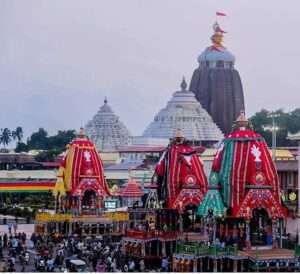
Rath Yatra is the grandest and most celebrated festival of Jagannath Temple. Every year, Lord Jagannath, Lord Balabhadra and Devi Subhadra travel in three magnificent wooden chariots from the main temple to the Gundicha Temple. Millions of devotees from across the world gather to pull the sacred chariots, believing that this act brings immense spiritual merit and divine blessings.
Other important festivals celebrated at the temple include Snana Purnima, Chandan Yatra, Niladri Bije, Dol Yatra, Makar Sankranti and the rare Nabakalebara festival, during which the sacred wooden idols are ceremonially replaced according to centuries-old traditions.
Important Facts
* Jagannath Temple is one of the Char Dham pilgrimage sites of Hinduism.
* It is also one of the Sapta Puris, the seven holiest cities in Hinduism.
* The deities are carved from sacred neem wood instead of stone.
* The idols are replaced during the rare Nabakalebara ceremony while preserving the sacred Brahma Padartha.
* The temple kitchen is the world’s largest functioning temple kitchen.
* Mahaprasad is considered one of the holiest sacred offerings in Sanatana Dharma and is served to thousands of devotees every day.
* The sacred Neelachakra atop the temple is made of Ashtadhatu and is revered by devotees.
* The temple flag is changed every day by temple servitors without the use of modern equipment.
* Rath Yatra is one of the oldest and largest religious festivals celebrated anywhere in the world.
* The temple stands as one of the greatest symbols of devotion, equality, faith and the timeless traditions of Sanatana Dharma.


