


Kalibaah Mandir is an ancient and highly revered Shakti shrine located on the banks of the sacred Yamuna River near Etawah in Uttar Pradesh. The temple stands along the Etawah–Bhind route and is one of the most important centers of Goddess worship in the region. Devotees from Uttar Pradesh, Madhya Pradesh, Rajasthan, and neighboring states visit the shrine throughout the year to seek the blessings of the Divine Mother.
The exact date of the temple’s origin is unknown. However, local traditions associate the sacred site with the Mahabharata era, making it one of the oldest centers of Devi worship in the Etawah region. While the present structure has undergone renovations over the centuries, the sanctity of the shrine and its worship traditions have been preserved for generations. The temple is widely regarded as an ancient Siddha Peetha with a history extending back many centuries.
The presiding deity of the temple is Goddess Mahakali, who is affectionately and lovingly worshipped by devotees as Bhad Bali Maiya. She is regarded as a compassionate yet powerful manifestation of Adi Shakti who protects her devotees from dangers, removes obstacles, and grants courage and spiritual strength. The temple also enshrines forms of Mahalakshmi and Mahasaraswati, symbolizing prosperity, wisdom, and divine power.
The temple follows the traditional North Indian Nagara style of architecture. The complex consists of a prominent entrance, spacious prayer areas, and the sanctum housing the revered deity. The temple’s spiritual atmosphere is enhanced by its location near the Yamuna River. Ancient sculptural remains and stone fragments preserved within the premises indicate the antiquity of the sacred site and reflect the region’s long-standing tradition of Devi worship.
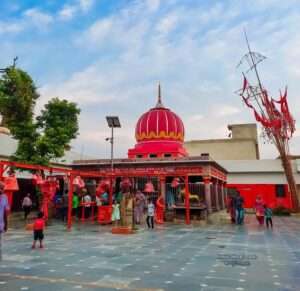
Kalibaah Mandir has served as a major spiritual center for devotees of the Divine Mother for centuries. The shrine gained prominence due to its association with the Shakti tradition and the powerful legends connected with the temple. Over time, it evolved into one of the most visited temples in Etawah district, attracting pilgrims seeking divine protection, fulfillment of wishes, and spiritual blessings. Despite renovations and additions over different periods, the temple continues to preserve its ancient traditions and sacred beliefs.
According to local tradition, the origin of the temple is linked to the story of Goddess Sati. After Sati immolated herself during Daksha’s yajna, Lord Shiva wandered across the universe carrying her body in deep sorrow. To restore cosmic balance, Lord Vishnu used his Sudarshana Chakra to dismember the Goddess’s body. It is believed that one of Sati’s arms fell at this sacred location.
The word “Baah” means “arm,” and the name “Kalibaah” is believed to have originated from this divine event. Because of this association, devotees consider the shrine a sacred seat of Shakti where the Divine Mother’s power remains eternally present. The temple is revered as a Siddha Peetha where sincere prayers are believed to be answered. Devotees believe that worshipping Bhad Bali Maiya here helps remove fear, negative influences, and obstacles while bringing courage, protection, prosperity, and spiritual upliftment.
One of the most fascinating traditions associated with the temple concerns Ashwatthama, the immortal son of Guru Dronacharya from the Mahabharata. According to local belief, Ashwatthama continues to wander the earth and visits Kalibaah Mandir before dawn every day to worship Bhad Bali Maiya.
Temple priests and devotees narrate that when the sanctum is opened in the early morning, flowers are often found already offered at the feet of the Goddess even before any devotee has entered the shrine. This enduring belief has strengthened the temple’s reputation as a place of divine mystery and spiritual power. Many pilgrims visit the temple hoping to receive the blessings of the Goddess worshipped by the immortal warrior himself. This unique tradition is one of the temple’s greatest spiritual distinctions and contributes significantly to its sacred status among devotees.
Navaratri is the most important festival celebrated at the temple, attracting thousands of devotees during both Chaitra and Sharad Navaratri. Kali Puja and other major Shakti festivals are also observed with special prayers and devotional programs. Tuesdays and Fridays are considered particularly auspicious for worship of Bhad Bali Maiya and witness large gatherings of devotees.


