



Hidimbeshwara Temple is an ancient Shiva shrine located inside the historic Chitradurga Fort in Chitradurga district, Karnataka. Surrounded by massive granite boulders and the seven layers of the famous hill fort, the temple has a unique atmosphere where spirituality, history and Mahabharata traditions come together. It is one of the prominent ancient temples within the fort and is especially interesting for devotees visiting during Shravana Masa and on Mondays. Karnataka Tourism identifies Hidimbeshwara as one of the oldest temples in the Chitradurga Fort area.
The exact date of the temple’s original construction is not clearly established. It is regarded as an ancient historic Shiva shrine, with the temple and surrounding fort having developed over different periods. The Mahabharata connection belongs to local Sthalapurana and tradition rather than a historically proven date.
The presiding deity is Lord Shiva, worshipped as Hidimbeshwara. The name Hidimbeshwara is associated with Hidimbasura, the rakshasa mentioned in the Mahabharata. The Shiva Linga is the main object of worship, and the temple remains an important Shaiva shrine within the fort. The association with Hidimbasura gives this temple a distinctive identity among the Shiva temples of Karnataka.
Hidimbeshwara Temple has a simple yet historic architectural character, quite different from the highly ornate Hoysala temples of Karnataka. Its most striking feature is its setting among the enormous granite boulders of Chitradurga.
The temple blends naturally with the rocky landscape, while the fort walls, gateways and other defensive structures surround it. A figure associated with Hidimbasura can be seen on the temple’s vimana. The combination of the temple, natural rock formations and historic fort architecture gives Hidimbeshwara a unique visual character.
The history of Hidimbeshwara Temple is closely connected with the history of Chitradurga Fort, also known as Yelu Suttina Kote, meaning the Seven-Circled Fort. The Chitradurga region has a long history and has seen the influence of several dynasties, including the Kadambas, Chalukyas, Rashtrakutas, Hoysalas and Vijayanagara rulers.
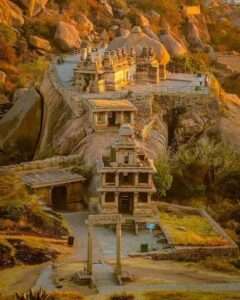
The fort was later developed and strengthened extensively by the Chitradurga Nayakas. The temple forms part of a larger sacred landscape within the fort, which contains several historic temples including Sampige Siddheshwara, Phalguneshwara and Ekanatheshwari.
The fort itself is famous for its seven concentric defensive walls, massive gateways, watchtowers, hidden passages and traditional water-management system. Thus, a visit to Hidimbeshwara is also a journey through the military and cultural history of Chitradurga.
The most famous Sthalapurana of Hidimbeshwara Temple is connected with the Mahabharata. According to local tradition, the Pandavas came to this rocky region during their exile. Hidimbasura, a powerful rakshasa, was believed to live among these hills.
Hidimbasura’s sister Hidimbi is said to have met Bhima and fallen in love with him. Hidimbasura opposed Bhima, leading to a fierce battle between the two. Bhima ultimately defeated and killed Hidimbasura, and according to the local tradition, Hidimbi later became Bhima’s wife.
The enormous rocks surrounding Chitradurga are also popularly associated with this legendary encounter. Local tradition further identifies a large bone preserved at the temple as Hidimbasura’s tooth, while a large iron object is traditionally associated with Bhima’s bheri.
Shravana Masa is an especially auspicious period to visit Hidimbeshwara Temple, with Shravana Mondays being particularly significant for Shiva devotees. Devotees visit the shrine for Shiva darshan, prayers and traditional worship during this sacred month.
Mahashivaratri is another important occasion for worshipping Lord Shiva, when devotees gather for special prayers and rituals.


