


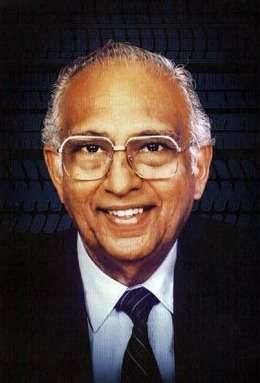
MS Sparsha
The story of success is often told through balance sheets, market share and billion-dollar valuations. Rarely do we pause to remember the dusty, uncertain beginnings of the men and women who built some of India’s most iconic brands with little more than courage and conviction.
Few stories exemplify this better than that of K.M. Mammen Mappillai—the man who transformed a handful of toy balloons into one of the world’s most respected tyre manufacturers.
In the scorching summer of 1946, a young graduate could be seen walking the streets of Madras carrying a heavy gunny bag filled with coloured toy balloons. He would stop at roadside vendors, haggle over a few annas and count copper coins carefully, for the money he earned would often determine whether he could afford his next meal.
This was not the life one would expect of someone born into one of Kerala’s most influential families.
K.M. Mammen Mappillai was the son of K.C. Mammen Mappillai, the legendary editor of Malayala Manorama and a leading banker in the erstwhile princely state of Travancore. The family’s fortunes, however, changed dramatically in the late 1930s following a bitter confrontation between his father and Sir C.P. Ramaswami Iyer, the powerful Diwan of Travancore.
The consequences were devastating. The state government shut down the newspaper, seized family assets, closed their bank and imprisoned his father. Overnight, privilege gave way to poverty. The family that once enjoyed immense wealth found itself staring at financial ruin.
By 1946, armed with a science degree from Madras Christian College, young Mammen Mappillai had no inherited fortune to fall back upon. There were days when he slept on the floors of friends and acquaintances because he had nowhere else to go. Yet, surrender was never an option.
Pooling together a modest amount of borrowed money, he rented a small wooden shed in Tiruvottiyur on the outskirts of Madras and established what would eventually become one of India’s most valuable brands—the Madras Rubber Factory, better known today as MRF.
There was nothing grand about its beginnings.
Without machinery or capital to manufacture industrial products, Mammen Mappillai chose perhaps the simplest rubber product imaginable—toy balloons. The enterprise was entirely manual. His wife, who possessed a background in chemistry, became his first collaborator. Together, they mixed rubber latex, dyes and chemicals at home before hand-dipping wooden moulds to create colourful balloons.
After they dried, the young entrepreneur would pack them into gunny bags and walk through the bustling streets of Madras selling them one by one.
It was entrepreneurship in its purest form—an enterprise powered not by investors or venture capital, but by sweat, resilience and relentless hard work.
By 1949, the small balloon business had expanded into latex gloves and cast rubber toys. But Mammen Mappillai understood that selling novelty items could never rebuild his family’s fortunes.
His defining moment arrived in 1952.
Post-Independence India was witnessing a boom in commercial transportation. Trucks were increasingly plying the nation’s roads, creating enormous demand for tread rubber used in tyre retreading. Almost all of it was being imported at considerable cost.
Seeing an opportunity where others saw risk, Mammen Mappillai took a bold decision. He invested every rupee he had painstakingly earned over six years and transformed his fledgling enterprise into a manufacturer of tread rubber.
The gamble paid off spectacularly.
Being locally manufactured and significantly cheaper than imported alternatives, MRF’s products found immediate acceptance among transport operators. Within just four years, the company captured nearly half of India’s tread rubber market.
From there, the journey became one of steady and extraordinary evolution.
In 1961, MRF went public and entered into a technical collaboration with an American tyre company, laying the foundation for its tyre manufacturing business. Over the decades, it grew into a global giant whose products today are exported to more than 65 countries.
Ironically, the company eventually returned to its origins. In 1989, MRF partnered with one of the world’s leading toy manufacturers to establish Funskool India—a fitting tribute to the humble toy balloons that had once kept its founder’s entrepreneurial dream alive.
When K.M. Mammen Mappillai received the Padma Shri in 1992, the young man who had once sold balloons on Madras streets had become the architect of an industrial empire.
Today, MRF’s iconic logo adorns cricket bats wielded by some of the world’s greatest players and its tyres roll across roads in dozens of countries. Yet, beyond the corporate success lies a far more inspiring lesson.
The story of K.M. Mammen Mappillai reminds us that fortunes may be confiscated, institutions may be destroyed and families may be brought to their knees by circumstances beyond their control. But resilience, ingenuity and an indomitable entrepreneurial spirit remain beyond the reach of anyone seeking to take them away.
Every giant enterprise has a beginning. In MRF’s case, it began not with tyres or factories—but with a young man carrying a gunny bag of hand-dipped toy balloons through the streets of Madras, refusing to let adversity define his destiny.
That is why K.M. Mammen Mappillai remains one of India’s true unsung heroes.

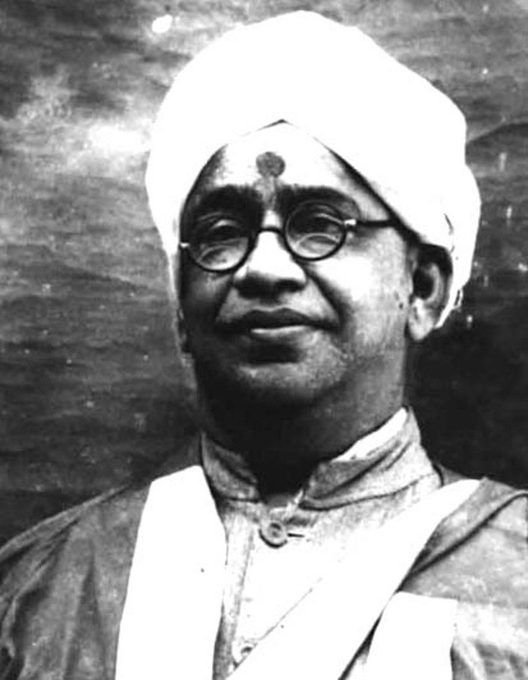


Every one knows MRF and few know its full fledged expansion as Madras Rubber Factory. Fewer people know about the story behind this which has been lucidly explained in this success story.