



Venezuela’s earthquake: A humanitarian tragedy and a global warning of disaster preparedness
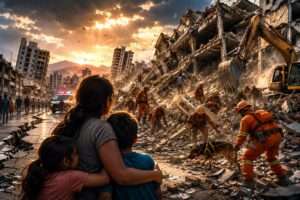
When nature unleashes its fury, it truly tests humanity’s technological achievements, economic progress, and administrative pretensions. The powerful earthquake in Venezuela once again illustrated that years of hard work, dreams, and the illusion of a secure life can be reduced to rubble in a matter of moments. A few seconds of an earthquake not only toppled buildings but also deeply threatened the hopes, livelihoods, and futures of thousands of families.
Natural disasters like earthquakes aren’t just geological events; they also test a nation’s preparedness, governance, social structure, and human sensitivity. The cries of those trapped under rubble, families searching for loved ones, the injured waiting for treatment in hospitals, temporary lives in relief camps, and nights spent in fear reveal that the true pain of disaster is far deeper than statistics.
Venezuela already faces economic challenges, resource constraints, and administrative pressures. This natural disaster, which strikes at this time, not only causes physical destruction but also places additional burdens on healthcare, communications, transportation, electricity, drinking water, and relief systems. This is why the impact of any disaster is more widespread in a society where infrastructure is already weak.
The greatest irony is that disasters do not affect everyone equally. People living in safe and sturdy buildings suffer relatively less damage, while those living in weak construction, unplanned settlements, and families with limited resources are most affected. The poor, laborers, women, children, the elderly, and the disabled pay the greatest price. Therefore, natural disasters gradually become a manifestation of social and economic inequality.
This is where the importance of urban planning comes into play. If cities are developed according to scientific standards, buildings are constructed using earthquake-resistant techniques, open spaces are provided, emergency evacuation routes are developed, and hospitals are made disaster-ready, the loss of life and property can be significantly reduced. Unfortunately, in many countries, disregard for building regulations, illegal construction, and poor supervision make such tragedies even more devastating.
The first 72 hours after an earthquake are considered the most crucial. This is the time when the chances of rescuing people trapped under debris are highest. Therefore, the speed, coordination, and efficiency of relief and rescue operations can make the difference between life and death for many. Rescue teams, doctors, firefighters, the military, local administration, and voluntary organizations become the biggest ray of hope in these difficult times.
Relief work goes beyond providing food and medicine. Temporary housing, clean drinking water, sanitation, mental health support, child protection, women’s needs, and the restoration of communication services are equally essential. True rehabilitation from any disaster is possible only when affected people are provided not only with the means to survive but also with the opportunity to resume their lives with dignity.
Such tragedies also test the credibility of governance. The public observes how quickly, transparently, and effectively the government acts in times of crisis. Clear information, quick decisions, proper distribution of resources, and administrative coordination maintain public confidence. Conversely, if there is confusion, delay, or a lack of information in the initial hours, the crisis becomes more severe.
Today, disaster management is no longer limited to relief operations. The modern approach emphasizes that preparedness is the best defense against disasters. Regular mock drills in schools, offices, hospitals, and public institutions, first aid training, local volunteer networks, timely warning systems, and public awareness programs can save thousands of lives. Educating citizens about the dos and don’ts of an earthquake is as important as any technological system.
This tragedy also has a global dimension. Natural disasters do not recognize national boundaries. When a country’s capacity is stretched thin, international cooperation becomes humanity’s strongest foundation. Efforts such as relief supplies, medical teams, search and rescue experts, technical assistance, temporary shelters, and reconstruction support strengthen a sense of global responsibility. This is a time when humanity is needed more than politics.
In this era of climate change and rapid urbanization, most countries in the world face the risk of some form of natural disaster. Earthquakes cannot be prevented, but their devastating impact can certainly be mitigated. This requires scientific research, robust infrastructure, stringent building standards, sustainable urban planning, and effective disaster management systems.
This tragedy in Venezuela also serves as a serious warning to the global community. We must understand that secure societies are not built solely on economic growth, but on visionary policies, strong institutions, scientific thinking, and citizen participation. Development is meaningful only when it can protect people’s lives in times of crisis.
Ultimately, the greatest lesson of any earthquake is that humanity’s greatest strength against nature is its science, its organization, and its compassion. Relief, rehabilitation, safe construction, disaster preparedness, and social solidarity—these five pillars are the most effective means of mitigating future tragedies.
Venezuela’s suffering isn’t just the suffering of one nation; it’s a reminder to all humanity that disasters strike suddenly, but the damage they cause determines our preparedness. Therefore, we mustn’t just let every tragedy become news, but instead transform it into an inspiration to secure the future. This will be the truest expression of sympathy and the most meaningful tribute to this tragic event.


