N Nagarajan
What a former colleague taught me about editors, authors and the responsibility of getting books right.
The controversy surrounding errors reported in Sonia Gandhi’s memoir has once again raised an old question in publishing: who is responsible when a book gets its facts wrong—the author, the editor, or the publisher?
Perhaps the answer is: all three.
But the episode also made me think of someone who took editing very seriously—Priya Adarkar, my former colleague at Orient Longman. I often wonder how she might have handled a first-time author confronted with questions about facts, dates and inconsistencies.
When I joined the then Orient Longman Central Office in Delhi in 1976, there were four Regional Publishers: Usha in Chennai, Dr Sujit Mukherjee and Ravi Vyas in Delhi, Gauri in Kolkata and Priya in Mumbai.
My early acquaintance with Priya was mainly through correspondence on authors’ agreements and questions relating to copyright, subsidiary rights and licences. Priya asked questions—lots of them. Her queries often sent me back to the agreements to find answers. In the process, I learnt much more about publishing than I otherwise would have. On occasions, they even led me to correspond with UNESCO and Lynette Owen, then Longman’s Rights and Permissions Manager, who later became its Director.
Priya had joined Orient Longman four years before me, but in many ways she became one of the people who helped me understand the publishing world.
Her questions, however, were not always serious. Sometimes they created great office entertainment.
In the 1980s, Dr Mukherjee moved to Hyderabad while the Central Office remained in Delhi. Inter-office correspondence could then become a mixture of confusion, humour and puns. I remember renewing the Marathi licence for B.K.S. Iyengar’s Light on Yoga, while also trying to obtain the Hindi edition and rights for Light on Pranayama. Dr Mukherjee did not have all the relevant papers, and somewhere along the way the titles became mixed up.
After several exchanges, I finally clarified everything. Priya then wrote to Dr Mukherjee, copying me, that both of them needed a yoga lesson—not from Iyengar, but from me!
That was Priya: serious about work, but never too serious to enjoy its absurdities.
She was also a strict grammarian. Orient Longman had licensed the Longman New Junior English Dictionary. Myself and young marketing executive, Arvind Lokhare often used to interact with novel and weird ways to market books. I suggested why not a Speller similar to one which we used to import from Longman that had 14000 words. Why not develop a speller with 7000 words and give it free with our new Dictionary. We got it cleared and developed a compact pocket speller to be given free with it. The speller contained about 7,000 words, compared with the dictionary’s 14,000.
The cover carried the line: “Available till stocks last.”
Priya refused to release the stock. She believed “until” was the correct word. The Chairman intervened and asked that the matter be independently checked. Priya agreed to release the books only after that assurance.
The verdict from a grammarian at CIEFL, now EFLU, was that both “till” and “until” were correct.
Priya may have lost that particular battle, but she won our respect for taking language seriously.
Yet she was not confined to serious books. She had a sharp commercial instinct too.
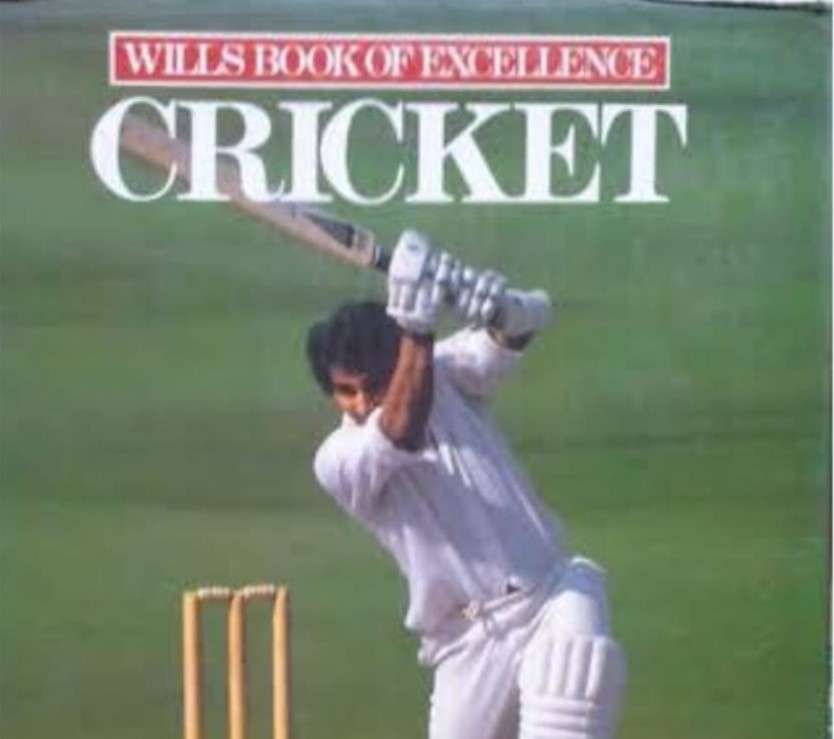
Orient Longman had agreed to publish and distribute the Wills Cricket and Sports series, sponsored by ITC, then a tobacco company. Dr Mukherjee, who had given up smoking after a mild heart attack, was understandably uncomfortable with the association. Sujata Sen in Kolkata was also in a difficult position.
Priya saw the opportunity differently. The series had a huge cricket audience and ITC had a substantial promotional budget. She persuaded the others that Orient Longman should look beyond its reservations and use the opportunity to build its own publishing brand.
The project went ahead. The series became a major bestseller, and the World Cup edition reportedly sold more than a million copies.
Priya understood that good publishing could mean serious literature one day and a commercially successful cricket book the next.
She also had an eye for books that others might overlook.
Orient Longman subscribed to Publishers Weekly and The Bookseller. The Chairman would occasionally mark titles he thought might have a market in India and ask us to explore them.
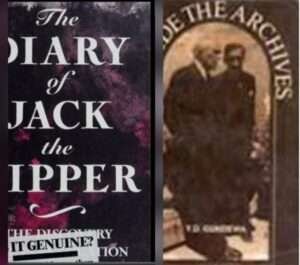
One such title was a book Dairy of Jack the Ripper that was attracting considerable attention in Britain. I obtained specimen copies and found it well researched and commercially promising. I sent the details and blurb to Priya. She was then heading Trade and General Publishing. Instead of waiting for a formal proposal, she circulated the material before even reading the full copy and asked for sales estimates. The figure discussed was around 7,000 copies or more.
She sent the proposal to Dr Mukherjee, who eventually declined it.
I remember the episode because it showed another side of Priya. She was not interested only in books that fitted the conventional image of a serious publisher. She was willing to explore a book outside that comfort zone if she believed there was a readership for it.
But perhaps her greatest strength was persuasion.
Y.D. Gundevia’s memoir, later published as Outside the Archives, came to Priya through Dr Mukherjee and Dr S. Gopal. Gundevia had been an ICS officer, Foreign Secretary and later Secretary to President Dr S. Radhakrishnan.
Priya read the manuscript and felt that Orient Longman should publish it, but that it needed considerable editing. Dr Mukherjee agreed and asked Priya to convey this to Gundevia.
He was furious.
He pointed out his distinguished career and the fact that he had drafted notes and letters for Prime Minister Nehru and the President. He did not want his manuscript edited and asked for it to be returned.
Priya was told to return it.
She did not give up.
She sought a meeting with him in Pune. He agreed to meet her but remained adamant. Yet somehow, in that personal meeting, Priya persuaded him to allow her to edit the manuscript.
The finished book delighted him. It received considerable attention in the media, particularly for its observations on China and Kashmir.
That episode, more than anything, showed me what a good editor could do. Editing was not merely correcting words or cutting passages. It was also about earning an author’s trust.
That is why the current debate about memoirs and factual errors makes me think of Priya.
An editor is not merely someone who checks spelling, grammar and punctuation. A good editor questions dates, names, places, chronology and assertions. An editor can ask the uncomfortable question an author may not have thought of. A publisher, too, has a responsibility to ensure that a manuscript has gone through adequate editorial and factual scrutiny before it reaches readers.
At the same time, the ultimate responsibility for a memoir’s personal recollections and assertions cannot simply be transferred to the editor. Authors have their own responsibility to ensure that what they write is accurate, particularly when the book deals with public events and public figures.
Priya understood that balance. She could be uncompromising about language and facts without making an author feel humiliated.
There are many more stories, but perhaps the Priya I remember most fondly was the person behind the publisher.
At our annual Managers’ Meetings outside Hyderabad, the formal sessions were only part of the experience. The leisurely conversations over tea were often far more memorable.
On one occasion, Priya and I were chatting about all sorts of personal matters. In the middle of the conversation, she winked and asked, almost conspiratorially, “Can I smoke?”
Then, completely out of the blue, she asked, “Are you a Brahmin?”
I said yes.
“Aray, I’m a Chitpavan Brahmin!” she immediately responded.
Then came another question: “What’s your star?”
“Uttiratadhi,” I said.
“Mine too!” she said. “No wonder our thinking and understanding match.”
That was Priya—unexpected,
curious, personal and wickedly humorous.
We shared a tendency to question things, whether concerning the company or the world outside. I enjoyed sharing funny or unusual news with her and Dr Mukherjee. There was always a response—sometimes serious, sometimes sharp and often funny.
Looking back, I sometimes wonder whether, if Priya had been handling Sonia Gandhi’s memoir, she might have approached the first-time author differently. She was certainly strict about facts and language, but she also knew how to persuade an author without making the author feel defeated.
Perhaps she would have combined her insistence on fact-checking with the personal diplomacy I saw her use with Gundevia—helping the author understand why corrections mattered while protecting her confidence.
That is only my speculation, of course. But knowing Priya, I can imagine her finding a way.
After reading some of my letters in newspapers, Priya somehow got my number from a staff at OBS. She called and invited me to come over for a chat.
We reconnected on WhatsApp, but somehow I never made that visit.
Then came the pandemic. “Physical distancing” became, perhaps unintentionally, “social distancing”. I kept postponing the meeting.
By the time life was returning to normal, I heard that Priya had left this world.
I have thought about that missed meeting many times.
There was no great obstacle. Just the familiar assumption that there would always be another day.
Priya had called me.
She had asked me to come.
And I didn’t.
So, Priya, wherever you are, I owe you a meeting.
When my turn comes to join you, I will look for you, sit down beside you and say what I should have said much earlier:
“Sorry, Priya.”
And knowing you, I suspect you will correct my grammar before you forgive me.
Editorial Note: The company referred to in these recollections was then known as Orient Longman. Following an out-of-court settlement in 2008, including compensation for the rebranding and relinquishment of the Indian entity’s 33% shareholding, the company was rebranded as Orient Blackswan. I have retained “Orient Longman” because that was the name under which these events and memories unfolded.