
Lakshmanrao Upadhyayula
The hymns attributed to the sage Vāmadeva in the Ṛgveda, composed in the majestic Triṣṭubh and graceful Anuṣṭubh metres, present Indra as the embodiment of courage, divine strength, and righteous victory. These hymns are not merely poetic invocations but profound expressions of the human longing for protection, prosperity, and spiritual elevation. The sages sought not only material riches but also the inner wealth that sustains truth, wisdom, and moral order. Their prayers reveal that prosperity becomes meaningful only when it is earned through righteousness and preserved through devotion.
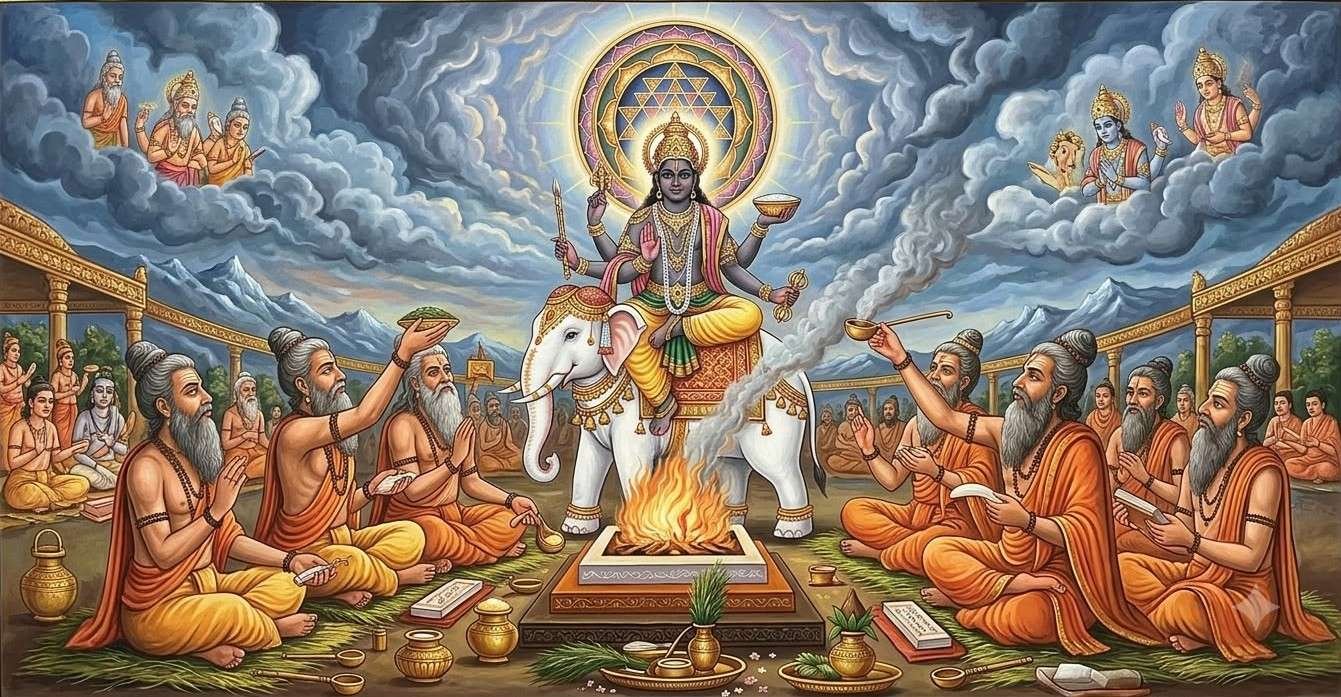
The seers repeatedly invite Indra to come near them, believing that divine presence transforms human effort into success. They ask what hymns should be sung to please the mighty deity, recognizing that sincere praise, disciplined chanting, and unwavering faith establish communion with the divine. Every Vedic hymn carries a sacred vibration, and its melodious recitation was regarded as a bridge between the mortal world and the celestial realm. Through these hymns, the worshipper aligns thought, speech, and action with cosmic harmony.
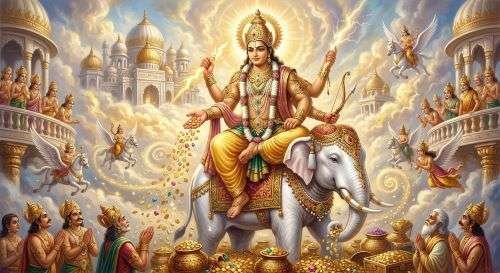
Indra is celebrated as the lord of valour, the protector of cattle, and the guardian of wealth. In the Vedic world, cattle symbolized not merely economic prosperity but nourishment, social stability, and sacred abundance. Therefore, the prayer that Indra should grant the wealth of enemies signifies the triumph of righteousness over injustice rather than the pursuit of greed. It is a symbolic appeal for the victory of virtue over forces that obstruct the welfare of society.
One of the greatest exploits attributed to Indra is the destruction of Vṛtra, the mighty serpent who imprisoned the life-giving waters. This celebrated episode carries profound symbolic meaning. Vṛtra represents obstruction, ignorance, fear, and stagnation, while Indra personifies the awakened consciousness that liberates the hidden streams of life. Every battle fought by Indra becomes an eternal reminder that darkness can never permanently imprison truth. Whenever obstacles arise in individual life or collective society, the spirit of Indra inspires humanity to overcome them with courage and determination.
The hymns portray Indra as the deity who willingly answers the call of those engaged in righteous struggle. Warriors invoke him before entering battle, not merely for physical victory but for moral strength and steadfastness. His presence assures them that courage guided by righteousness is superior to brute force. Thus, warfare in the Vedic vision is never glorified for destruction but is justified only when it protects justice and preserves social order.
The patrons who sponsor sacrifices and the priests who perform them are described as partners in sacred duty. They devote themselves to penance, often neglecting bodily comforts in pursuit of higher ideals. Such discipline demonstrates that spiritual achievement demands restraint, perseverance, and self-control. Their mutual cooperation reflects the Vedic understanding that divine grace descends where harmony exists among individuals dedicated to truth.
The desire for flourishing progeny occupies an honoured place in these prayers. The sages seek Indra’s blessings for strong, virtuous, and enlightened descendants who will continue the sacred traditions of wisdom and righteousness. In the Vedic worldview, children are not merely heirs to property but inheritors of dharma, entrusted with preserving moral values across generations.
The hymns further proclaim that humanity is scattered across every direction, yet people unite whenever strength, protection, and noble purpose are required. They assemble to perform yajñas, recognising that collective worship creates social unity and spiritual harmony. Those preparing for battle also gather together, understanding that courage is strengthened through cooperation. Thus, both sacrifice and social solidarity become complementary expressions of the same divine principle.
Every yajña culminates in sacred offerings made with clarified butter and sanctified Soma. Soma occupies a unique position in Vedic literature. Beyond its ritual significance, it symbolizes divine inspiration, inner bliss, and the nectar of spiritual consciousness. Indra is repeatedly described as delighting in Soma because it represents the awakening of higher awareness rather than mere physical enjoyment. The offering of Soma signifies the surrender of the purified mind to the divine.
The hymns also reveal a remarkable transition from external ritual to internal meditation. While sacrifices are carefully performed according to sacred injunctions, equal importance is given to those who enthrone Indra in the depths of their minds. Such devotees cultivate unwavering concentration, transforming ritual into contemplation. This subtle teaching illustrates that the highest sacrifice is ultimately performed within the human heart, where devotion, wisdom, and self-discipline merge into a single spiritual experience.
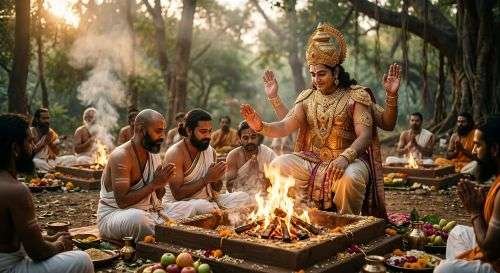
Those who offer oblations with sincerity receive not only material prosperity but also divine friendship. The Vedic seers understood that true wealth extends beyond possessions. Friendship with the divine brings courage during adversity, clarity amid confusion, and strength to fulfil one’s responsibilities. Indra becomes the unseen guardian who empowers individuals to overcome both external enemies and internal weaknesses.
During prolonged conflicts against powerful adversaries, Indra’s consort symbolically encourages him to partake of Soma and renew his strength before returning to battle. This imagery reminds humanity that even the greatest power requires constant renewal through spiritual nourishment. The invitation extended by the patron to Indra into the sacred precincts of the yajña signifies humanity’s willingness to make the divine an active participant in every noble endeavour.
An intriguing passage reflects commercial honesty and ethical conduct. A seller, believing he has received insufficient wealth, approaches the buyer seeking the remaining balance. The buyer confidently replies that he has already paid more than was required and refuses to alter the agreed terms. This dialogue reveals that integrity, fairness, and commitment to one’s word were regarded as sacred virtues. Even in trade and exchange, truthfulness was considered an expression of dharma. The mention of ten cows further illustrates the value of honest transactions in Vedic society, where promises carried moral authority beyond written agreements.
The concluding vision expands beyond ritual and prosperity into profound philosophical reflection. Human history advances and retreats through cycles of progress and decline. Civilisations rise and fall, fortunes are gained and lost, yet the journey of humanity never truly begins or ends. Life unfolds through countless dimensions, revealing that no individual experiences complete fulfilment through material success alone. Many possess abundant wealth but remain deprived of peace, while others with modest possessions attain deep contentment through wisdom and devotion. Human existence remains inherently multifaceted, always striving for completeness yet never fully attaining it through worldly achievements.
Recognising this eternal truth, the Vedic sages directed their entire intellectual and spiritual energy towards the Divine. They understood that perfection belongs solely to God, who alone embodies absolute truth, infinite wisdom, and complete purity. Every hymn, every yajña, every meditation, and every act of righteous living ultimately leads towards that supreme reality. The scientific temperament reflected in these hymns lies in their disciplined observation of nature, their understanding of universal order, and their insistence that inner transformation follows immutable laws of cause and effect. Spirituality and rational inquiry therefore stand united, guiding humanity towards a life where strength is tempered by wisdom, prosperity by righteousness, and action by unwavering truth.