
New Delhi: In a major overhaul of the Agnipath scheme, the government on Wednesday announced that Agniveers set to exit the military at the end of their four-year tenure will be given an additional two-year extension period and subsequently offered permanent recruitment, subject to meeting specific eligibility criteria and individual consent.
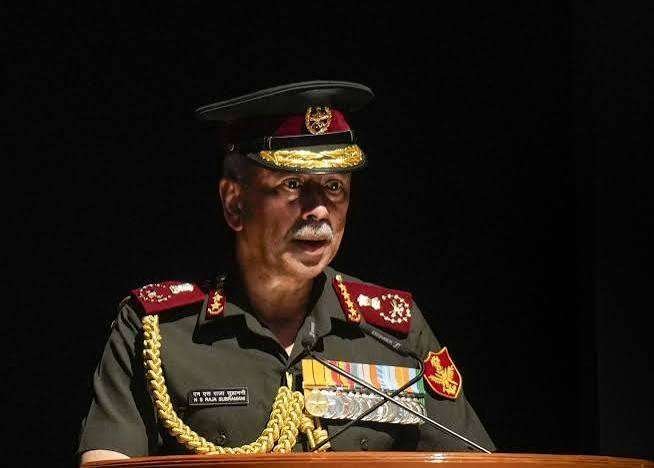
The decision was announced by Chief of Defence Staff Gen N S Raja Subramani, shortly after the Union Cabinet approved the changes in the military recruitment scheme as recommended by the three services.
Defence Minister Rajnath Singh said the move is part of “long-term structural reforms” of the defence forces aimed at creating “a younger, fitter, technologically equipped and future-ready military”. Under the Agnipath scheme rolled out in June, 2022, soldiers were recruited for a four-year term, with a provision to retaining only 25 per cent of them in regular services. The changes in the scheme were brought in just over three weeks before around 18,000 Agniveers were to exit the armed forces.
“Today is a very significant day for the Indian defence forces and for Agniveers. The Cabinet has created a pathway for all Agniveers to be absorbed into the defence forces,” the Chief of Defence Staff said, addressing a press conference alongside Information and Broadcasting Minister Ashwini Vaishnaw.
At present, over 300,000 soldiers recruited under the Agnipath scheme are operating in the military.
“As per existing provisions, 25 per cent of Agniveers are enrolled into the regular forces based on merit, while the remaining 75 per cent exit as disciplined and motivated youth,” Gen Subramani said.
“Under the new changes, this 75 per cent will be offered an additional engagement period of two years. Following the completion of this extended period, those who meet the selection criteria and wish to continue will be enrolled into the Armed Forces,” he said.
The Chief of Defence Staff (CDS) described the government’s decision as the opening of a “pathway” for all Agniveers, ensuring almost all of them are going to be absorbed into the defence forces.
“Today is a very significant day for the Indian defence forces and for our Agniveers,” he said.
Gen Subramani also asserted that the Agnipath scheme will continue and that the 25 per cent Agniveers to be recruited as regular soldiers at the end of the four-year period will be ahead in seniority as against those getting the two-year additional engagement period and their subsequent absorption.
“The Agnipath scheme will not be discontinued. It will continue. Secondly, this second engagement period of two years gives those Agniveers who have not been selected in the first four years a chance to serve longer,” he said.
In June 2022, the government rolled out the Agnipath recruitment scheme with an aim to bring down the age profile of the three services.
The scheme provides for recruiting youths between the age bracket of 17-and-half years and 21 for four years.
Several opposition parties including the Congress had targeted the government over the scheme wondering what will happen to 75 per cent of the Agniveers after their four-year tenure ends as only 25 per cent of the total recruits will be retained for 15 years.
Various central government agencies and departments had already announced plans to recruit former Agniveers.
When asked about the schemes announced by various central ministries and state governments for Agniveers exiting after their four-year tenure, Gen Subramani said those provisions would no longer be required.
Defence Minister Singh described the two-year extension period as the “Second Tour of Duty” for Agniveers and thanked Prime Minister Narendra Modi for the decision.
“This would also provide enrollment of all willing Agniveers as regular soldiers after the tenure of 4/6 years, who meet the selection criteria,” he said.
“This decision is continuation of long-term structural reforms of our defence forces, aimed at creating a younger, fitter, technologically equipped and future-ready military. It is not merely a recruitment policy; it is a way forward to prepare India’s military for the changing character of warfare,” he said on social media.