
The real malice behind a decade of administrative decay
Special Correspondent
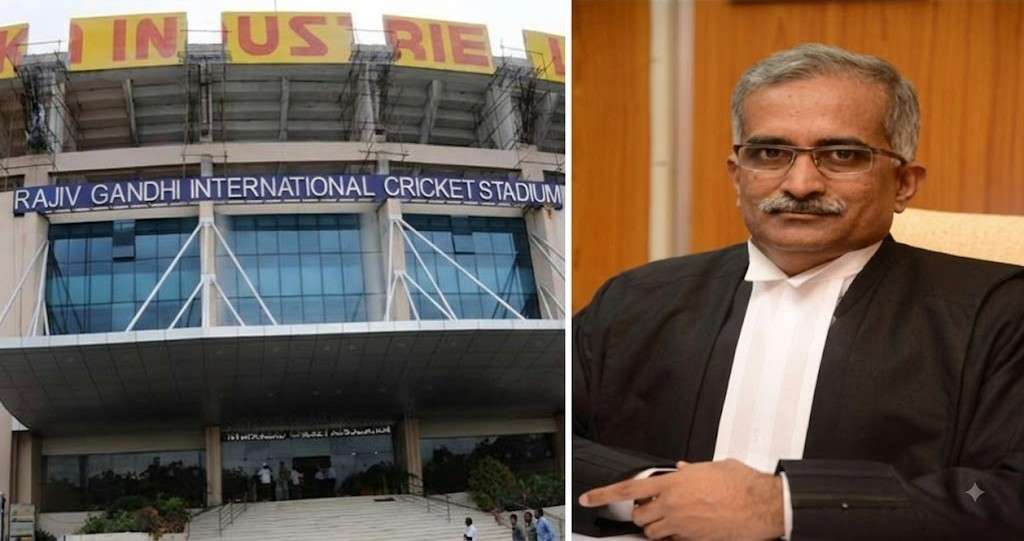
The Hyderabad Cricket Association (HCA) does not suffer from a shortage of cricketing talent, capable administrators or judicial intervention. What it has suffered from, for well over a decade, is something far more damaging: an entrenched class of self-serving office-bearers and club power-brokers who have repeatedly placed personal survival, electoral arithmetic and control over the association above the interests of cricket.
They are, quite simply, the real malice behind HCA’s administrative decay.
Instead of strengthening the institution, promoting cricket across Telangana and respecting democratic processes, a section of its office-bearers appears to have perfected the art of manipulation, confrontation and courtroom manoeuvring. Every disagreement becomes litigation, every adverse decision becomes a challenge, and every opportunity to retain influence becomes a political exercise. The result? An association perpetually embroiled in disputes, with cricket administration taking a back seat.
The latest episode involving 32 previously barred clubs and three HCA office-bearers exposes this duplicity in particularly disturbing detail.
Thrown out yesterday, partners today!
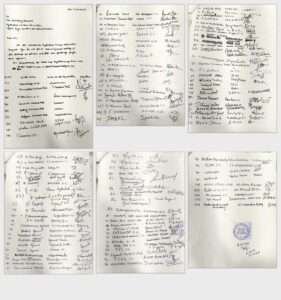
A handwritten representation dated June 17, 2026, carrying 106 entries, has sought a special general meeting to amend HCA’s rules. Curiously, it does not specify what amendments are being proposed. Why would members seek to rewrite the association’s constitution without placing the proposed changes on record? What is the urgency, and more importantly, who stands to benefit?
The signatures make the exercise even more questionable.
Among the signatories are 32 of the 57 clubs barred by former Supreme Court judge Justice L. Nageswara Rao in July 2023. Also signing are three individuals who were instrumental in keeping these very clubs out of the HCA’s July 2025 adjourned AGM: Acting President Sardar Daljeet Singh, Joint Secretary T. Basava Raju and Councillor Sunil Kumar Agarwal.
The 32, as named on the handwritten letter and on Justice Nageswara Rao’s 2023 list: Hyderabad Titans, Vijay Anand, Victoria, Hyderabad Panthers, Secunderabad Gymkhana, Mayura, Agarwal Seniors, Shri Shyam, Raju’s Cricket Club, Raju’s Cricket Academy, Raju’s Cricket Centre, Swastik, Shanti Associates, P. Krishnamurthy Memorial, Ensconce, Hyderabad Wanderers, Green Turf, St. Andrews, Kosaraju, Marredpally Colts, Dayanand, Abhinav Colts, Mahmood, Sunshine, Evergreen, Kishoresons, M.L. Jaisimha, International, Gunrock, Satya, Elegant and Saint Sai.
Eight from one family group. Three from one coach’s home. The very pattern the judge found in 2023, back on paper in 2026.
In 2025, these three office-bearers treated the 57 clubs as disqualified and excluded them from the AGM. In 2026, the same trio appears alongside 32 of those clubs, jointly seeking changes to HCA’s rules.
The flip-flop is older still. The council’s own June 2025 minutes record that the same 57 clubs “were permitted to participate” in the 2024 AGM. In: 2024. Out: 2025. In again: 2026. The clubs did not change. Only the convenience did.
What changed? Did the legal position change? Were the disqualifications withdrawn? Were the judicial directions complied with? Or have political and electoral calculations suddenly made yesterday’s disqualified clubs today’s convenient allies?
The silence is deafening.
A judicial warning conveniently forgotten
Justice Nageswara Rao’s July 31, 2023, order was not an inconsequential administrative observation. It exposed the dangerous concentration of voting power among interconnected clubs and families. His findings described a cartel-like arrangement in which a few individuals controlled multiple clubs to influence HCA elections.
As many as 57 clubs were barred for a specified period, with directions that their office-bearers could neither vote nor contest for one term or three years, whichever was longer. The clubs were also directed to restructure their committees immediately, ensuring that no individual or family exercised control over multiple clubs.
The warning was unambiguous. Non-compliance could invite severe action, including expulsion.
Yet, three years later, 32 of these clubs have surfaced together on a representation seeking constitutional amendments. The striking feature is that several names and family-linked club structures identified in the 2023 proceedings continue to raise questions about whether the original directions were implemented at all.
And the bar was still running. The letter is dated 17 June 2026, inside the three years. It was forwarded on 18 October 2026, before the 2023 council’s term ended on 21 October.
Were the committees genuinely reconstituted? Were the multiple-club connections dismantled? Who verified compliance? These are not peripheral questions. They go to the heart of HCA’s electoral integrity.
Three years of institutional embarrassment
The outgoing Apex Council’s record hardly inspires confidence.
The July 2025 arrests of HCA’s President and Treasurer, the controversial adjourned AGM conducted on three days’ notice, the exclusion of 57 clubs and subsequent judicial intervention have left the association deeply damaged.
In April 2026, the Telangana High Court expressed concern over the council’s non-cooperative approach and placed HCA under the supervision of Justice P. Naveen Rao’s Supervisory Committee (SMC). Council decisions were made subject to the committee’s approval. Contempt notices followed over alleged violations of court directions.
The High Court also directed a CID Special Investigation Team to examine HCA’s administration and finances. The proceedings recorded eight criminal cases involving office-bearers and an Enforcement Directorate money-laundering investigation.
An election for the President, directed by the High Court in June 2026, did not materialise. Following the expiry of the council’s tenure in October, the High Court permitted the existing members to continue only in a stop-gap capacity until club membership verification and fresh elections.
This is hardly a record to celebrate. It is a record that demands accountability.
The latest manoeuvre raises bigger questions
The three office-bearers’ participation in the latest representation raises questions about consistency and propriety. More curious is the Acting President signing as a member of Khalsa Cricket Club and subsequently forwarding the representation in his official capacity to the SMC, seeking a special meeting on ten days’ notice.
The same individual effectively appears on both sides of the request.
Why was the proposed agenda not disclosed? Why was the membership verification process not allowed to proceed first? Why the sudden enthusiasm for constitutional amendments when the association is under judicial supervision?
Why a members’ letter, and not a request to the SMC? Because under HCA’s rules, if a members’ letter is not acted on in thirty days, the signatories can call the meeting themselves. If the referee will not wave you through, play without the referee.
HCA’s rules determine who votes, who contests, eligibility conditions, cooling-off periods and the circumstances under which clubs can be admitted or removed. Any attempt to change these provisions without transparency could have consequences extending well beyond the present administration.
The timing, therefore, deserves serious scrutiny.
A WARNING TO THE OTHER 74
Not every name on the letter is a barred club. But every one of the 106 names is now on record, sitting beside 32 clubs barred for multiple-club control.
A signature is not a formality. It lends a club’s name to a move whose purpose nobody has been told. And the scrutiny will not stop at the 57. Justice Nageswara Rao asked HCA to examine other clubs “similarly placed”. That enquiry was never held. With a Court-ordered membership check now due, it may finally be.
So why should the SMC not ask every signatory two plain questions: Did you know whom you were signing with? And did you know what you were signing for?
Clubs that signed in good faith can still write to HCA and withdraw. Those who stay on the letter may find themselves counted with the 32.
Enough of this self-serving circus!
For too long, HCA has been held hostage by individuals who seem to believe that occupying an office entitles them to exercise permanent control. The association is not anybody’s private property, nor is a club membership a hereditary entitlement to electoral influence.
The real tragedy is that generations of Hyderabad cricketers have built a proud sporting institution, only to see its administration repeatedly dragged into controversy by those entrusted with protecting it.
The SMC must not allow another round of electoral engineering to derail institutional reform. Every club must first undergo the prescribed verification. Compliance with Justice Nageswara Rao’s directions must be established. Proposed amendments, if any, must be circulated transparently, examined legally and subjected to proper scrutiny before any meeting is convened.
The three office-bearers must also explain their dramatic reversal of position on the very clubs they once excluded.
HCA needs administrators, not habitual litigants; cricket promoters, not electoral brokers; and custodians of the institution, not self-appointed gatekeepers.
The disease is not merely bad administration. It is the continuing influence of those who have made manipulation an administrative tool. Until this nexus of convenience, vested interests and questionable power politics is dismantled, HCA’s promised revival will remain another courtroom aspiration rather than a reality on the cricket field.