


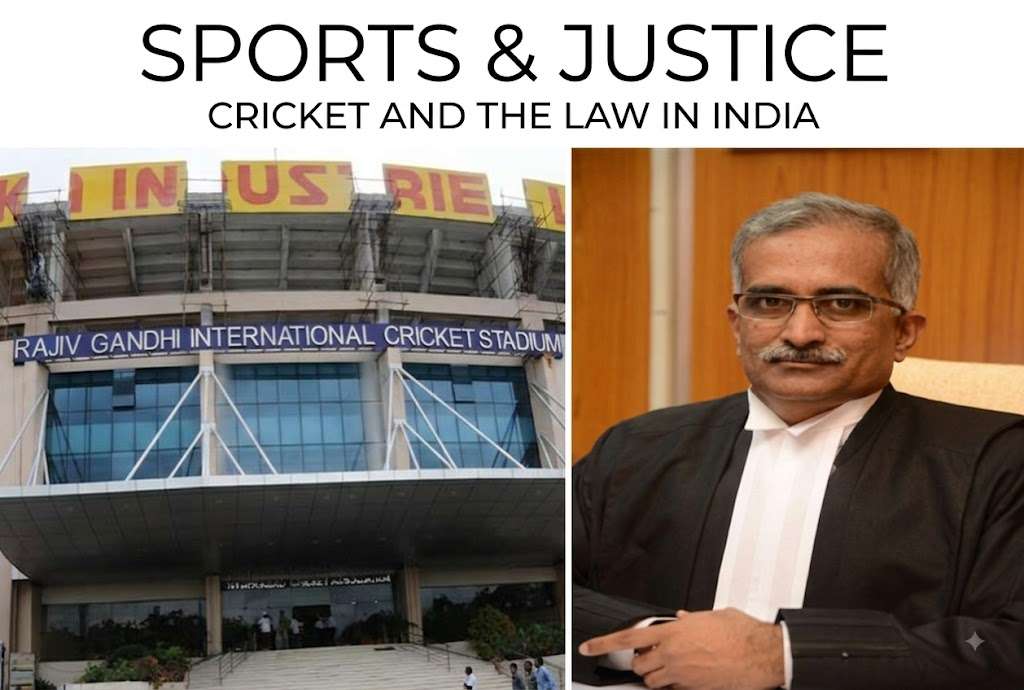
Hyderabad has everything a cricket powerhouse needs: money, an IPL home, a booming city and an enormous pool of players. So why do its teams repeatedly fall short? The answer lies not in a shortage of talent, but in a selection system that appears to reward influence over performance.
Special Correspondent
Few Indian cities are as naturally equipped to become cricketing powerhouses as Hyderabad. A rapidly expanding metropolis, fuelled by a thriving IT industry that has attracted talent and families from across the country, it has the resources, infrastructure and sporting culture to produce cricketers of the highest calibre. It is also home to an IPL franchise, a commercially successful film industry and a cricketing tradition that stretches from neighbourhood playgrounds to competitive club leagues.
This is, after all, the city that has produced some of Indian cricket’s finest names. The appetite for the game remains enormous, and the pool of aspiring cricketers is anything but small.
Yet, season after season, Hyderabad’s teams struggle to translate this abundance into consistent results. The problem cuts across age groups, formats and even women’s cricket. Occasional successes provide relief, but they have done little to conceal a worrying pattern of underachievement.
The uncomfortable question is unavoidable: How can a city so rich in cricketing talent remain so poor in results?
The answer, increasingly, appears to lie in the way cricket is administered, players are identified and teams are selected.
The Scorecard
The Hyderabad Cricket Association’s (HCA) own records for the 2025–26 season offer a revealing picture. There were individual achievements and a few encouraging performances, but the overall record was far from reassuring.
Tournament Record Outcome
Vinoo Mankad Trophy (Men’s U-19 One-Day) 7 wins, 1 loss Champions
Cooch Behar Trophy (Men’s U-19 Multi-Day) 1 win, 3 losses Struggled after wholesale changes
Men’s U-23 State A Trophy (One-Day) 1 win, 5 losses Bottom of the group
Col. C.K. Nayudu Trophy (Men’s U-23 Multi-Day) 3 wins, 2 losses Fourth in the group
Ranji Trophy 1 win, 2 losses, 4 draws —
Vijay Hazare Trophy 2 wins, 5 losses Sixth in the group
Vijay Merchant Trophy (U-16) 1 win, 1 loss, 3 draws —
South Zone U-14 1 win, 4 losses, Fifth
Senior Women’s T20 Trophy 1 win, 6 losses Eighth; faced demotion to the Plate group
Senior Women’s One-Day Trophy 2 wins, 5 losses —
There were bright spots, notably the Vinoo Mankad Trophy triumph and a strong Syed Mushtaq Ali T20 campaign. But these were islands of success in an otherwise disappointing season. One championship cannot compensate for a system that struggles to remain competitive across multiple age groups.
The New Season: Mixed Signals
The 2026–27 season has offered some encouragement, but also fresh reasons for concern.
Team Performance so far
Ranji Trophy: Two emphatic victories: an innings and 40 runs against Tripura and a 267-run win over Andhra. Tanay Thyagarajan claimed 11 wickets in the match against Andhra.
Vinoo Mankad Trophy: (Men’s U-19) Eliminated in the quarter-finals, a year after winning the championship.
Col. C.K. Nayudu Trophy (Men’s U-23): Lost to Uttar Pradesh despite taking a 110-run first-innings lead. UP scored 168 and 303; Hyderabad replied with 278 before failing to chase 194.
Women’s U-19 T20 Trophy: Victories against Assam and Madhya Pradesh, but the larger question of a sustainable development pathway remains.
Senior Women’s T20 Trophy: Three matches, three defeats: against Uttar Pradesh, Mumbai (by eight wickets) and Delhi (by 108 runs). Delhi’s 262/6 was the highest total in women’s domestic T20 cricket.
The Ranji team’s performances deserve appreciation. However, much of its strength comes from experienced players. Its success is welcome, but it cannot be taken as proof that the development pipeline beneath the senior side is functioning effectively.
That pipeline is precisely where Hyderabad’s cricketing establishment needs to look more closely.
The root of the problem
Speak to people familiar with Hyderabad cricket and a common set of concerns emerges. They are not merely about individual defeats or disappointing tournaments. They point to a structural malaise that has accumulated over several years.
- A decade of administrative distractions
For far too long, HCA has been consumed by elections, internal factions, legal battles and competing power centres. Successive administrations have spent considerable energy fighting over control rather than building a sustainable cricketing structure. Committees and administrators have come and gone, but the fundamental problems have persisted.
- Selectors without accountability
Selection committees are supposed to identify the best available talent, not serve administrative or electoral interests. Yet appointments have repeatedly raised questions about whether cricketing credentials and vision are the overriding considerations.
Where are the measurable targets? Where are the performance reviews? Who answers for consistently poor results? A selector who cannot be held accountable for the quality of teams selected is unlikely to bring about meaningful change.
- Private academies fill the vacuum
Hyderabad has no shortage of private cricket academies. Indeed, many have done commendable work in identifying and training young players. But they have also filled a vacuum left by the absence of a functioning HCA academy.
A court-appointed administrator had found that the HCA academy was effectively “literally closed from 2017”. That is a damning indictment of an association entrusted with developing the next generation.
The danger is that private interests can begin to exert disproportionate influence over the selection process when the association itself fails to provide a credible development structure.
- The protected few
Perhaps the most damaging perception within the cricketing fraternity is that a select group of players, often backed by influential academies or parents, enjoy a degree of protection.
Once they enter the age-group system, they appear to move from U-14 to U-16, U-19 and U-23 almost automatically. Their places remain secure despite indifferent performances, while players in better form struggle to get opportunities.
If this perception is allowed to take root, it destroys the very foundation of competitive sport: the belief that everyone gets a fair chance.

The ‘Talent-coated’ cricketers
This is perhaps the most insidious aspect of Hyderabad’s selection culture.
A young cricketer is identified as exceptionally talented at U-14. The label sticks. From then on, he is treated as a future star rather than a player who must continually prove himself.
His failures are explained away as temporary setbacks. His place is rarely questioned. Even an assessment of his performances can become contentious.
In the process, the label of talent becomes a protective shield.
The consequences are damaging on both sides. Players who are assured of their places lose the competitive urgency to improve. Meanwhile, genuinely deserving cricketers, scoring runs and taking wickets in club leagues and TG20 competitions, are left cooling their heels.
Some eventually lose motivation. Others simply walk away from the game.
Hyderabad, therefore, risks losing not just the talent it fails to recognise, but also the talent it has already selected and failed to develop.
U-23: Where the system exposed
The men’s U-23 team deserves particular scrutiny. This is a crucial transition stage, where promising youngsters are expected to demonstrate that they are ready for senior cricket.
Instead, Hyderabad’s performances in the one-day format have been deeply disappointing. Last season, the side finished at the bottom of its group with just one victory in six matches, narrowly avoiding relegation to the Plate group.
The current season has offered little reassurance.
The defeat against Uttar Pradesh is particularly difficult to explain away. Hyderabad dismissed UP for 168 and secured a substantial first-innings lead of 110 runs. Yet, after UP recovered with 303 in its second innings, Hyderabad failed to chase a target of 194.
A team that takes such a commanding first-innings advantage should not surrender the match without a fight.
These are not merely lost matches. They raise questions about temperament, match awareness, physical preparedness and team composition.
There are concerns that players who are not sufficiently fit are being selected, while the principle of horses for courses appears to have taken a back seat. Selection must take into account the format, playing conditions, opposition and the specific skills required. Reputation alone cannot win matches.
There have, admittedly, been exceptions. Captain Aman Rao, all-rounder Pranav Varma and fast bowler Nishant have delivered encouraging performances. But beyond these players, several positions merit a fresh assessment.
The message should be simple: nobody owns a place in the team. Those who fail to perform must return to the leagues, regain form and earn their way back.

Women’s Cricket: A pathway that does not exist
If the men’s selection process raises questions, the women’s cricket structure presents an even bigger challenge.
There is no regular women’s league offering a consistent platform to assess players. Selection announcements often lack visible explanations, leaving aspiring cricketers and their families wondering what exactly they must do to earn a place.
Last season, the senior women’s team managed just one victory in seven T20 matches and faced the prospect of demotion. This season has begun even worse, with three successive defeats, including a humiliating 108-run loss to Delhi.
The captaincy has also become a subject of discussion. The captain was brought in from outside Telangana, with members alleging that the appointment was made at the instance of an influential member.
Whatever the circumstances surrounding the appointment, the team has yet to register a victory under her leadership this season. This is not about questioning an individual’s ability. It is about asking why local players, who should have a fair opportunity to establish themselves, are being denied a transparent pathway to leadership.
Why was an experienced local performer such as Vanka Pooja not seriously considered for the captaincy? Members deserve an explanation.
The irony is that Hyderabad has players capable of delivering at the highest level. Gongadi Trisha, a member of India’s U-19 Women’s World Cup-winning side, top-scored with an impressive 80 off 52 balls against Delhi. Vanka Pooja, one of the senior side’s consistent performers, returned figures of 4 for 32 in the same match, even as the other bowlers struggled.
These performances underline the availability of talent. What remains missing is a system that identifies and harnesses it consistently.
Talented girls cannot be expected to thrive on occasional opportunities and selection announcements. They need regular competition, professional coaching and a transparent route into the State team.
Expectations raised, confidence eroded
The appointment of a high-profile former international cricketer to oversee cricket operations, supported by a cricket operations committee, had initially generated considerable optimism.
For a cricket association that has struggled with administrative turbulence, this appeared to be an opportunity to bring professional expertise and discipline into the system.
Unfortunately, the early experience has not matched those expectations.
Decisions appear to change with alarming frequency. Squads are announced and subsequently altered. Roles are assigned and withdrawn. The senior women’s coach was removed midway following complaints and later reinstated, without any publicly explained rationale for either decision.
Such uncertainty does little to inspire confidence among players and support staff. Cricket requires consistency, clarity and accountability. Selection and coaching decisions cannot become revolving doors.
Equally troubling are concerns about the selection-match structure. Instead of concentrating on a smaller pool of the most deserving performers, selection matches have reportedly involved an excessive number of teams.
At the U-19 level, as many as 12 teams were fielded. Such an approach risks diluting the quality of competition. The best performers get fewer opportunities to compete directly against one another, while the selection process becomes unnecessarily cumbersome.
More seriously, members have alleged that the expanded process created room for players who might otherwise not have qualified on merit.
One particularly disturbing allegation concerns the son of an influential parent, who is also a club secretary. Members have alleged that pressure was exerted on players and umpires, including threats, to secure his son’s selection.
These are serious allegations and must not be treated as established facts without an independent examination. But neither should they be brushed aside. If there is substance to them, the matter calls for an impartial inquiry, protection for anyone facing intimidation and appropriate action against those found responsible.
Cricket selection cannot become a family privilege, an extension of club politics or a favour dispensed by influential individuals.
What needs to change?
Hyderabad does not need another committee issuing lofty assurances. It needs a selection and development framework that can be measured, monitored, and held accountable.
Seven steps could make a meaningful difference:
- Make league performance decisive. Club leagues and TG20 performances must form the primary basis for selection. Reputation and recommendations should not outweigh runs scored, wickets taken and consistency demonstrated on the field.
- Rationalise selection matches. Instead of unnecessarily large selection pools, restrict the final contests to two or three teams comprising the most deserving performers. Quality of competition must take precedence over quantity.
- Make selectors accountable. Give selectors fixed tenures, clearly defined performance targets and mandatory reviews after every tournament. Those with conflicts of interest must not be allowed to influence selection.
- Reset age-group selections every season. No player should enjoy an automatic place because of past performances or an established reputation. Every squad must be assessed afresh on current form, fitness and suitability for the format.
- Revive a proper HCA academy. A year-round State academy, with qualified coaches, structured fitness programmes and scientific monitoring, is essential. The responsibility for nurturing Telangana’s talent cannot be outsourced indefinitely to private academies.
- Establish a proper women’s league. Regular competitive cricket is indispensable to identifying talent and assessing performance. Local women cricketers must have a transparent pathway into representative teams.
- Create an independent grievance mechanism. Players, parents, coaches and umpires must have a safe channel to report intimidation, favouritism and undue influence. Complaints must be examined impartially, without fear of retaliation.
The talent is waiting
Hyderabad has no shortage of aspiring cricketers. They are in its clubs, colleges, districts, academies and neighbourhood grounds. The city has the financial resources, sporting tradition and public interest to build a formidable cricketing structure.
What it lacks is a system that recognises merit without fear or favour.
The HCA must understand that winning a few tournaments is not the ultimate measure of success. Its responsibility is to create a sustainable cricketing ecosystem in which the best players are identified, developed and given opportunities, irrespective of their background or connections.
A player should be selected because of his runs, wickets, fitness and match-winning ability — not because of whose recommendation he carries. The same principle must apply to women’s cricket.
Talent should earn selection, performance should secure a place, and accountability should govern the selectors.
Until that simple philosophy becomes the foundation of Hyderabad cricket, the city will continue to produce promising cricketers without producing the results it is capable of achieving.
Rich in talent. Poor in results. And, increasingly, running short of excuses.


An excellent article that covers the length and breadth of Hyderabad cricket and talks both about positive and negatives and also solution driven. all age group categories of men and women cricket last performance and current standing are details oriented and give the right direction
The Hyderabad Cricket Association (HCA) women’s cricket division is facing a critical turning point. While recent heavy defeats expose a lack of transparency and systemic continuity in governance, the true strength of Hyderabad cricket remains its exceptional local talent pool. Individual brilliance cannot carry the state team alone; the association must build a transparent system and a strong senior player culture to convert individual excellence into collective victories and successfully develop athletes for the Indian national team.
The current squad features Top class performers who form the frontline spine of the team:
• Gongadi Trisha & Pranavi Chandra: Trisha’s elite boundary-hitting—headlined by her recent brilliant 80 off 52 balls against Delhi—proves her world-class caliber. Alongside her, Pranavi Chandra provides the essential middle-order stability and tactical depth required to anchor high-pressure matches.
• Vanka Pooja & Kranthi Reddy: These seasoned local stars are the defensive backbone of the squad. Pooja’s outstanding figures of 4 for 32 against Delhi highlight her ability to deliver under immense pressure, while Kranthi Reddy provides the reliable domestic depth needed to sustain bowling pressure.
• S Yashasri: As the state’s premier aggressive fast bowler, Yashasri injects raw pace and a fierce competitive drive capable of dismantling top-order oppositions.
• Mamtha Madiwala: A specialized wicketkeeper-batsman who provides essential field presence behind the stumps and crucial batting resilience in the lower-middle order.
However, to reverse the team’s current losing streak and ensure a major boost for upcoming years, the HCA must immediately bring back proven domestic match-winners Trisha Poojitha and Kota Anitha.
Excluding these two senior icons severely damages squad depth. Trisha Poojitha brings a proven, top-tier run-scoring track record across multiple domestic seasons and WPL environments. Alongside her, Kota Anitha provides the precise all-round utility and lower-middle-order balance needed to halt sudden batting collapses.
Re-integrating Poojitha and Anitha is vital to establishing a healthy senior player culture. A robust senior culture is the foundation of a successful state team for two reasons:
• Nurturing Future International Players: A strong senior player culture creates a stable, high-performance environment that allows raw talents to transition smoothly into mature cricketers. It is this exact ecosystem that refines local players, prepares them for intense pressure, and creates a clear pathway to the Indian national team.
• Shielding Developing Youth: Forcing exceptional junior prospects to carry the entire competitive burden of a struggling senior side risks premature burnout. Experienced players absorb the high-pressure scenarios on the field, giving younger talent the breathing room to grow naturally.
A stable future cannot be built through revolving-door coaching changes and bloated selection matches. The HCA must act now to establish a regular women’s domestic league, publish clear selection criteria, and confidently center the senior team around this unified local core of current stars and returning veterans to build a pipeline for national selection.