Cricket has always possessed a unique charm. Unlike many sports that demand specialised facilities, expensive equipment or carefully prepared playing surfaces, cricket can find a home almost anywhere — on an open ground, a street, a terrace or even a backyard. A few friends, an improvised bat and a ball are often enough to get a game going. Age is rarely a barrier, and the rules can be adapted to suit the space, the players and the occasion. This remarkable flexibility has helped cricket become more than a sport in Bharat; it has become a shared passion across generations.
Over the decades, Bharat has developed its own cricketing identity, evolving from a country eager to compete internationally into one of the game’s leading powers. The achievements of its celebrated international players are well documented. Yet, behind this journey lies another story — that of exceptionally gifted cricketers who served their state teams with distinction but never got the opportunity to wear the India cap.
Their stories deserve to be remembered, too.
Eddie Aibara, Paddy Shivalkar, Rajinder Goel, Ramnarayan, Noshir Mehta, Vijay Kumar and Amol Muzumdar are among the names that come to mind. Each belongs to a different chapter of Indian domestic cricket, but they share a common thread: talent and performances that earned recognition within the domestic circuit without culminating in the ultimate reward of representing the country in Test cricket.

Rajinder Goel, the celebrated Haryana left-arm spinner, accumulated a remarkable number of wickets in domestic cricket but never played a Test for India. Mumbai’s Paddy Shivalkar, another outstanding left-arm spinner, similarly remained outside the national Test team despite his reputation as a formidable bowler. Amol Muzumdar, a prolific run-scorer in domestic cricket, also never made his international debut for India.
Their careers remind us that a player’s contribution cannot be measured solely by international appearances. Domestic cricket demands consistency, resilience and a willingness to perform season after season, often without the glamour or recognition enjoyed by international stars. These cricketers strengthened their respective teams, challenged opponents and gave spectators countless moments to cherish.
The cricket of earlier generations also had a character of its own. Modern cricket places considerable emphasis on athletic conditioning, specialised training, scientific analysis and carefully managed workloads. Those are important advances. But the older generation often acquired its fitness through the rhythms of everyday life — walking long distances, travelling in crowded buses and trains, and spending hours playing in the open. Physical endurance was frequently built outside the gym, even if the players and their methods differed considerably from today’s professionals.
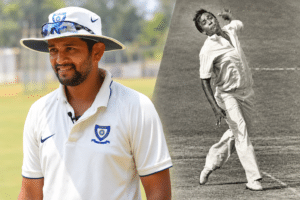
On the field, brilliance could emerge in an instant. A seemingly impossible stop, a spectacular catch or a powerful six struck with a well-used bat could electrify a crowd. The equipment might have been simpler, the facilities less sophisticated and the support systems limited, but the passion was unmistakable. Every match offered its own drama, and every player brought a distinctive personality to the contest.
It would be unfair to romanticise the past or suggest that today’s cricketers work any less hard. The modern game is faster, more demanding and increasingly competitive. But remembering earlier generations allows us to appreciate how much of Indian cricket’s foundation was laid by players who performed largely away from the national spotlight.
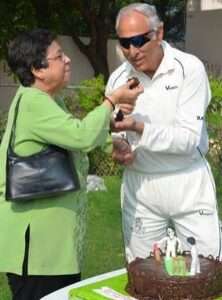
Not everyone who contributes to a country’s cricketing journey will receive an India cap. Some will remain domestic legends, admired by teammates, respected by opponents and remembered by loyal spectators. Their achievements may not always make the headlines, but they form an essential part of the game’s history.
The next time we celebrate an Indian cricketing triumph, let us remember those who helped build the journey without sharing its ultimate stage. They may not have worn the national blazer, but they wore their state colours with pride and served the game with distinction.
Cricket owes its greatness not only to those who represented India, but also to those whose unfulfilled international dreams never diminished their contribution to the game.