



Shubh Navaratri Day – 7
॥ Om Devi Kalaratryai Namah ॥
॥ Ekaveni Japakarnapura Nagna Kharasthita।
Lamboshthi Karnikakarni Tailabhyakta Sharirini॥
Vamapadollasalloha Latakantakabhushana।
Vardhana Murdhadhwaja Krishna Kalaratrirbhayankari ॥
Goddess Kalratri is the seventh form of Goddess Durga, worshipped on the seventh day of Sharadiya Navaratri. Her complexion is described as dark as the night, with dishevelled hair and three eyes that radiate divine light. Flames are said to emerge from her nostrils, and she wears a garland of skulls around her neck. Although her appearance is fierce, she is considered highly auspicious and is also known as Shubhankari, the benevolent goddess who blesses devotees with courage, protection, and freedom from fear. Her devotees believe that her blessings protect them from dangers associated with fire, water, animals, enemies, and darkness.
Goddess Kalratri represents the power that destroys evil and protects the righteous. She is traditionally depicted riding a donkey and is associated with the destruction of negative forces. Her devotees worship her to overcome fear, remove obstacles and seek spiritual strength.
Kalratri is regarded as one of the fierce manifestations of the Divine Mother, associated with forms such as Kali, Mahakali, Bhadrakali, Bhairavi, Mrityu, Rudrani, Chamunda, Chandi and Durga.
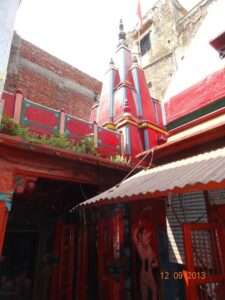
The Kalratri Devi Temple is dedicated to this fierce yet benevolent manifestation of Goddess Durga in the sacred city of Varanasi. Devotees visit the temple to offer prayers and seek the goddess’s blessings, particularly during Navaratri.
The worship of Goddess Kalratri is rooted in ancient Hindu religious traditions. Her legends are associated with the battles of the Divine Mother against powerful demons and symbolise the triumph of good over evil.
According to a traditional account, the demons Shumbha and Nishumbha invaded Devaloka and defeated the gods. Indra, the ruler of the gods, and the other deities went to the Himalayas and prayed to Goddess Parvati for help in regaining their heavenly abode.
In response to their prayers, the Divine Mother manifested a fierce form known as Chandi or Ambika to defeat the demons. When the demon generals Chanda and Munda approached to fight her, a dark and terrifying goddess emerged from her power. This goddess defeated the two demons and came to be known as Chamunda.
The battle continued when the demon Raktabija arrived. He possessed a special boon: whenever a drop of his blood fell to the ground, another demon identical to him would emerge. During the battle, his spilled blood produced numerous copies, making him extremely difficult to defeat. The fierce goddess drank his blood before it could touch the ground, preventing further demons from appearing. This enabled the Divine Mother to overcome Raktabija and continue the battle against Shumbha, Nishumbha, and their forces.
Another legend describes Goddess Chamunda as the creator of Devi Kalratri. Riding a powerful donkey, Kalratri pursued the demons Chanda and Munda, captured them, and brought them before Kali, after which the demons were killed by Goddess Chamunda.
Yet another traditional account tells of a demon named Durgasur who attempted to attack Mount Kailash, the abode of Goddess Parvati, in the absence of Lord Shiva. Learning of his intentions, Parvati created Kalratri and sent her to warn Durgasur against attacking Kailash. When his guards attempted to capture her, Kalratri assumed a gigantic form and delivered the warning. Durgasur later attacked Kailash, where Parvati fought and defeated him, becoming renowned as Durga, the invincible goddess. In this account, Kalratri serves as the divine messenger who warns Durgasur of the consequences of his actions.
These legends highlight the fierce protective power of the Divine Mother and her role in destroying evil, protecting the gods and restoring righteousness.
The seventh day of Sharadiya Navaratri is dedicated to Goddess Kalratri. Devotees perform special prayers and offer flowers and other traditional offerings, seeking courage, protection and freedom from fear. Temples dedicated to the goddess witness special worship during Navaratri.

