



Shubh Navaratri Day 5
॥ Om Devi Skandamatayai Namah ॥
॥ Simhasanagata Nityam Padmanchita Karadvaya।
Shubhadastu Sada Devi Skandamata Yashasvini ॥
Skanda Mata Temple is located in Jaitpura, Varanasi, Uttar Pradesh. This sacred shrine is associated with the worship of Maa Skandamata, the fifth form of Goddess Durga, and holds special significance during Navaratri. Devotees visit this temple as part of the traditional worship of the nine forms of the Divine Mother in Kashi.
Maa Skandamata is the divine mother of Lord Skanda, also known as Kartikeya. She is traditionally depicted with four arms and three eyes. Her upper hands hold lotus flowers, while one of her lower hands is raised in a gesture of blessing. Her son Skanda sits in her lap, and she is also depicted riding a lion, symbolising courage, strength and the victory of good over evil.
As she is associated with a lotus seat, she is also known as Padmasana Devi. Her form represents maternal love, protection and the strength of the Divine Mother. Devotees believe that worshipping her brings peace, prosperity, happiness and spiritual wisdom.
The temple has a simple structure characteristic of the old neighbourhoods of Varanasi. One of its distinctive features is the arrangement of shrines on two levels. According to local temple traditions, Maa Skandamata is worshipped on the upper floor, while the ground-level shrine is associated with Goddess Vageshwari, also known as Ashwarooda.
The precise date of the temple’s construction and its early history are not clearly documented. Its religious importance is connected with the traditional worship of the nine forms of Goddess Durga in Kashi. During Navaratri, devotees visit the temple as part of the Navadurga Yatra, a pilgrimage honouring the nine manifestations of the Divine Mother.
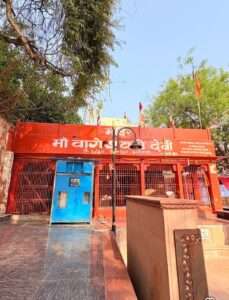
The temple is also associated with Goddess Vageshwari, whose shrine is traditionally kept behind closed doors for most of the year and opened for worship on two designated days, according to local accounts.
According to sacred scriptures, the demon Tarakasura performed severe penance to please Lord Brahma. When Brahma appeared before him and offered him a boon, Tarakasura asked for immortality. Brahma explained that no being could remain immortal. The demon then cleverly requested that he could be killed only by a son of Lord Shiva, believing that Shiva would never marry and have a child.
With this boon, Tarakasura considered himself invincible and began tormenting the gods and sages. His growing power threatened the peace of the celestial worlds. The gods realised that only a son of Lord Shiva and Goddess Parvati could defeat him, and they prayed for divine intervention.
Lord Skanda, also known as Kartikeya, was born to Shiva and Parvati. He grew into a mighty warrior and was appointed commander of the divine army. Leading the gods into battle, Skanda defeated Tarakasura and restored peace to the worlds.
As the mother of Lord Skanda, Maa Skandamata represents the extraordinary power of motherhood. Her form teaches that a mother’s love is not merely tender and nurturing; it is also courageous, protective and capable of inspiring strength in the face of adversity. Devotees worship her for the well-being of their children, family harmony and the courage to overcome difficulties.
The temple’s association with Goddess Vageshwari adds another distinctive element to its religious tradition. The name Ashwarooda comes from the Sanskrit words “Ashwa”, meaning horse, and “Arooda”, meaning mounted or seated upon. Goddess Vageshwari is represented riding a horse named Aparajita, meaning unconquerable. In certain Shakta traditions, she is associated with the divine forces of Sri Rajarajeshwari and the cavalry of her celestial army.
Sharad Navaratri is the most important festival associated with Maa Skandamata. On the fifth day, devotees visit the temple to offer prayers, flowers and fruits to the Goddess. The shrine is an important destination for pilgrims undertaking the traditional Navadurga Yatra of Varanasi.
Chaitra Navaratri is another significant period of worship. During both Navaratri celebrations, devotees participate in prayers and aarti, seeking the blessings of the Divine Mother for health, happiness, prosperity and protection.

