MS Shanker
Bharat is witnessing a disturbing new trend in democratic politics. An Opposition that has repeatedly failed to convince the electorate at the ballot box appears increasingly tempted to take its political battles to the streets, targeting Constitutional institutions and attempting to create an atmosphere of suspicion, confrontation and distrust. This is not merely a contest between political parties. It raises a larger question: how long can a democracy tolerate the substitution of parliamentary debate with street pressure?
The people of Bharat must be cautious.
There is nothing wrong with questioning the Election Commission, demanding accountability or challenging a government. Indeed, a strong Opposition is indispensable to a healthy democracy. But there is a constitutional method for doing so. Elected representatives have the privilege—and the responsibility—to raise every legitimate grievance in Parliament, participate in debates, seek judicial remedies where appropriate, and ultimately return to the people with their arguments.
What they cannot do is behave as though electoral defeat gives them a mandate to paralyse institutions or manufacture anarchy on the streets.
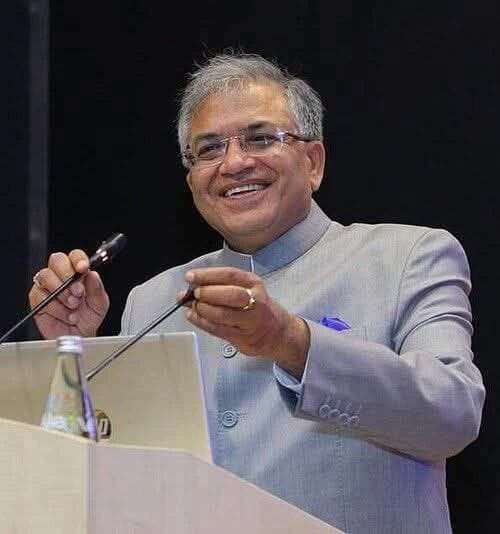
The recent campaign against Chief Election Commissioner Gyanesh Kumar illustrates this troubling tendency. Allegations concerning electoral processes deserve scrutiny, but scrutiny cannot begin and end with sensational newspaper reports. Nor can an allegation automatically become a fact merely because it is repeated loudly enough on television, social media or the streets.
The Supreme Court’s recent handling of the matter is instructive. Rather than accepting the Opposition’s narrative at face value, the three-member Bench headed by Chief Justice Surya Kant sought responses from the Election Commission and the Centre and allowed the judicial process to take its course. The court also made it clear that it could not proceed merely on the basis of a newspaper report. That is precisely how constitutional democracy is expected to function: evidence first, adjudication next and political conclusions thereafter.
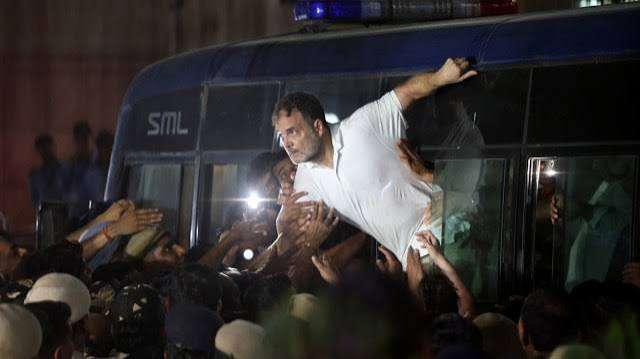
Yet, instead of allowing the judicial process to run its course, political activists have continued their street campaign. Even the reported protest at Akashvani, where demonstrators allegedly entered despite restrictions and confronted security personnel, reflects how quickly political mobilisation can cross the line into institutional disruption.
This is precisely where the people need to draw a distinction between democratic protest and political adventurism.
A protest is legitimate when it seeks to persuade. It becomes dangerous when its objective is to intimidate institutions or create an impression that the country is ungovernable unless a particular political demand is accepted.
Bharat must not travel down that road.
The comparison with Bangladesh should therefore serve as a warning, not as a simplistic political analogy. Bangladesh demonstrated how prolonged street mobilisation, institutional confrontation and political polarisation can rapidly transform a political crisis into a national crisis. Whatever one’s assessment of the events surrounding Sheikh Hasina’s government, the larger lesson is unmistakable: once political actors begin treating institutions and democratic processes as obstacles to be overcome through street power, nobody can confidently predict where the resulting disorder will end.
Bharat is far too large, diverse and consequential a democracy to permit such experimentation.
The Opposition’s electoral record makes the present strategy even more curious. Congress has now suffered repeated setbacks in successive Lok Sabha elections and several important Assembly elections. Its inability to convert anti-incumbency, where it exists, into a convincing alternative has been evident across several States. The electorate has repeatedly demonstrated that it is prepared to punish governments at the ballot box—but equally prepared to reject Opposition parties that fail to offer credible governance.
That is the fundamental lesson of democracy.
If a political party cannot defeat its opponent through votes, it cannot expect to defeat it through manufactured unrest.
The 2024 Lok Sabha election itself demonstrated the sophistication of the Indian voter. BJP did not secure a simple majority on its own, while the NDA returned to office. That verdict was neither the end of democracy nor a licence for any side to question the electorate’s wisdom. The people spoke, political parties adjusted and the constitutional process continued.
This is how democracy is supposed to work.
Congress and other Opposition parties have every right to challenge the government on the economy, employment, national security, welfare, federalism, elections or any other issue. They have Parliament, State legislatures, courts, constitutional mechanisms and, above all, the next election.
What they do not possess is a constitutional right to create anarchy because the electorate did not vote for them.
The distinction is crucial.
Bharat is today pursuing an ambitious national transformation towards becoming a developed economy by 2047. Such a transformation requires political stability, institutional credibility, economic confidence and social peace. Governments must be held accountable, but accountability cannot mean permanent agitation. Opposition is essential; obstructionism is not. Protest is legitimate; intimidation is not. Criticism strengthens democracy; attempts to delegitimise every constitutional institution weaken it.
The Election Commission, judiciary, Parliament and other constitutional institutions may—and must—be questioned when there is credible evidence of wrongdoing. But the remedy for institutional failure in a democracy is institutional correction, not street anarchy.
This is also where responsible political leadership matters.
Those elected to Parliament are not merely political activists with microphones and slogans. They are representatives of millions of citizens. Their mandate carries a duty to deliberate, debate, scrutinise and legislate. If every disagreement is converted into a street confrontation, Parliament itself becomes irrelevant—and that would be a dangerous victory for nobody.
The people of Bharat must therefore remain vigilant against politics that seeks to replace reason with rage and evidence with allegations.
Political parties will come and go. Governments will change. Elections will produce winners and losers. But the Republic and its institutions must endure.
The electorate should punish bad governance through the ballot box, reward good governance through the ballot box and reject those who seek power through disorder.
That is the safest antidote to anarchic politics.
Bharat needs a stronger Opposition—not a more anarchic one; sharper political debate—not street intimidation; and above all, democratic competition—not a politics of permanent disruption.
The final word must always remain with the people—and the people’s verdict must be respected.