N Nagarajan
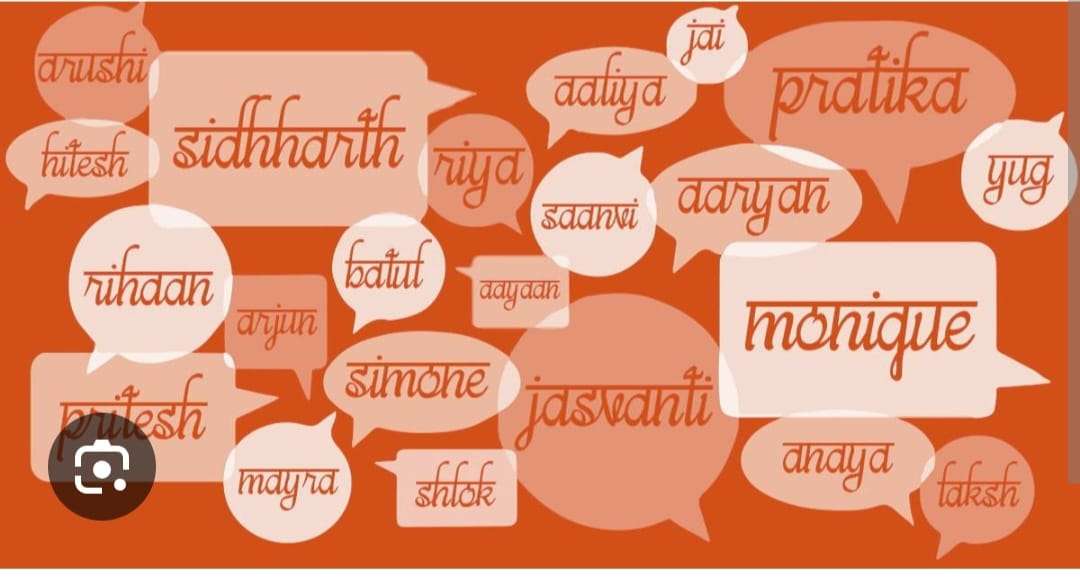
Names in our multicultural India can often play havoc with our official lives. The mere mention of the Election Commission’s SIR—Special Intensive Revision—now sends shivers down the spine of many people who have discovered, sometimes rather late, that their names do not remain the same across different records.
Let me begin with my own name. My name is N. Nagarajan, though my full name is Natarajan Nagarajan. In the Tamil tradition, the initial often represents the father’s name. Consequently, from Class 1 onwards, all my basic records have carried the name N. Nagarajan. That should have been simple enough.
But growing up in Delhi created its own complications. Despite my best efforts, casual records often shortened my name to “Nagaraj”, dropping the final “an”. When I shifted to Hyderabad in 1982, my father, being a law-abiding citizen, had my name deleted from the family ration card—the high-value, all-purpose document of those days. Fortunately, the deletion slip carried my correct name, although it had been scribbled as “Naga Rajan”, splitting one name into two.
In Hyderabad, things did not become any easier. My name has been variously written as Nagaraju, Nagaraj and even Nagarjuna. So, please do not equate me with the Telugu star—my spouse is certainly not Amala! So far, so good—or so I thought. South Indian names have often been murdered beyond recognition in North India.
My elder sister’s perfectly simple name was Srimati, but people invariably pronounced and wrote it as “Sirimati”. When she once went to obtain a passport, she gave her name as “Sirimati”. The person asking her name apparently thought she was saying something connected with marital status and kept asking her to “aage bolo”! My late brother-in-law had another experience.
His name was R.B.S. Manian. Some assumed that the initials stood for R. Balasubramanian. In fact, his full name was Rajagopalan Balasubramanian. When he went to obtain an LPG connection, the agency staff recorded his short name as R.B.S. Banian on the regulator deposit receipt.
When he pointed out the mistake, the staff member pleaded that he could not overwrite it and suggested that it did not matter because only the cylinder delivery was involved. That small mistake remained there for the rest of his life. He could never get it corrected. Tamilians, of course, have traditionally been sentimental about retaining a father’s initial, and sometimes a grandfather’s name as well.
What begins as a simple naming tradition can become increasingly complicated when the same name has to be fitted into PAN, passport, Aadhaar, voter ID and numerous other forms. And it is not only our names that are complicated. Our forms are complicated too. Take the different ways in which various institutions ask us to enter our names. Aadhaar asks for the full name. PAN asks for surname, first name and middle name.
A passport uses “Given Name”, followed by middle name and surname. The voter application has its own format. A savings bank account asks for the full name. An air ticket generally requires first name and surname, while a railway ticket asks for the full name, subject to a character limit.
When the basic data-collection systems themselves differ, it is hardly surprising that attempts to link one database with another can produce problems. Aadhaar has to be linked with bank accounts, PAN with Aadhaar, mobile numbers with voter IDs, and boarding passes with Digi Yatra. Somewhere along the chain, one missing initial, an extra surname, a spelling variation or a misplaced space can suddenly become a major identity problem.
The irony is that, despite facing innumerable problems over names, we Indians often do not take our own names—or those of others—seriously enough. I was reminded of this some years ago when my mother-in-law, who was then unwell, came to stay with us. She carried her medical records, but her name was recorded differently by different hospitals and laboratories.
It would be unfair to blame the relatives who were looking after her. They gave her name casually, the hospitals recorded it in their own style, and the caregivers did not realise that these small differences could matter later. She was around 93 when she passed away peacefully in her sleep. The doctor issued the death certificate based on the name appearing in the latest medical record. We also obtained a cremation certificate, but even there her name was not recorded exactly as it appeared on Aadhaar.
The problem surfaced when we subsequently applied for the official death certificate. Since she had died at home and I was not directly related to her, I had to submit an indemnity bond. The notary examined the medical and cremation records and noticed that the names did not match Aadhaar. Faced with the possibility of the application being rejected, we chose to proceed with the Aadhaar name.
A municipal official later visited us and took Aadhaar copies of two witnesses. After repeated follow-ups, he eventually pointed out the mismatch between the Aadhaar and cremation certificate and asked us to get the cremation certificate corrected. We explained our difficulty. He volunteered to visit the cremation ground himself and get the correction made. Eventually, however, the manager who had signed the original certificate was transferred and the new manager would not sign the correction.
After repeated attempts, we realised that we were unlikely to get the certificate. Fortunately, there was no inheritance involved and no property claim depending on it. We simply gave up. That experience illustrated something important: a name that looks like a minor clerical detail can become a major administrative obstacle.
The ongoing SIR is another example of how ordinary citizens can struggle with names that they themselves did not choose. Our parents, grandparents and sometimes wider family traditions chose them for us. Social customs, caste identities and family names have also become embedded in the names we carry.
Despite changing attitudes, many of us continue to retain surnames that reveal caste or family identity—Iyer, Iyengar, Rao, Reddy, Gupta, Nigam, Bhatnagar, Goyal, Garg, George, John, Khan, Ali, Khader and countless others. Even those who speak strongly about discrimination or gender equality generally continue to carry their family and caste names. Some women retain their birth names; others add their husband’s surname after marriage.
Public figures too carry multiple names, sometimes making an already long name even longer. Consider names such as Priyanka Gandhi Vadra or Aishwarya Rai Bachchan. Some people also incorporate their place of origin or association into their names—Lalgudi, Kunnakudi, Madurai, Palghat, Sirkazhi and many others. How do all these names fit neatly into every modern database?
Anyone who has worked in an educational institution or handled examination records will know the problem. Long names can easily cross the character limits imposed by computer systems. Out of curiosity, I looked up some remarkably long Indian names, including Satyamantri Venkata Rama Naga Butchi Anjaneya Satya Krishna Vijay, with 69 characters, and several others running to 30 or 40 characters.
The problem is not restricted to length. Some names are also mistaken for the opposite gender. I once had a male colleague whose name began with “Madhu”. Staff who had never met him assumed the name referred to a woman. I even had a stenographer who would routinely type his name as “Madhav”.
More recently, a friend came across the name Kallavi Narasimha Sudarshan and was unsure whether it referred to a man or a woman. Perhaps it is time for Indian parents to think differently. There is nothing wrong with tradition, but perhaps we should also think about the administrative life our children will have to lead.
A simple given name, without unnecessary layers of surname, caste or family identifiers, could save them from countless explanations and corrections. After all, as Shakespeare famously put it, “What’s in a name?” Quite a lot, it seems, when that name has to travel through a hundred government forms and computer databases. And if we do not learn to take names seriously, the next SIR—or any other exercise that depends on matching records—could create considerable havoc with the names of our children and with our own identities.