MS Shanker
The political battle over the Chief Election Commissioner is about more than one officer. It is increasingly about the credibility of institutions, electoral processes and the political narratives surrounding them.
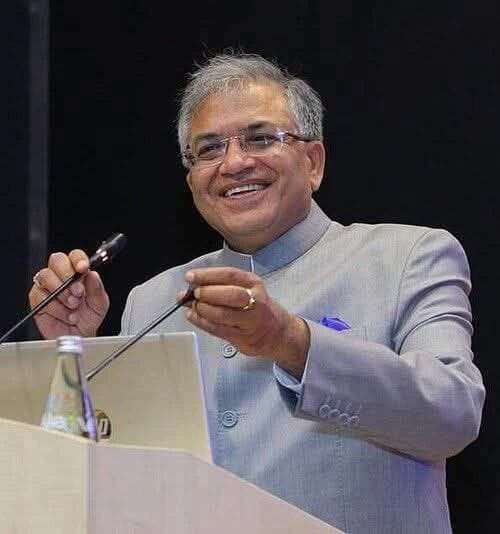
The latest political confrontation over Chief Election Commissioner Gyanesh Kumar raises a question that deserves to be examined beyond the daily exchange of accusations: why has one bureaucrat become such a prominent target of the Opposition?
The immediate trigger is the Election Commission’s handling of the Special Intensive Revision (SIR) of electoral rolls. Reports have alleged that Election Commissioners Sukhbir Singh Sandhu and Vivek Joshi raised objections on at least 14 occasions over a period of 10 months regarding certain decisions and orders. The Opposition has seized upon these reports to question the functioning of the Commission and the credibility of its leadership. The Election Commission, for its part, has maintained that decisions concerning SIR were taken unanimously.
The Congress-led Opposition is now preparing another motion seeking Kumar’s removal, with reports saying that notices are being drafted for both Houses of Parliament. Rahul Gandhi has demanded Kumar’s resignation and has continued to press his allegations concerning the electoral process.
But there is another dimension to Kumar’s career that makes the present political confrontation particularly interesting.
Before entering the Election Commission, Kumar spent years handling some of the most sensitive assignments of the Union Government. He is a 1988-batch Kerala-cadre IAS officer who took charge as India’s 26th Chief Election Commissioner on February 19, 2025. The official ECI biography records his experience in the Ministries of Defence, Home Affairs, Parliamentary Affairs and Cooperation. His academic qualifications include a B.Tech in Civil Engineering from IIT Kanpur, studies in Business Finance at ICFAI and Environmental Economics at Harvard University.
His role during the dramatic events surrounding Jammu and Kashmir in 2019 is particularly noteworthy. Kumar was Joint Secretary in the J&K Division of the Ministry of Home Affairs when the Government undertook the constitutional and administrative changes surrounding Article 370 and the Jammu and Kashmir Reorganisation Act. Contemporary reporting and later profiles have identified him as a key bureaucrat involved in the preparation and implementation of the Government’s J&K policy.
His association with the Ayodhya issue is equally significant. After the Supreme Court’s November 2019 verdict, the Government constituted the Shri Ram Janmabhoomi Teerth Kshetra Trust in February 2020. Kumar, then serving in the Home Ministry, was associated with the dedicated administrative work relating to the Ayodhya case and the constitution of the trust. The Indian Express reported that he was given responsibility for constituting the trust, while other reporting identifies him as an ex-officio member of the trust.
These are not ordinary bureaucratic assignments. They placed Kumar at the centre of two of the most consequential political and constitutional developments of the Modi era.
That history inevitably forms part of the political context surrounding him today. It does not, by itself, establish that the Opposition is targeting him because of his earlier government service. That would be an inference requiring evidence. But it does explain why Kumar’s career has acquired a political significance extending beyond his present constitutional office.
There is another irony here.
The Election Commission is not supposed to be judged by whether a political party likes its decisions. Its legitimacy rests on procedure, transparency, constitutional authority and the confidence of voters. If there are genuine differences among Election Commissioners, they deserve scrutiny. If allegations are made against the electoral process, they deserve evidence. And if the Commission’s decisions are challenged, the appropriate constitutional and judicial mechanisms remain available.
The same standard, however, must apply to the Opposition.
Political criticism is legitimate. Questioning an Election Commissioner is legitimate. Seeking his removal through the constitutional procedure, if the Opposition believes there are grounds, is also legitimate. But accusations concerning electoral integrity are too serious to be sustained merely through rhetoric.
This is where the Gyanesh Kumar controversy becomes bigger than Gyanesh Kumar himself.
The Opposition’s present campaign is centred on SIR and the functioning of the Election Commission. Kumar’s critics are entitled to question his decisions and demand accountability. Equally, the Commission is entitled to place its version before the country. Ultimately, facts—not political volume—must determine whether the allegations stand.
For a democracy as large as Bharat, the danger lies not in criticism of constitutional institutions. The danger lies when every institutional disagreement is automatically converted into a political indictment, or when every criticism of a political party is dismissed as an attack on democracy.
Gyanesh Kumar’s journey from the sensitive corridors of the Home Ministry to the country’s highest electoral office has placed him under an unusually intense political spotlight. The current confrontation should therefore be watched carefully—not as a contest between personalities, but as a test of how India’s constitutional institutions withstand political pressure.
The question for the Opposition is straightforward: if there are specific charges against the CEC, place the evidence before Parliament and the appropriate constitutional forums.
And the question for the Election Commission is equally straightforward: answer every legitimate question with facts, records and transparency.
That is how democratic institutions earn—and retain—public confidence.