MS Shanker
The All-India Majlis-e-Ittehadul Muslimeen (AIMIM), once largely identified with Hyderabad and the politics of the old city, has spent the past decade trying to transform itself into a party with a wider national footprint. Its electoral presence has extended beyond Telangana, with victories in Maharashtra and representation in other States. Yet one of its most politically significant ambitions remains unfulfilled: establishing an electoral foothold in Uttar Pradesh, India’s most populous State and one of the most consequential battlegrounds in national politics.
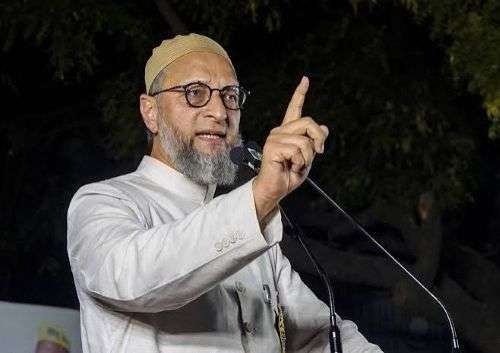
That explains the renewed activity of AIMIM president Asaduddin Owaisi in Uttar Pradesh ahead of the 2027 Assembly elections. Owaisi has been openly calling for Opposition unity against the BJP while simultaneously arguing that Muslims and other marginalised communities need an independent political voice. AIMIM has also been building its organisation and announcing candidates, signalling that it does not intend merely to be an electoral adjunct of another party.
For AIMIM, however, Uttar Pradesh is a vastly different proposition from Telangana.
The State has 403 Assembly constituencies and an exceptionally complex social and political composition. Muslims constitute about 19.3% of Uttar Pradesh’s population according to the 2011 Census, making the community electorally significant, particularly in constituencies where its concentration is substantially higher than the State average. But it would be simplistic to treat nearly one-fifth of the population as a single political bloc. Voting behaviour in Uttar Pradesh has historically been shaped by caste, locality, candidate, alliance structures, governance issues and the perceived ability of a party or coalition to defeat its principal rival.
That is precisely where AIMIM’s challenge begins.
The Muslim Vote Is Not an AIMIM Vote
The political history of Uttar Pradesh demonstrates that Muslim voters have not permanently belonged to any one political formation. The Congress enjoyed considerable Muslim support for decades after Independence. Later, the community’s electoral preferences shifted significantly towards regional parties, particularly the Samajwadi Party (SP), as caste and communal polarisation became central to the State’s politics.
The SP under Mulayam Singh Yadav built a durable social coalition around Yadavs and Muslims. The formula was electorally effective for considerable periods because the Yadav vote provided a relatively identifiable caste base while Muslim support supplied an additional large constituency. The BSP, under Kanshi Ram and later Mayawati, demonstrated another route through social engineering, bringing together Dalits and sections of other communities and, at different times, even broadening its appeal beyond its core support base.
The BJP subsequently developed its own social coalition, extending beyond its traditional upper-caste support by making substantial inroads among non-Yadav OBCs and other sections of the electorate. Narendra Modi’s emergence as the BJP’s national face in 2014 added another layer to this political realignment.
Consequently, the Muslim electorate cannot simply be assumed to transfer en bloc from SP or Congress to AIMIM merely because Owaisi offers a separate political platform.
This is the fundamental problem before AIMIM.
From Hyderabad to Uttar Pradesh
AIMIM’s expansion strategy has always involved a delicate balance. On one hand, it seeks to demonstrate that Muslims can create their own political leadership instead of depending exclusively on larger secular or regional parties. On the other, its electoral strength remains insufficient in most places to independently challenge established parties.
Its experience in Uttar Pradesh illustrates this dilemma starkly.
In the 2022 Assembly election, AIMIM contested seats across the State but failed to win any. Its vote share was only around 0.43%. Many of its candidates received relatively small vote totals.
Four years later, the party is attempting a different approach.
Owaisi has simultaneously kept the door open for an alliance and demanded political space for AIMIM. Reports indicate that the party is seeking to move beyond the image of merely being a “vote-splitter” and establish itself as a serious political player. Its current strategy appears to combine organisational expansion, direct mobilisation and negotiations with opposition parties.
That is politically understandable. But it creates a difficult question for the SP.
If the SP gives AIMIM meaningful space, it risks creating a new competitor within a constituency on which it has historically depended. If it refuses, Owaisi has the option of contesting independently and attempting to draw a section of Muslim voters away from the SP.
Either way, AIMIM has succeeded in placing itself in the political conversation.
The BJP Factor
The arithmetic becomes more complicated because the BJP remains a formidable electoral force in Uttar Pradesh.
In the 2022 Assembly election, the BJP won 255 of the 403 seats with 41.29% of the vote, while the SP won 111 seats with 32.06%.
The 2024 Lok Sabha election, however, demonstrated why no UP election should be treated as a simple continuation of the previous result. The SP won 37 Lok Sabha seats in the State and secured 33.59% of the vote; the BJP remained ahead in vote share at 41.37%, while the Congress received 9.46% and the BSP 9.39%.
The contrast between the 2022 Assembly and 2024 Lok Sabha results is instructive.
It shows that electoral arithmetic in Uttar Pradesh can shift significantly when parties combine, candidates change, national and State issues interact, and voters perceive a realistic alternative.
The BJP therefore cannot simply assume that its 2022 Assembly performance will automatically be replicated in 2027. Equally, the Opposition cannot assume that the 2024 Lok Sabha outcome will automatically translate into an Assembly victory.
The two elections operate on different political dynamics.
SP’s AIMIM Dilemma
For the SP, the AIMIM challenge is particularly sensitive because the party has spent years building its Muslim-Yadav social base while simultaneously attempting to broaden its appeal among other OBCs and Dalits.
The 2024 Lok Sabha election showed the potential of an SP-Congress arrangement. The two parties combined their organisational strengths and succeeded in converting the alliance into substantial parliamentary gains. The SP’s 37 seats made it the largest party in the Uttar Pradesh Lok Sabha delegation.
But translating that success into the 2027 Assembly election will require maintaining the coalition across 403 constituencies, where local caste equations, candidate selection and organisational strength can be very different.
This is where AIMIM’s entry becomes significant.
If AIMIM contests independently in constituencies with substantial Muslim populations, it need not win seats to influence the contest. Even a relatively small vote share can matter in closely fought constituencies.
That is why established parties are likely to look at the AIMIM question less in terms of the number of seats it can win and more in terms of where its candidates can alter the margin between the principal contenders.
But there is another side to the argument.
If AIMIM joins an Opposition alliance, it could gain legitimacy, visibility and potentially a negotiated share of constituencies. Yet an alliance would also require it to accept compromises on seat distribution and campaign strategy. Going alone would provide greater political independence but expose the party once again to the danger of securing votes without winning representation.
The Mayawati Factor
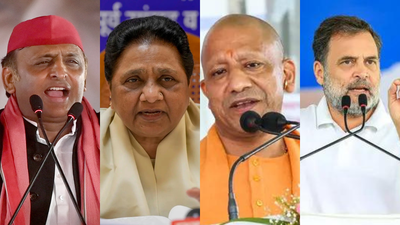
No serious analysis of Uttar Pradesh can ignore the BSP.
Mayawati’s party has experienced a substantial decline from its earlier electoral position, but the BSP continues to possess a recognisable social base and a statewide organisational legacy. In the 2024 Lok Sabha election, it secured 9.39% of the vote in Uttar Pradesh despite winning no seat.
That vote share is politically relevant.
A three-cornered or four-cornered contest involving BJP, SP-Congress, BSP and AIMIM could produce very different constituency-level outcomes from a direct BJP-versus-SP contest.
Conversely, any broader Opposition arrangement involving SP, Congress, BSP and AIMIM would have to solve the much more difficult problem of transferring votes between parties whose social bases, political histories and leadership structures are not identical.
Vote addition on paper does not automatically become vote transfer at the polling booth.
That is perhaps the biggest lesson of Uttar Pradesh politics.
Owaisi’s Calculus
Owaisi’s present strategy therefore appears to have two objectives.
The first is electoral: AIMIM wants to win its first Assembly seat in Uttar Pradesh.
The second is political: it wants to establish itself as a legitimate negotiating force rather than remain dependent upon larger parties.
His recent appeal to Opposition parties to unite against the BJP serves both purposes. If the Opposition accepts AIMIM, the party gains bargaining space. If it rejects the offer, AIMIM can present itself as a political alternative to parties that, in its view, have traditionally sought Muslim votes without giving the community sufficient independent political representation. Owaisi has also argued that Muslims need to build their own political leadership rather than permanently rely on larger parties.
The question is whether that argument can be converted into votes and, more importantly, seats.
So far, Uttar Pradesh has not provided AIMIM with that breakthrough.
A Battle Beyond One Seat
AIMIM’s Uttar Pradesh project is therefore much larger than the question of whether it can win one or two constituencies.
The State could become a test case for Owaisi’s broader national strategy: can a party that emerged from Hyderabad build a durable political organisation in a State where Muslim voters have historically exercised influence through larger regional formations rather than an exclusively Muslim-led party?
That remains an open question.
The SP will not want to surrender its established Muslim support base. Congress will want to retain the benefits of its alliance with the SP without unnecessarily complicating seat-sharing. The BSP has its own independent political calculations. And AIMIM wants space precisely within this crowded Opposition field.
The BJP, meanwhile, benefits politically whenever Opposition votes become fragmented, but the 2024 Lok Sabha results also demonstrate that the Opposition can substantially alter the electoral equation when it succeeds in combining its support bases.
For AIMIM, therefore, Uttar Pradesh represents both an opportunity and a formidable test.
Owaisi may be seeking an electoral account in the State. But opening that account will require much more than invoking Muslim numbers. It will require converting demographic presence into a political organisation, political messaging into voter trust and voter support into geographically concentrated electoral victories.
The 2027 Uttar Pradesh election could consequently become an important test not merely of the BJP versus the Opposition, but also of whether AIMIM can move from being a party with influence in selected pockets to becoming a genuinely consequential political force in India’s largest State.
For now, the ambition is clear. The electoral destination is not.