



Every monsoon, Bharat watches helplessly as floods and flash floods turn into recurring tragedies. Homes disappear, roads are washed away, livelihoods are destroyed, and precious lives are lost. Governments rush in with rescue teams, relief packages and compensation announcements. Politicians visit affected areas, officials hold review meetings, and the familiar explanation follows: an unprecedented natural calamity. Enough. Nature may trigger a disaster, but administrative complacency, ecological neglect and technological under-utilisation can turn it into a catastrophe. In an era when satellites can continuously observe terrain, artificial intelligence can process weather patterns, sensors can monitor river flows and mobile networks can issue location-specific warnings, there is little justification for governments remaining dangerously reactive. Bharat does not suffer from a shortage of technology. It suffers from a failure to deploy technology intelligently, comprehensively and in time. A river basin does not recognise state or national boundaries. Yet our disaster-management architecture often remains fragmented by precisely those boundaries. The Brahmaputra, for instance, is a transboundary river system. Sudden cloudbursts, glacial lake outbursts, landslides or extraordinary rainfall in upstream catchments can send enormous volumes of water downstream with frightening speed. Similar vulnerabilities exist across the Himalayan belt and other flood-prone regions. The most glaring weakness is the absence of sufficient real-time upstream intelligence. Why are automated rain gauges, river-level sensors, weather radars and satellite-linked monitoring systems not deployed comprehensively across vulnerable mountain catchments? Why should authorities wait for water to rise dangerously in the plains before sounding an alarm? By then, the warning is not an early warning at all—it is merely a confirmation of disaster. The traditional dependence on fixed “danger marks” and river-level thresholds also needs urgent review. Flash floods do not behave like slow-rising rivers. Water levels can change dramatically within minutes. A warning system designed for yesterday’s flood cannot protect communities facing tomorrow’s climate extremes. Then comes the equally serious last-mile failure.
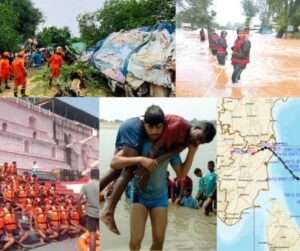
A warning reaching a government control room is not enough. It must reach the villager, farmer, tourist, school, hospital and family living in the threatened zone—and reach them early enough to act. Cell-broadcast systems, sirens, satellite communications, radio, public-address systems and local disaster-response networks must work together. And every vulnerable habitation must have clearly identified evacuation routes and safe shelters. Technology without preparedness is merely expensive hardware. Governments must also stop treating ecological destruction as somebody else’s problem. Deforestation, indiscriminate hill cutting, unregulated mining, construction on floodplains and destruction of wetlands have weakened nature’s own capacity to absorb water. Siltation can reduce the carrying capacity of rivers, while concretisation eliminates the wetlands and drainage channels that once acted as natural sponges. The solution therefore cannot be another cycle of relief and reconstruction. Bharat needs a National Flash-Flood Intelligence and Response Grid integrating the IMD, Central Water Commission, ISRO, state disaster-management authorities, reservoirs, local administrations and scientific institutions. Mountain catchments must be densely instrumented. Data from rainfall, river levels, soil moisture, reservoirs and satellite observations should flow into a common real-time platform capable of generating location-specific risk forecasts. States sharing river basins must be compelled to automatically share reservoir levels and release data. Where rivers cross international boundaries, Bharat must pursue stronger real-time hydrological information-sharing mechanisms while simultaneously expanding its own upstream monitoring capability. Most importantly, every warning must trigger a predetermined response—not another meeting. The question is no longer whether technology exists. It does. The question is whether governments have the political will and administrative discipline to use it before people die. Climate change will make extreme weather more frequent and unpredictable. Bharat cannot prevent every cloudburst, landslide or flash flood. But it can dramatically reduce the human toll. That requires governments to stop behaving as if disaster management begins after disaster strikes. The age of post-flood compensation must give way to the age of pre-flood intelligence, preparedness and prevention. If technology can warn us, map the danger and save lives, failing to use it is not merely an administrative lapse. It is a failure of governance.


