



Firstly, I have to explain my silence for over two weeks. There has been a wedding in my family, and I haven’t written a word except names on invitation cards.
Secondly, I have stayed away from news, views and nonsense. It was blissful. Then came Swara Bhasker.
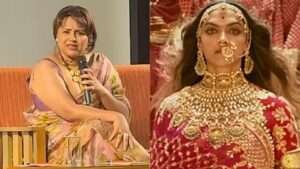
Swara has once again stirred the pot, this time reopening the eight-year-old controversy over the Jauhar sequence in Sanjay Leela Bhansali’s Padmaavat.
Swara never misses an opportunity
Speaking at an event in Delhi, she said the scene was ‘problematic’ because a rape survivor watching it might wonder whether she was a coward for choosing to live rather than kill herself to preserve her honour.
That is a legitimate subject for debate. But Swara’s subsequent clarification is equally important. She insists she never called Rani Padmaavati or the women who performed Jauhar cowards and says her remarks were misunderstood or mistranslated. Fair enough.
But then, if one is going to lecture others about historical sensitivity, perhaps one should also practise a little of it oneself.
History is not a Netflix script
Jauhar was not invented by Bhansali. Nor was it a Bollywood director’s idea of dramatic background music. It belongs to a brutal historical context in which defeated populations faced capture, enslavement and sexual torture.
Whether one agrees with the practice or not, judging people living under such circumstances exclusively through the moral standards of 2026 is rather like reviewing a medieval battlefield using a workplace HR manual.
And here is another small historical inconvenience: the ruler associated with the 1303 siege of Chittor was Alauddin Khilji of the Delhi Sultanate – not a Mughal.
The very story of Padmaavati is also historically contested. The celebrated ‘Padmavat’ of Malik Mohammad Jayasi was composed in the 16th century, more than two centuries after Khilji’s siege. So perhaps some humility would be useful before converting a complex medieval episode into a neat modern morality play.
The feminism of convenience
There is another question worth asking. Why does outrage over women’s dignity sometimes become remarkably selective?
Women being told what to wear, whom to marry, whether to study, whether to speak, whether to leave the house – these are all matters of legitimate feminist concern.
But feminism loses some credibility when it appears most loudly only when the villain fits a politically convenient template.
Remember the controversy over Swara’s 2024 meeting with Islamic cleric Sajjad Nomani, whose views on women’s education had attracted considerable criticism. Perhaps feminism should not come with a religious footnote.
And then came Mahira
Pakistani actress Mahira Khan reportedly came out in support of Swara amid the controversy. Social-media reports even circulated an invitation to Swara to come to Pakistan and ‘live freely’. One could not ask for a more deliciously ironic subplot.
A Bharatiya actress defending women’s freedom, a Pakistani actress defending the Bharatiya actress, and everyone discovering feminism simultaneously. If only history were as simple as Instagram.
Even Krishna needs comment control
The controversy also spilled into Swara’s Janmashtami post, with reports that she restricted comments amid the backlash.
There is something almost poetic about celebrating Lord Krishna – the eternal questioner, mischief-maker and challenger of convention – while having to switch off the comments because the conventionally offended have arrived. Perhaps Krishna would have enjoyed the comments section.
History deserves context
I have no objection to Swara questioning Jauhar. Nor should anyone. But questioning a historical practice is different from dismissing the people who lived through it. And defending Jauhar historically does not mean advocating suicide today. Both truths can coexist.

