



Most retail investors think they are picking stocks. They are not. Three structural forces now decide most of the return, and almost nobody names them out loud.
Force One: Your Money Is No Longer Yours To Direct
Every month, more new savings go into index funds and ETFs than into actively managed funds. In the US, money sitting in passive funds has now overtaken money in active funds. This sounds like a footnote. It is not.
Here is the mechanical consequence. When a company gets added to a major index, index funds are forced to buy it, regardless of price, regardless of valuation, regardless of whether the business deserves it. When a company gets removed, the same funds are forced to sell, again regardless of price. There is no analyst in the loop. There is no judgment. There is only a rule.
This creates a strange incentive for company promoters and private equity sponsors. Push a private company’s valuation up in the private market, list it at a rich price, get it into the index, and a wall of mechanical buying appears on schedule, month after month, with no one asking whether the price makes sense.
For an ordinary investor, the lesson is uncomfortable. A stock’s price can keep climbing for reasons that have nothing to do with its business. And a stock that gets dropped from an index can quietly die, not because the company failed, but because its natural buyers simply stopped showing up. Before you buy something because “it’s been going up,” check whether the up move is coming from earnings or from index mechanics. They are not the same thing, and they do not reverse the same way.
Force Two: AI Is Making Everyone Buy the Same Five Stocks
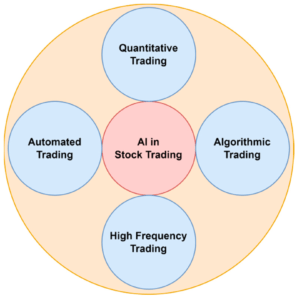
AI tools are genuinely useful for a first pass on a stock or a sector. The problem shows up one step later. When thousands of people ask an AI assistant the same question, “what should I buy right now,” they tend to get variations of the same answer, because the AI is drawing on the same visible, well documented, widely covered companies.
The result is a new kind of herding, faster and wider than anything an old fashioned tip from a broker could produce. It is not that AI is wrong. It is that AI concentrates conviction. When a large number of people outsource their thinking to the same tool, they end up crowding into the same handful of names and the same handful of themes, which inflates those names further, which makes the AI’s own analysis of “what’s working” even more convinced of the same names. It is a loop, not a filter.
The practical risk is leverage. People who feel unusually confident because “the AI said so” tend to size positions more aggressively than their own research would justify. That confidence is borrowed, not earned, and borrowed confidence combined with leverage is exactly how retail accounts get wiped out in a single sharp reversal. Treat any AI-generated stock view the way you would treat a stranger’s tip: useful as a starting point, worthless as a substitute for your own checking.
Force Three: Some Prices Are Being Held Down On Purpose
In the last several months, a genuinely large disruption to global oil supply barely moved the oil price. That is not normal. Historically, a shock of that size to physical supply causes a sharp, sustained price spike. Instead, the market shrugged, helped along by a steady stream of “supply glut” narratives arriving at exactly the moments prices tried to rise, even as strategic reserves were sitting near multi-decade lows.
None of this proves manipulation in a courtroom sense. But it is consistent with large, well resourced players using the futures and derivatives market, the “paper” market, to suppress a signal that would otherwise come from actual physical scarcity, the “real” market. When policymakers or large funds can control price, they can control the story that ordinary investors tell themselves about supply and demand, and that story is what drives everyday buying and selling decisions.
This is now spreading beyond oil into currency markets, where large, deliberate interventions have started showing up in places they were not expected. For an individual investor, the old rule was that real, physical assets cannot stay mispriced forever because supply and demand eventually force the price to the truth. That rule still holds, but “eventually” may now be a much longer and more painful wait than it used to be. Do not assume a suppressed price will snap back on your timeline. It may not snap back on any timeline you can survive financially.
What This Means For You
None of these three forces are going away soon, and fighting them individually is usually a losing trade. The right posture most of the time is to understand the current is there and let it carry you, not to swim against it out of principle.
But all three forces share the same failure mode. They work by suppressing volatility, by making markets feel calmer and more predictable than they actually are. Passive flows smooth out price discovery. AI-driven herding smooths out disagreement. Price suppression smooths out the signal from real-world events. Calm markets make everyone feel smart, right up until the moment the underlying pressure finds a way out.
Your job as an individual investor is not to predict when that moment arrives. It is to make sure that when it does, you are not the one holding maximum leverage on a position you only bought because everyone else, or the algorithm, was buying it too.

