As Bharat celebrates 80 years of Independence, it is worth looking beyond the familiar milestones of economic growth, technological progress and social transformation to recognise one of its most consequential democratic achievements: the steadily expanding political participation of women.
The journey has been neither easy nor complete. Gender inequality continues to exist in many forms, from unequal access to economic opportunities and property to safety concerns, unpaid care work and social expectations. Yet, the transformation of the Indian woman from a largely underrepresented participant in public life to an increasingly influential political stakeholder is one of the most significant stories of independent Bharat.
At Independence, female literacy was below 10 per cent. Today, it is above 77 per cent, reflecting a remarkable expansion of educational opportunity. Girls have also made substantial gains in school enrolment and, in several stages of education, have matched or surpassed boys. Constitutional guarantees of equality, laws addressing dowry and domestic violence, and measures aimed at improving workplace safety have created an important legal framework for women’s rights.
But education and legal protection alone cannot guarantee equality. Female labour force participation, despite recent improvement, remains below the level seen in many major economies. Women continue to shoulder a disproportionate share of household and caregiving responsibilities. Wage disparities, limited ownership of productive assets and concerns about personal safety also restrict economic independence and freedom of mobility.
Against this backdrop, political empowerment becomes particularly important.
The constitutional amendment providing one-third reservation for women in the Lok Sabha and State Legislative Assemblies is not merely another legislative reform. It has the potential to alter the character of Indian democracy fundamentally. The landmark Nari Shakti Vandan Adhiniyam, 2023 provides for reserving one-third of seats for women in these legislatures, including one-third of seats reserved for Scheduled Castes and Scheduled Tribes.
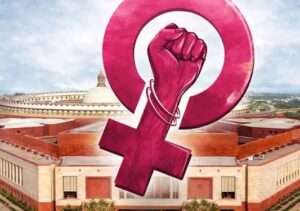
Its significance lies in creating a critical mass of women lawmakers. For decades, women’s representation in Parliament remained disproportionately low despite women constituting nearly half the population. Reservation can change that equation by ensuring that women’s voices are not dependent solely on the willingness of political parties to nominate them.
The experience of grassroots democracy offers compelling evidence. Constitutional reservations for women in Panchayati Raj institutions have brought millions of women into elected public office. Across villages and local bodies, women representatives have often focused attention on practical issues such as drinking water, sanitation, healthcare, education and local infrastructure. Equally important, their presence has challenged traditional assumptions about who can exercise political authority.
The road to full implementation of legislative reservation, however, remains tied to the constitutional process involving the Census and subsequent delimitation. That has generated legitimate debate over timing, representation and the distribution of seats among States. These concerns must be addressed transparently, but they should not dilute the larger objective.
Political reservation should not be viewed as charity or concession. It is an instrument to correct a historic democratic imbalance.
Bharat’s greatest achievement may ultimately be not merely that women are permitted to participate in politics, but that they are increasingly positioned to shape governance, legislation and national priorities.
As the country enters its 80th year of Independence, the message is clear: political empowerment is not the destination of women’s equality, but one of its most powerful engines. A democracy becomes truly representative only when its institutions reflect the society they govern.
The promise of political reservation, therefore, is larger than one-third of the seats. It is the promise of a Bharat where women are not merely voters, beneficiaries or spectators, but equal partners in writing the nation’s future.