Lakshmanrao Upadhyayula
The venerable sage Śaunaka Gṛtsamāda, immersed in contemplation and inspired by the sacred cadence of the Triṣṭubh metre, raised his voice in praise of the divine Apām Napāt, the radiant “Offspring of the Waters,” celebrated in the hymns of the Rigveda. With reverence he declared, “I chant this holy hymn for food, nourishment, strength, and the flourishing of life.” In the Vedic vision, prayer was not a mere utterance of words, but a conscious alignment with the subtle powers that sustain the cosmos. Through this hymn, the sage sought both material abundance and inner brilliance, praying that the swift-moving and all-pervading deity might bestow upon humanity vitality, prosperity, and a noble, radiant personality.
The name Apām Napāt literally means “Grandson of the Waters.” This profound epithet reflects the Vedic insight into the interdependence of the elements. Waters nourish the trees; trees become fuel; and from wood arises Agni, the sacred fire. Thus Agni, born from the offspring of the waters, is rightly called their grandson. In this symbolism the seers perceived a subtle scientific truth: water generates vegetation, vegetation stores solar energy, and fire releases that latent power. What modern science explains through ecological and thermodynamic processes, the Vedic sages expressed through luminous myth and sacred metaphor.
The sage acknowledged that the mantras are not inventions of human intellect but eternal truths inscribed within the heart by divine wisdom. The ṛṣis did not compose the Vedas; they “heard” them in states of purified consciousness. Through repeated recitation and meditation, these mantras reveal their hidden meanings. Apām Napāt, pleased by sincere praise, subdues hostile forces both within and without. By his own inherent strength he established all worlds and sustains every form of existence.
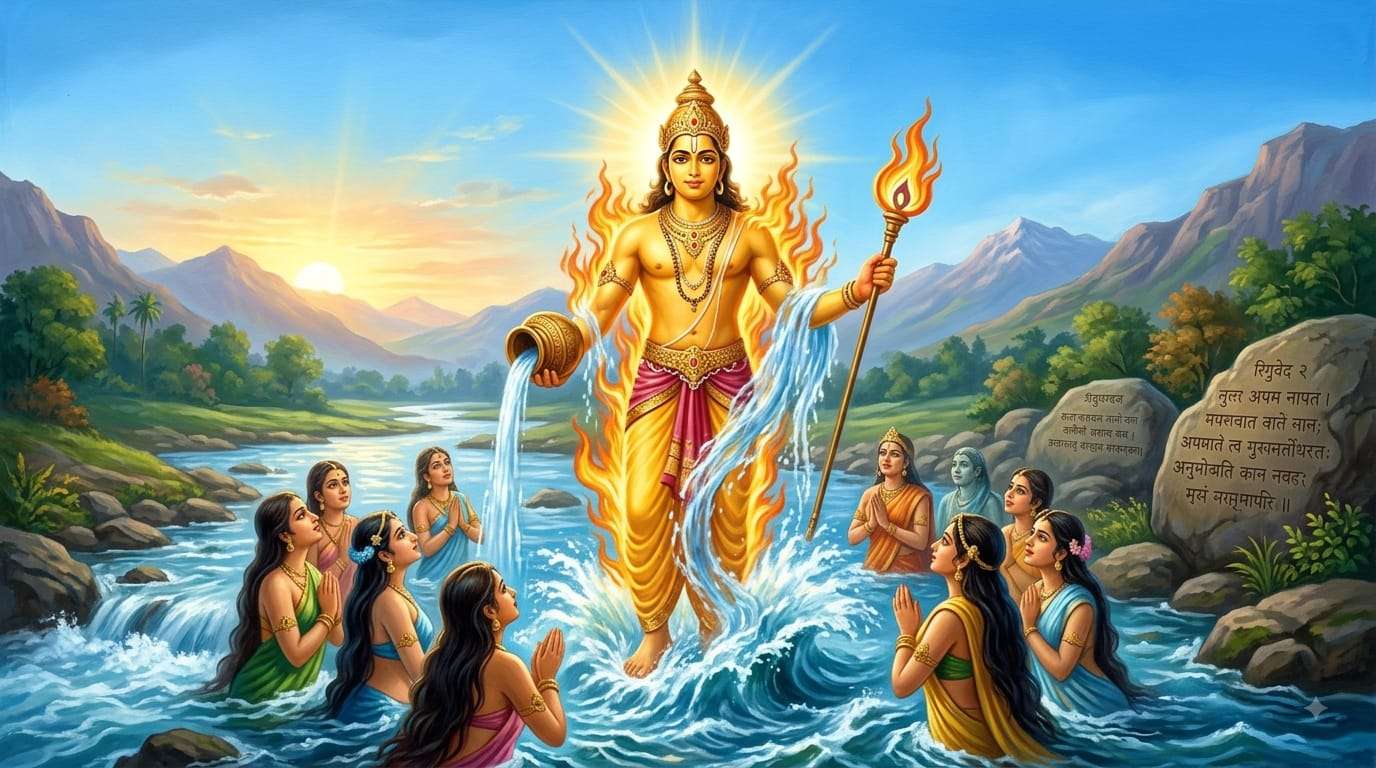
The waters of the universe are portrayed as conscious and devoted attendants of this divine Fire. Some remain still in lakes and reservoirs; others rush forth as rivers to merge with the ocean. All of them nourish the mysterious submarine fire known in Vedic lore as the Bādaba Agni, the latent energy concealed in the depths of the cosmic waters. Pure streams approach Apām Napāt from all directions, encircling him with devotion and serving him like maidens adorning a youthful prince.
These celestial maidens, symbolic of the rivers and vital energies of nature, beautify the shining deity. Though without visible fuel, he burns resplendent, an image of self-sustaining energy. He is metaphorically anointed with clarified butter, signifying purity and sacrificial sanctity. Seated in the midst of the waters, he radiates golden brilliance and generates nourishment for all beings. This portrayal evokes both the hidden electrical energy within water and the solar fire reflected upon the surface of rivers and oceans.
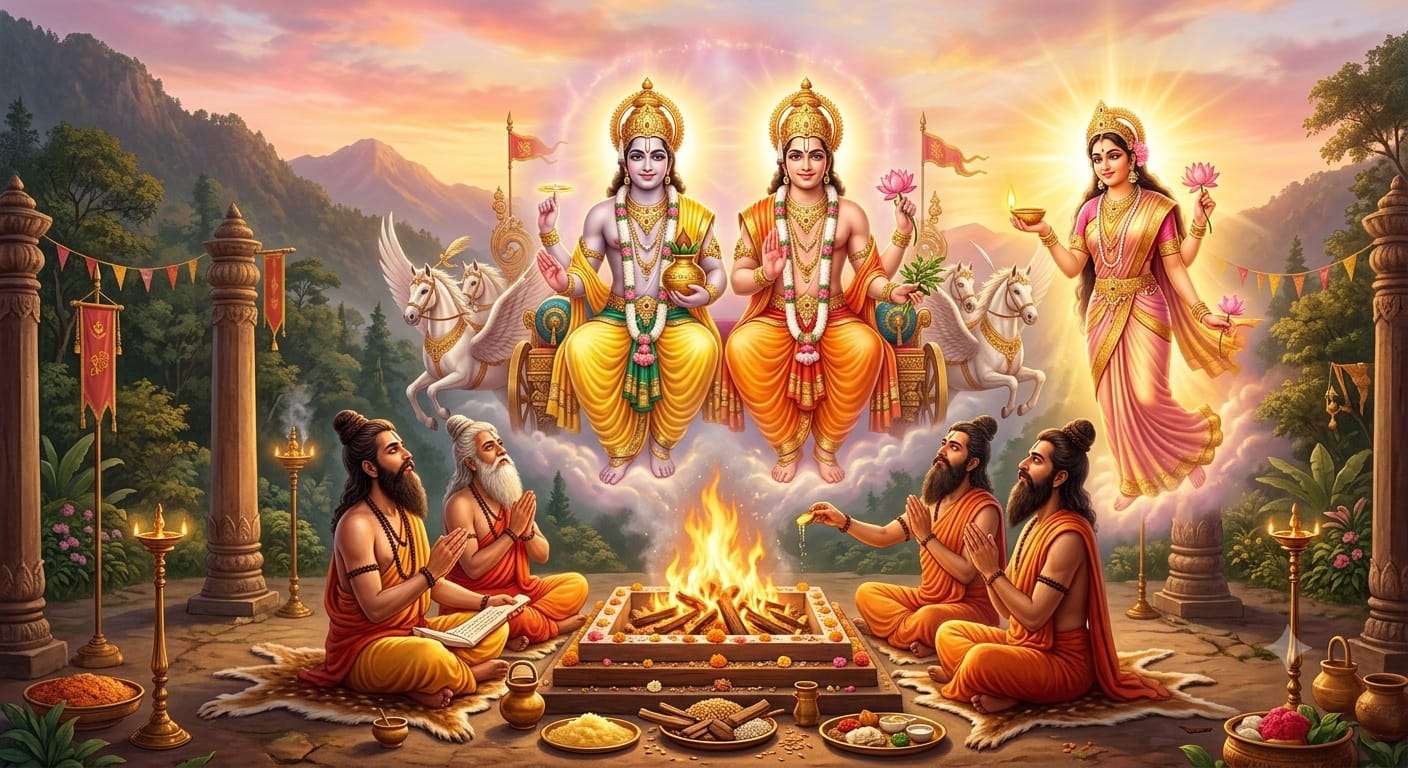
The goddesses Ilā, Sarasvatī, and Bhāratī attend him with offerings of food and abundance. These divine powers represent speech, wisdom, and sacred culture. They gather the subtle essences generated within the waters, and Apām Napāt partakes of the first and purest sap of creation. The waters thus become both his origin and his sustenance, revealing the cyclical unity of life.
From the cosmic ocean associated with this deity arose the celestial horse Uchchaihshravas, symbol of sovereign energy and divine majesty. Apām Napāt governs all waters and protects priests and seekers from destructive forces. Those who are ungenerous, impure, or hostile to sacred order cannot perceive his radiant presence, whether they dwell amid clear waters or polluted streams. Divine truth reveals itself only to the pure in heart.
Those who live righteously, maintain their households with harmony, and draw milk from their cows with ease prosper under the grace of Apām Napāt. Rain descends upon them, crops flourish, and the finest foods sustain their lives. Here the Vedic worldview links moral conduct, ecological balance, and material prosperity. Human virtue and cosmic harmony are inseparably connected.
Standing in the midst of the waters, Apām Napāt blesses his worshippers with wealth and splendour. He is Truth embodied, eternal and indivisible, vast beyond measure, and luminous with self-born brilliance. The elements of nature are but his manifold expressions, while the universe unfolds as branches from his inexhaustible being.
The fruits, flowers, herbs, and medicinal plants arise through his power. In the zigzag movement of lightning within the storm clouds, the seers perceived his celestial form. Clothed in the currents of the atmosphere, he rides through space as dynamic energy. Golden rivers and rain-bearing clouds sing his praises as they flow, bringing fertility to the earth.
Apām Napāt is golden in form, hue, and radiance. He sits upon a lofty golden throne, resplendent in celestial glory. The donor of gold and wealth, symbolic of one who offers the finest of possessions, receives in return food, prosperity, and spiritual merit. Gold here signifies purity, incorruptibility, and the immortal light of consciousness.
His rays constitute his body, and his name itself is wondrous and profound. Both his essence and his manifestation remain mysterious, hidden yet ever-present. The youthful waters lovingly nourish this golden deity as he flourishes throughout the heavens. Water is his food, and in turn he transforms it into the energy that sustains all life.
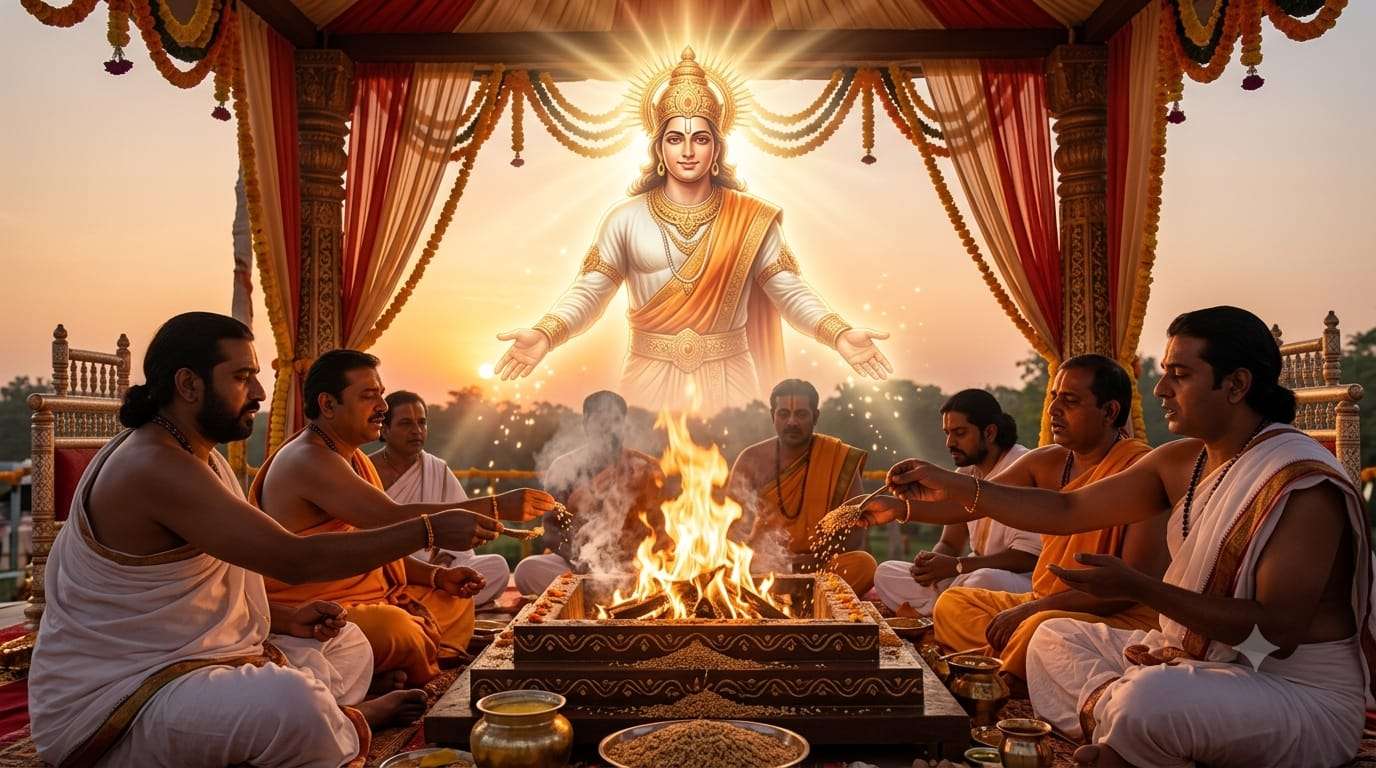
Therefore the worshippers approach this ancient friend of gods and men with offerings, oblations, and sacred chants. They prepare the altar on an elevated place, decorate it with care, and invoke him with mantras born of devotion. Through ritual and contemplation they seek to unite themselves with the purifying power of the divine Fire.
Apām Napāt is the purifier who manifests life in the midst of the waters. He drinks their essence, while all waters touch and honour him. As heavenly Agni he appears on earth in countless forms—in flame, lightning, sunlight, metabolism, and the vital heat of living beings. Ever self-luminous, he stands in majesty as the hidden source of transformation.
The great waters carry nourishment to him and patiently await his presence. The worshippers pray, “O auspicious Agni, we have come seeking the welfare of our children and descendants. We bring these hymns for the prosperity of the patron and the blessing of all.” They invoke the goodwill of the gods, desiring that they and their children’s children may continue to chant the eternal hymns of the Rigveda in gratitude and wisdom.
Thus the hymn to Apām Napāt reveals one of the most profound insights of Vedic thought: that the divine resides in the very processes of nature. Fire emerges from water, energy from matter, life from the union of the elements, and consciousness from the depths of being. Through poetic symbolism, the Vedic sages expressed truths that resonate with both spiritual intuition and scientific understanding. Apām Napāt stands as the golden bridge between visible nature and invisible divinity, nourishing the world with light, order, and immortal abundance.