



Sri Thirumaleeswarar Temple is located at Thirumathalampakkam village, near Arakkonam in Ranipet district of Tamil Nadu.The temple is particularly special because of its unique tradition that Lord Thirumaal (Vishnu) himself performed penance and worshipped Lord Shiva here.
The temple is regarded as an ancient Shiva shrine with a very long history. A worn inscription on the southern outer wall is reported to indicate an antiquity of around 1,500 years. The temple also has strong Chola-period associations, with evidence of renovation and worship during the Chola period.
The presiding deity is Sri Thirumaleeswarar, worshipped in the form of a Shiva Lingam. A distinctive feature of the Moolavar is the long Bana and square Avudaiyar. The name Thirumaleeswarar itself is connected with the belief that Thirumaal worshipped Shiva at this sacred place.
The Goddess is Sri Tripurasundari Ambal, a form of Goddess Parvati. One unusual feature of the Ambal shrine is the presence of Nandi in front of the Goddess instead of the usual lion.
The temple also has a separate shrine for Lord Thirumaal / Perumal, which is especially significant because Lord Vishnu is central to the temple’s Sthala Purana. The Perumal image is traditionally associated with a green Maragatha stone, and a local devotional belief connects milk abhishekam to a bluish appearance of the milk.
The temple follows the traditional South Indian Shiva temple style, with the sanctum of Sri Thirumaleeswarar forming the central shrine. The complex includes the shrines of Sri Tripurasundari Ambal and Lord Thirumaal, along with traditional subsidiary sannidhis.
One of the most important and distinctive features is the presence of Sapta Matrika sculptures, associated with the Chola-period tradition. The seven Mother Goddesses are Brahmani, Maheshwari, Kaumari, Vaishnavi, Varahi, Indrani and Chamunda.
The Vilva tree is regarded as the Sthala Vriksha and is especially sacred to Lord Shiva.
Thirumathalampakkam lies in a historically important region associated with the Pallavas and Cholas. The nearby Takkolam is famous for the 10th-century Battle of Takkolam, one of the important conflicts of medieval South India.
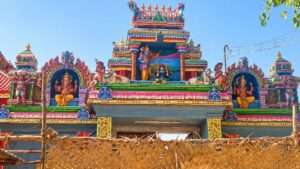
The temple has reported inscriptional evidence of considerable antiquity and strong Chola-period connections. Traditional accounts state that Chola rulers worshipped Sri Thirumaleeswarar and undertook renovation work here. The Chola-period Sapta Matrika sculptures further strengthen the temple’s historical and artistic importance.
The temple was renovated in recent times and underwent Mahakumbhabhishekam on 16 September 2024, followed by a 48-day Mandalabhishekam.
The most important Sthalapurana of Sri Thirumaleeswarar Temple is connected with Lord Thirumaal, or Vishnu.
According to the traditional temple legend, Thirumaal came to this sacred place with a deep desire to worship Lord Shiva and receive his divine grace. He chose this place for his penance and began worshipping Shiva with great devotion.
Thirumaal performed intense penance here, completely concentrating his mind upon Lord Shiva. His worship was an act of humility and surrender, seeking the blessings of the Supreme Lord.
Pleased with the sincerity of Thirumaal’s penance, Lord Shiva appeared before him and granted him his divine darshan.
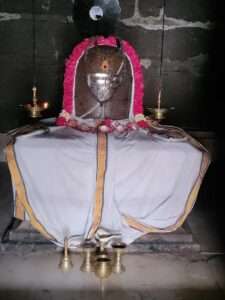
The traditional account describes Lord Shiva’s appearance as filled with extraordinary brilliance and golden radiance. The divine effulgence of the Lord was so magnificent that his manifestation became the central sacred memory associated with this place.
Thirumaal received the blessings of Lord Shiva after his penance. Because Thirumaal worshipped Shiva at this sacred place, Lord Shiva came to be worshipped here as Thirumaleeswarar.
The name itself preserves the memory of this divine event: Thirumaal + Easwarar = Thirumaleeswarar.
In other words, Thirumaleeswarar is traditionally understood as the Easwara worshipped by Thirumaal.
The traditional Sthalapurana also gives an explanation for the name Thirumathalampakkam. The place where Thirumaal performed his penance came to be remembered as Thirumaal Thavam Pakkam, meaning the place where Thirumaal performed penance. Over time, this name is traditionally believed to have evolved into Thirumathalampakkam.
Thus, the name of the village and the name of the presiding deity are both traditionally connected with the same sacred event — Thirumaal’s penance and worship of Lord Shiva.
The story does not end with the appearance of Shiva. The presence of a separate shrine for Thirumaal within the temple complex keeps alive the memory of the very deity who is believed to have come here as a devotee of Shiva.
This gives the temple a special Hari–Hara significance. Here, Hari, in the form of Thirumaal, worships Hara, Lord Shiva. The Sthala Purana therefore conveys the traditional Hindu understanding that the different manifestations of the Divine are not separate but ultimately united.
The presence of Sri Tripurasundari Ambal adds another dimension to this sacred combination. Shiva, Shakti and Thirumaal are all represented in this temple, making it a beautiful meeting place for the Shaiva, Shakta and Vaishnava traditions.
For devotees, the temple is therefore not merely a place where an ancient Shiva Lingam is worshipped. It is a sacred place where the tradition remembers a divine meeting between Thirumaal and Thirumaleeswarar, and where the harmony between Hari and Hara continues to be celebrated.
The main annual festival is the three-day Panguni Uthiram Brahmotsavam. Maha Shivaratri, Pradosham, Pournami and Navaratri are also observed with special worship. Navaratri is particularly important for Sri Tripurasundari Ambal.


