If there is one politician in contemporary Bharatiya politics who has perfected the art of converting political desperation into convenient fiction, it is Arvind Kejriwal. His latest claim on ethanol is not merely misleading; it is a spectacular demonstration of how far political rhetoric can travel when facts are treated as an inconvenience. Kejriwal wants people to believe that the Modi Government has somehow been forced to accept large-scale imports of ethanol from the United States as part of an alternative-fuel strategy. The claim is so breathtakingly disconnected from the facts that it deserves to be dismantled, not merely disputed. The official record is unambiguous: Bharat does not need American ethanol to run its E20 programme. Bharat has built enormous domestic ethanol-production capacity and has sufficient supply to meet the current blending requirement. The Petroleum Ministry says Bharat’s production capacity has scaled to nearly 20 billion litres, substantially above the approximately 11 billion litres required to sustain E20. So where exactly is Kejriwal’s US-import story? Nowhere. The Government has also made it clear that there has been no policy decision to permit large-scale imports of fuel ethanol from the US for petrol blending. The existing programme relies on domestically produced ethanol. Any suggestion that Bharat has surrendered this policy as some kind of trade concession is therefore misleading. This is not a matter of interpretation. It is a matter of records. And records, unlike political speeches, do not lie. Perhaps Kejriwal should spend a little more time reading government documents and a little less time manufacturing political-narratives. Passing the civil services examination and entering the IRS may demonstrate intellectual ability; it does not confer a permanent licence to distort economic or energy facts. The irony becomes even greater when one examines the history of ethanol blending. The programme did not suddenly emerge from the Modi Government. Pilot projects began in 2001 and the Ethanol Blended Petrol programme was formally launched in 2003 with 5 per cent blending in identified States and Union Territories. The UPA Government subsequently notified a broader policy framework in 2013. What the Modi Government did was fundamentally different: it turned an underperforming policy into a major national energy-security programme. Ethanol blending rose from less than 1.5 per cent in 2013-14 to 20 per cent in 2025-26. Bharat reached the 20 per cent target five years ahead of schedule. Ethanol procurement rose from about 38 crore litres in 2013-14 to more than 1,200 crore litres projected for 2025-26, while production capacity expanded nearly fivefold from 421 crore litres in 2014 to around 2,000 crore litres in 2026. That is the real story. It is a story of reducing dependence on imported crude, creating another market for farmers, saving foreign exchange and building domestic energy resilience. Government figures put cumulative foreign-exchange savings from the programme at more than ₹1.97 lakh crore, alongside substantial crude-oil substitution and farmer payments. Kejriwal’s problem, therefore, is not merely that he has got the facts wrong. His larger problem is that the facts destroy the political narrative he wants to sell. And this is where his credibility deficit becomes impossible to ignore.
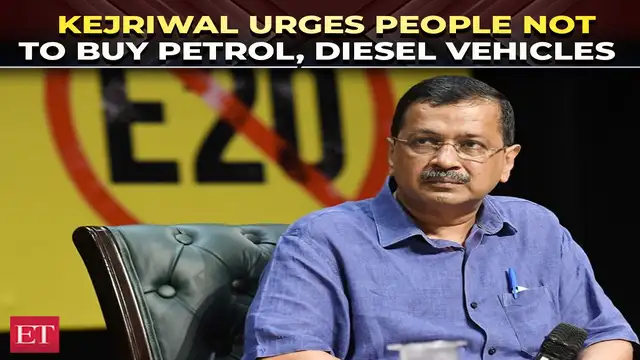
The man who once famously declared, “If people call me an anarchist, then I am an anarchist,” has hardly earned the moral authority to lecture the country on responsible governance. He may have embraced the label himself, but Bharat is not obliged to embrace the politics that comes with it. The electorate has already delivered one emphatic verdict. In the 2025 Delhi Assembly election, the BJP won 48 of 70 seats while the AAP was reduced to 22, with Kejriwal himself losing his constituency. That was not merely an electoral setback; it was a warning that political theatrics, accusations and perpetual victimhood eventually collide with public judgment. Yet the lesson appears not to have sunk in. With his political influence under pressure, Kejriwal seems to believe that another sensational allegation can somehow revive his fortunes. Perhaps he imagines that if a lie is repeated loudly enough, it will become a fact. It will not. And Punjab should not be treated as a laboratory for such political misinformation either. There can certainly be a legitimate national debate about E20—vehicle compatibility, mileage, feedstock economics, food-versus-fuel concerns, consumer interests and the pace of transition are all legitimate subjects for scrutiny. Indeed, responsible governments should welcome such scrutiny. But inventing an American ethanol-import surrender is not scrutiny. It is political fiction. The tragedy is that Kejriwal once presented himself as the great crusader against corruption, political deceit and establishment politics. Today, his political discourse increasingly resembles precisely the kind of politics he once claimed he would cleanse from public life. Bharat deserves criticism backed by evidence, not allegations manufactured for headlines. If Kejriwal wants to challenge the Modi Government, let him produce documents. Let him produce the import agreement. Let him produce the government notification permitting large-scale US fuel-ethanol imports. Let him produce the evidence of the alleged surrender. Until then, the accusation remains what it appears to be: another Kejriwal political concoction. The country has enough real problems. It does not need a former IRS officer-turned-politician confusing fiction with fact. In politics, disagreement is legitimate. Dissent is democratic. But repeatedly treating demonstrably false claims as facts is neither. And when the facts are placed on the table, no amount of political shouting can make them disappear.