Temple autonomy without financial transparency would merely replace one custodian with another. The time has come to make every rupee offered to God fully accountable.
If the first battle is about liberating Hindu temples from excessive governmental control, the second—and perhaps even more important—battle is about protecting temple wealth from every possible avenue of misuse.
The two issues cannot be separated.
Those who passionately demand administrative autonomy for Hindu temples must also be equally passionate about ensuring the highest standards of financial transparency. Otherwise, critics will inevitably ask a legitimate question: If governments should no longer supervise temple finances, what safeguards will prevent future misuse by private administrators?
That question deserves an answer—not anger.
For years, governments have justified their continued presence in temple administration by citing accountability. Temple activists, on the other hand, have argued that bureaucratic control has itself become a source of inefficiency, political interference and alleged diversion of temple resources. Both sides have made compelling points.
Yet, surprisingly, almost nobody has attempted to bridge the two positions.
In my opinion, the bridge already exists.
Its name is digital transparency.
India has become a digital economy
Over the last decade, India has witnessed nothing short of a digital revolution.
Millions of citizens now use UPI for transactions that were once unimaginable.
The roadside tea vendor accepts QR code payments.
The vegetable seller accepts UPI.
Auto-rickshaw drivers accept digital payments.
Street-side flower vendors display QR codes alongside their baskets.
Electricity bills are paid digitally.
Income tax is filed online.
Railway tickets are booked through mobile applications.
Property registrations are increasingly digitised.
Government subsidies are transferred directly into beneficiaries’ bank accounts.
Even pilgrims visiting major temples today purchase darshan tickets online, reserve accommodation through mobile applications, donate towards annadanam electronically and receive digital acknowledgements.
Technology has entered almost every aspect of public life.
Except one.
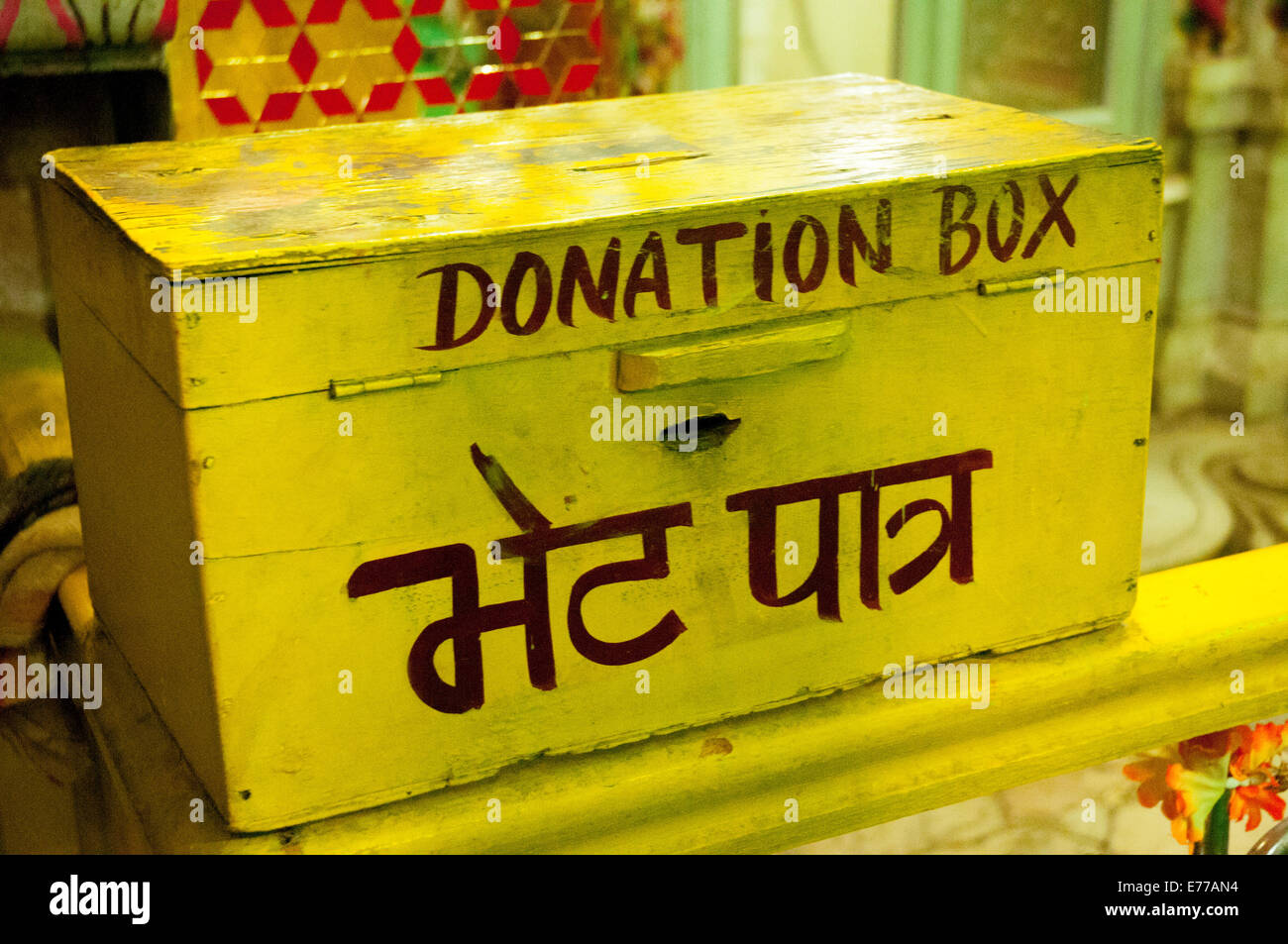
The traditional hundi.
Is cash the only form of devotion?
This is perhaps the most sensitive question.
Some may immediately argue that dropping money into the hundi is itself an act of devotion.
Certainly.
The act of offering is sacred.
But is the cash sacred?
That is an entirely different question.
The essence of Hindu philosophy has never been the currency note.
The essence has always been bhakti.
A devotee’s sincerity is not measured by whether he places a ₹100 note into a wooden hundi or scans a QR code outside the sanctum.
Also read: https://orangenews9.com/why-not-digitalize-even-hundi-offerings-part-i/
God recognises devotion.
Not payment modes.
Currency notes themselves did not exist when our temples were built centuries ago.
Neither did bank transfers.
Nor digital wallets.
The form evolves.
Faith remains eternal.
Every rupee deserves a trail
Here lies the real issue.
Many of India’s largest temples receive hundreds of crores of rupees every year.
Some receive tonnes of gold and silver.
Some receive valuable jewellery.
Some receive property donations.
Much of this wealth originates from anonymous cash.
Nobody knows who contributed.
Nobody knows whether the money represents honest earnings.
Nobody knows whether it includes unaccounted wealth.
Nobody knows whether illicit money has found a convenient sanctuary in the name of devotion.
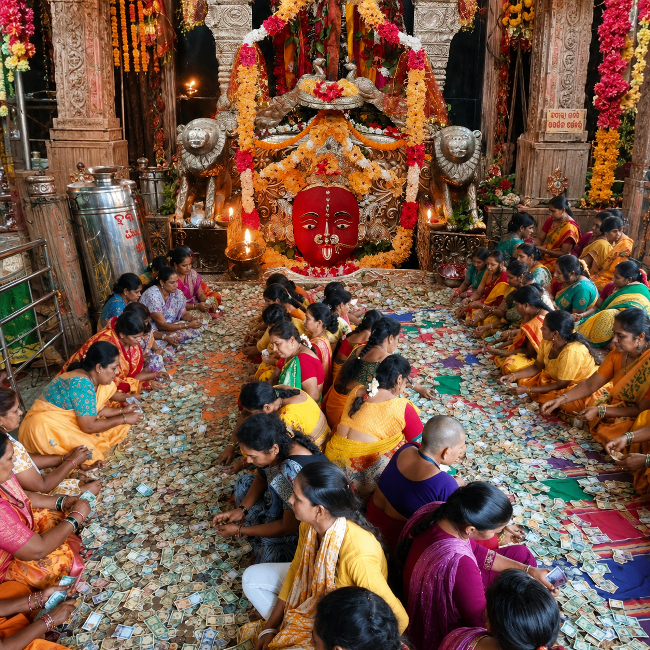
Equally important, once enormous volumes of cash enter any institution, opportunities arise for pilferage, under-reporting, manipulation during counting, transportation risks and accounting discrepancies.
I am not accusing any particular temple.
Nor any particular government.
I am merely stating an undeniable reality.
Wherever large volumes of anonymous cash accumulate, transparency inevitably becomes more difficult.
That is precisely why banking systems evolved.
That is why digital payments became the global norm.
Why should temples remain an exception?
Transparency protects temples
Ironically, the loudest opponents of digital reform often claim they are protecting temples.
I respectfully disagree.
Nothing protects a temple more effectively than complete financial transparency.
If every donation enters directly into an audited bank account, allegations of missing cash become nearly impossible.
If every contribution carries an electronic record, auditing becomes faster and more reliable.
If every transaction leaves a digital footprint, public confidence grows.
Technology does not weaken faith.
It protects it.
In fact, it protects trustees as much as devotees.
No honest trustee should fear transparency.
On the contrary, transparent systems shield administrators from false accusations.
But what about anonymous charity?
One argument deserves serious consideration.
Indian civilisation has always respected gupta daan—anonymous charity.
Many devotees intentionally avoid publicity while making donations.
Would digital payments destroy that noble tradition?
Not necessarily.
Modern banking systems already protect personal privacy.
A donor’s identity need not be displayed publicly.
Temple notice boards need not announce donor names.
Only authorised auditors, statutory authorities or investigating agencies—when legally required—should have access to donor records.
Privacy and accountability are not mutually exclusive.
Both can coexist.
Learn from the digital transformation
Temples have never hesitated to adopt technology when it improves administration.
Consider the changes over the last two decades.
Online darshan bookings.
Electronic queue management.
Digital accommodation.
Virtual seva reservations.
SMS alerts.
Facial-recognition access in some places.
Electronic accounting systems.
Mobile applications.
Live streaming of festivals.
If technology can organise millions of pilgrims every year, why should it stop at the hundi?
Why should the most important financial transaction remain largely dependent upon bundles of currency notes?
A phased reform—not a cultural revolution
I am not advocating that every village temple should immediately abolish its hundi.
Nor am I suggesting that elderly devotees unfamiliar with digital technology should be inconvenienced.
Reforms should always be practical.
Large temples receiving substantial annual donations can begin voluntarily.
Alongside the traditional hundi, prominent digital donation counters and QR codes can be installed across temple premises.
Devotees should have complete freedom to choose.
Over time, as digital literacy expands, electronic donations will naturally increase.
The transition should be evolutionary—not coercive.
Faith should never feel forced.
Beyond cash: A Temple Transparency Code
Digital donations alone are not enough.
India needs a broader Temple Transparency Code applicable to all major public temples, irrespective of whether they are government-administered or independently managed.
Such a framework could include:
- Mandatory annual independent audits by accredited auditors.
- Quarterly publication of income and expenditure statements.
- Real-time disclosure of major development works.
- Online inventories of gold, silver and precious jewellery, with appropriate security safeguards.
- GPS-based records of immovable temple properties to curb encroachments.
- Public disclosure of major tenders and contracts.
- Digital receipts for every donation.
- CCTV monitoring of counting rooms.
- AI-assisted reconciliation of collections and accounting records.
- Periodic social audits involving respected members of the devotee community.
None of these measures interfere with religion.
Every one of them strengthens public trust.
Minimum government. Maximum governance.
For years, the Union Government has spoken about “Minimum Government, Maximum Governance.”
Temple administration offers an ideal opportunity to translate that philosophy into reality.
If governments genuinely believe religious institutions should gradually enjoy greater autonomy, then they should simultaneously encourage technology-driven transparency.
The objective should not be perpetual bureaucratic control.
Nor complete absence of oversight.
The objective should be systems that make corruption extraordinarily difficult, irrespective of who occupies the administrator’s chair.
Good governance should outlive governments.
Every custodian is only a trustee
Ultimately, this debate is not about politicians.
Nor bureaucrats.
Nor temple boards.
Nor hereditary trustees.
The real owner of temple wealth is neither the State nor the management.
It is the deity in whose name every offering is made.
Every administrator is merely a temporary custodian.
Every trustee holds office in trust.
Every rupee belongs to the deity.
Every gram of gold belongs to the deity.
Every acre of temple land belongs to the deity.
No government has a moral right to misuse it.
No trustee has a moral right to appropriate it.
No vested interest has a moral right to exploit it.
That is why accountability must be universal.
The next great temple reform
The movement to free Hindu temples from excessive governmental control may continue in legislatures and constitutional courts.
That debate deserves thoughtful adjudication.
But another reform need not wait for judicial verdicts.
It can begin tomorrow.
The management of major temples—whether under government supervision or independent trusts—can voluntarily embrace complete financial transparency through digital technology.
India has shown the world that it can lead a digital payments revolution.
Surely, the civilisation that gave the world the concept of dharma can also demonstrate that faith and accountability are not adversaries.
They are natural partners.
The debate, therefore, should no longer be confined to who controls Hindu temples.
The more important question is:
How do we ensure that every offering made by a devotee reaches the deity’s service without the slightest shadow of doubt?
When that day arrives, temple autonomy will no longer be merely a political demand.
It will become a moral triumph.
And perhaps that will be the greatest offering we can collectively make—not to any government, not to any political party, not even to any temple board—but to the timeless ideals of Sanatana Dharma, where integrity is itself an act of worship.