Upadhyayula Lakshman Rao
In the measured cadence of Trishtup and Jagati metres, the sage Agastya raises his invocation to Indra, the sovereign of luminous force and wielder of celestial authority, whose greatness is inseparable from the mighty hosts of the Maruts. Indra is not isolated in his power; rather, he stands resplendent amidst the vibrant energies of the Maruts, the storm deities who embody motion, vitality, and the dynamic principles of nature. Thus, Agastya proclaims that Indra’s glory arises from this divine association, for he is the lord of these forces that stir the atmosphere and sustain cosmic balance. With humility and reverence, the sage entreats Indra to extend his grace, to grant comfort, prosperity, and the harmonious conditions necessary for both ritual and life.
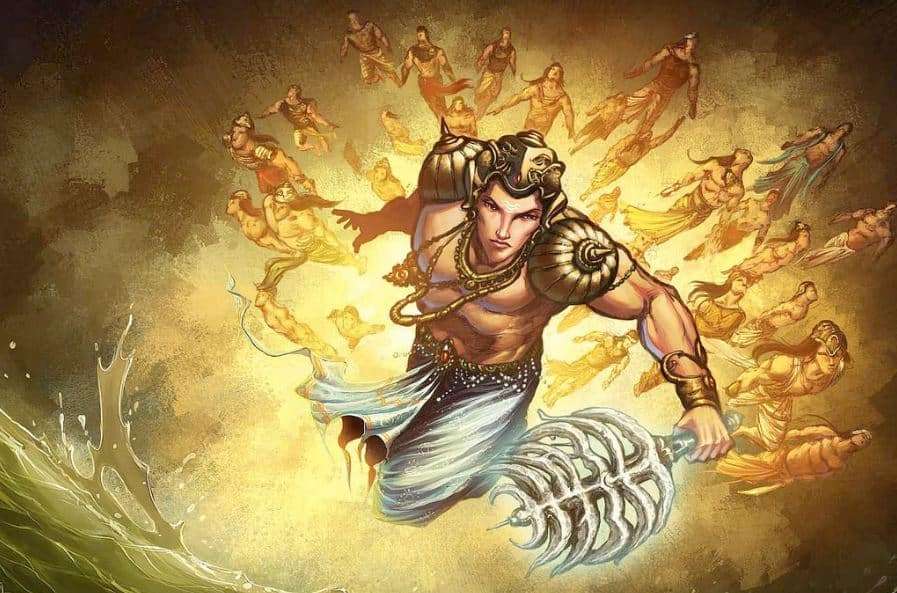
Indra, beloved of all beings, is extolled as the bestower of waters, the one who releases the life-sustaining rains through the agency of the Maruts. These Maruts, described as wise and radiant, accompany him in celestial endeavors, particularly in the symbolic battles against drought and chaos. Their victories are not merely mythic but represent the perennial triumph of order over disorder, fertility over barrenness. The thunderbolt, the Vajra of Indra, becomes a profound symbol—not only of destructive power but of transformative energy that breaks the inertia of clouds, releasing rain. In this interplay, Agni, the sacred fire, flourishes in yajna, just as electrical currents animate water; both represent conduits of energy, one terrestrial and one celestial, reflecting an early intuitive grasp of interconnected natural forces.
The ritual itself becomes a meeting ground of metaphysics and proto-scientific insight. Agni consumes the oblations as if wearing them, transforming matter into subtle essence, much like energy transmutation recognized in modern scientific thought. Indra is acknowledged as the great donor, the possessor of inexhaustible riches—not merely material wealth, but the abundance of natural resources and vitality. Agastya implores him to share these riches, emphasizing that divine generosity mirrors the ecological cycles of giving and renewal. The hymns chanted with precision and melody symbolize not only devotion but also the disciplined ordering of sound, akin to vibrational harmonics that influence both mind and environment.
The narrative deepens as nature itself is portrayed as a living, strengthening force. Indra is asked to nourish humanity, to provide sustenance that fortifies both body and spirit. The Maruts, before approaching the sacred precincts of the yajna, are invoked to bestow wealth, suggesting that preparation and alignment with natural rhythms are prerequisites for receiving abundance. The clouds gather vast and purposeful, driven by unseen laws, while the Maruts, like swift warriors, strike them to release rain. The imagery of Krishna-parnas and the roaring movement of the Maruts evokes the sensory experience of storms, capturing both their terror and their necessity. These forces, though fierce, act as protectors, much like disciplined armies safeguarding life.
Indra is further exalted as the creator and sustainer of life, whose actions, in union with the Maruts, enhance cosmic glory and dispel sorrow. The shaking of clouds and the pouring of rain signify renewal, the cyclical restoration upon which all existence depends. The hosts of divine beings join in praise, acknowledging the intricate balance of forces that sustain the universe. In this vision, food, nourishment, and longevity are not mere blessings but outcomes of a well-ordered cosmos where divine and natural laws operate in harmony.
A profound philosophical turn emerges when Indra reflects on the uncertainty of knowledge. He speaks of the limitations of human awareness, of the restless mind that forgets what it has learned and cannot foresee the future. This introspection introduces a deeply psychological dimension, recognizing cognitive impermanence and the fluid nature of human understanding. Agastya, in response, expresses concern, questioning whether divine power might turn destructive. He reminds Indra of his kinship with the Maruts and the shared participation in yajna, urging him toward protection rather than harm, especially in times of conflict.
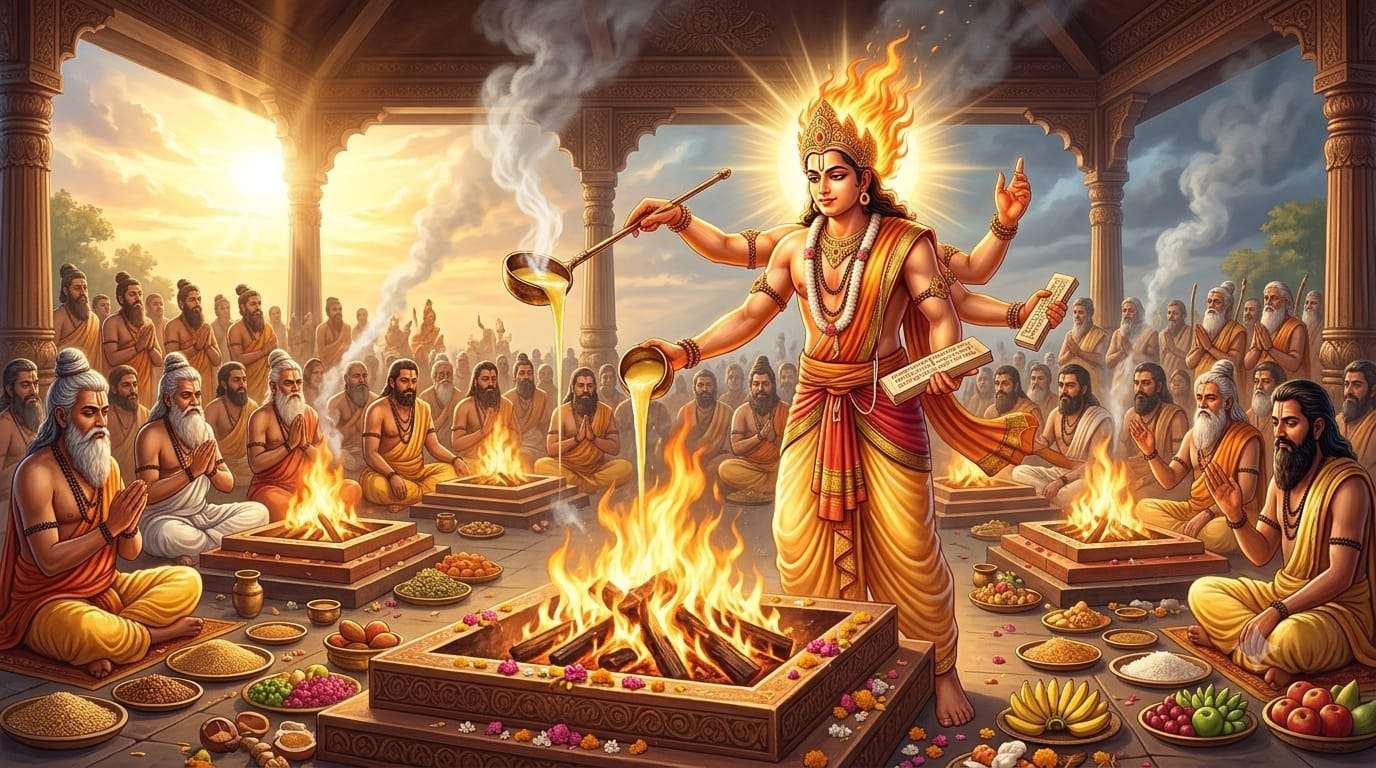
Indra’s reply is marked by intimacy and clarity. Addressing Agastya as a brother and dear friend, he questions the sage’s doubt and emphasizes the importance of expressed thought. Unspoken intentions, he suggests, cannot be understood, pointing toward the necessity of clear communication—an insight as relevant to human relations as to spiritual practice. He then directs the ritual order: the altar must be prepared, Agni ignited at the forefront, and the yajna conducted as a symbol of immortality. Here, ritual becomes a structured process, almost experimental in nature, where precise actions yield transformative outcomes.
Agastya concludes with a renewed prayer, addressing Indra as the lord of wealth, companionship, and supreme authority. He recognizes him as the refuge for those who seek shelter and affirms that the yajna is ready. With devotion and clarity, he invites the Maruts to partake in the offerings, completing the cycle of invocation, response, and fulfillment. In this narrative, the Vedic vision unfolds as a synthesis of spirituality and observation, where divine forces mirror natural phenomena, and ritual becomes a disciplined engagement with the laws governing both the cosmos and the human mind.