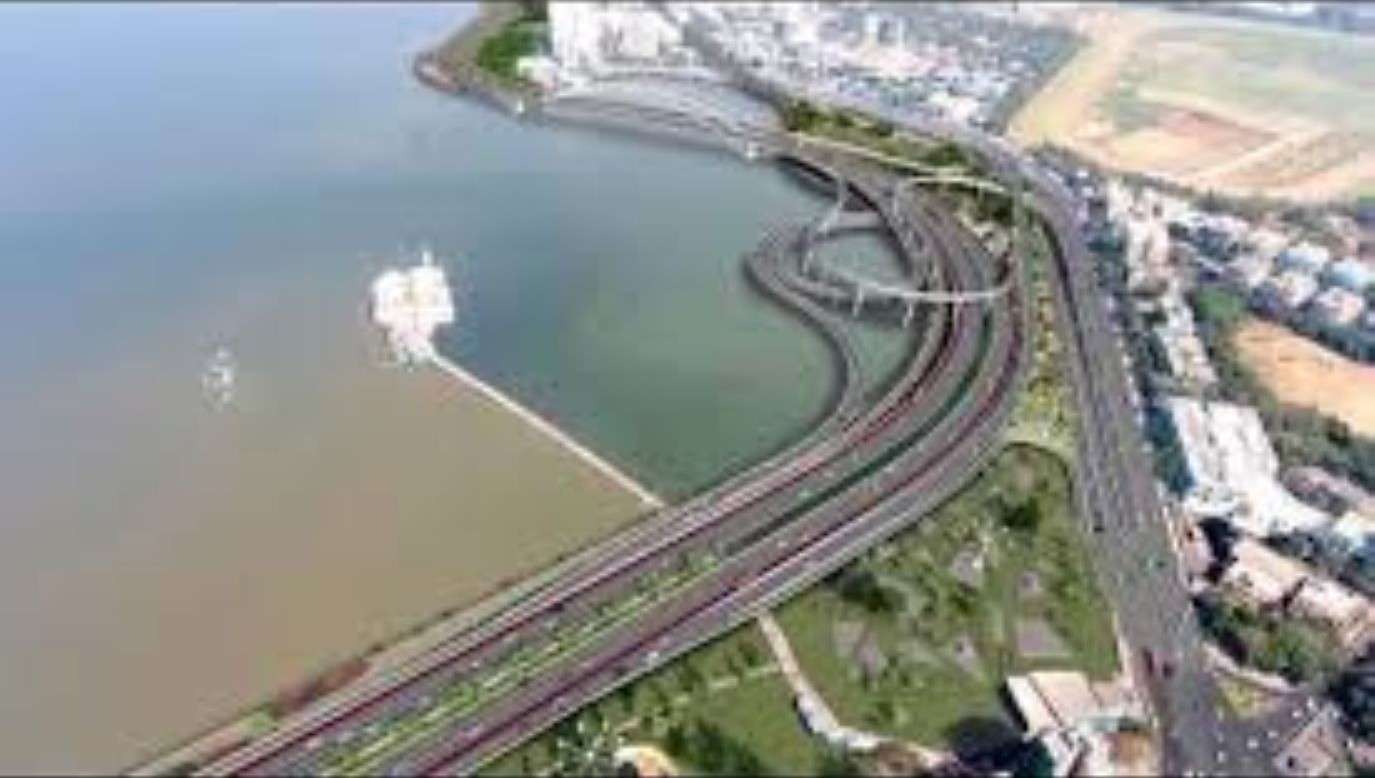
Mumbai: Maharashtra Chief Minister Devendra Fadnavis on Sunday said the ambitious Mumbai Coastal Road project would decongest the Western Express Highway, which carries around 60 per cent of the city’s traffic, and asserted that the Bandra-Versova stretch would be completed by March 2028.
“Nearly 60 per cent of Mumbai’s traffic uses the Western Express Highway. Considering Mumbai’s length, it was extremely necessary to provide a parallel signal-free road. That is why this project has been undertaken,” Fadnavis told reporters after reviewing the progress of the project.
He said the metro network had reduced pressure on roads and would continue to do so, but Mumbai also needed a parallel signal-free corridor because of its geographical length.
The CM said the Bandra-Versova sea link and Versova-Bhayandar connectors would converge in the north and despite rough sea conditions and high waves, work was progressing rapidly.
“You can see how difficult this work is. There have been several court cases and we have won them. After the monsoon, the work will gather tremendous speed,” he said.
Fadnavis said the government was aiming to complete the Bandra-Versova section by March 2028, while the Versova-Bhayandar stretch and its connectors were targeted for completion by December 2028.
He said separate plans had been prepared for monsoon and fair-weather periods and that the project was being monitored daily through a war room mechanism to ensure timely execution.
Addressing concerns over mangrove loss, Fadnavis said Maharashtra and the Mumbai Metropolitan Region were unique in recording an increase in mangrove cover.
“First of all, all of us should understand that Maharashtra is the only state, and Mumbai and the MMR region are the only region, where the Forest Survey of India has recorded an increase in mangrove cover. This is because the Maharashtra government has continuously undertaken mangrove plantations, created mangrove parks, and ensured their conservation,” he said.
Even when some mangroves have to be shifted or removed for such vital infrastructure projects, Maharashtra remains number one in mangrove conservation, he said.
Referring to preparations for next year’s Kumbh Mela, Fadnavis said development works had commenced at Trimbakeshwar, Ghrishneshwar and Parli Vaijnath temples, while work at Bhimashankar was more challenging because of forest cover, biodiversity and the habitat of the Indian giant squirrel, Maharashtra’s state animal.
He said an entire village located near the Bhimashankar temple had agreed to relocate and would be shifted around 1.5 km away and developed as an ideal village.
Fadnavis said the temple-related work, originally expected to take one-and-a-half years, had been completed by the administration in six months.