Upadhyayula Lakshman Rao
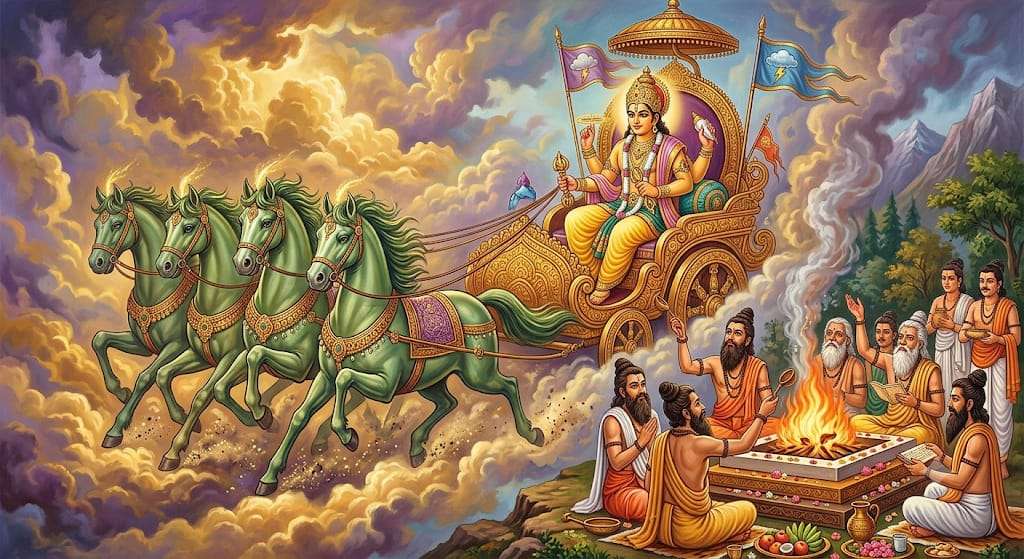
In the sacred cadence of the Antyeṣṭi and Triṣṭubh metres of the Rigveda, the sage Puruchhepa raises a solemn and elevated invocation to Rudra and the twin cosmic sovereigns Mitra and Varuna. These ancient deities, radiant and eternal, are celebrated as the upholders of ṛta—the cosmic order—and as the benevolent bestowers of comfort and prosperity upon their devoted patrons. Having partaken with grace and acceptance of the sanctified oblations, they are invoked through refined hymns, composed with devotion and precision, reflecting both spiritual reverence and disciplined thought. Their luminosity is not merely symbolic but reflects a profound understanding of natural order, as they govern the cycles of rain, light, and moral law, ensuring that no adversarial force may prevail against the harmony they establish.
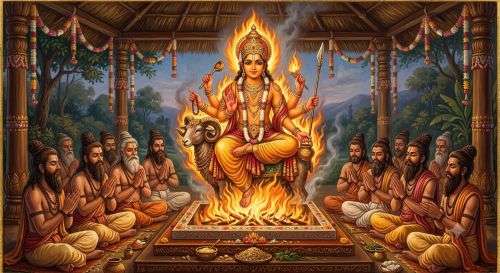
Their divine presence is intertwined with the celestial rhythm of dawn, where the graceful movement of the Ushodevis heralds the unfolding of light across the horizon. The path of the Sun, adorned with countless rays, reveals the expansive dominion of Mitra, whose brilliance permeates the heavens, while the same effulgent beams extend into the vast and mysterious realm of Varuna. Thus adorned with the offerings of sacred chants and ritual purity, these deities are seated upon the sanctified northern altar, the luminous axis of the yajña. This altar, carefully purified by the patron, gleams with auspicious radiance, symbolizing both spiritual aspiration and an early awareness of directional sanctity and spatial alignment within ritual science.
Each day, these sons of Aditi awaken the patrons to righteous action, illuminating their paths with clarity and purpose. Between them moves Aryaman, the noble guide who inspires human beings to fulfill their duties and ascend to higher realms according to their merits. This reflects a profound ethical framework wherein actions, governed by truth and discipline, determine one’s spiritual elevation. The northern altar becomes not merely a ritual space but a symbolic center of energy, from which the devoted draw strength, nourishment, and clarity for both worldly and transcendental pursuits.
Upon this sacred altar rests the Soma, the purified elixir, prepared with meticulous care and reverence. Offered with humility, it becomes dear to Mitra and Varuna, who partake of it with bowed heads, signifying the sacred reciprocity between the divine and the human. The Soma, in its essence, represents both a spiritual ecstasy and a refined understanding of vitality—an early expression of the interplay between material preparation and inner illumination. Consumed by all the gods with equal regard, it signifies unity within diversity, and its essence shines forth within the patrons, invigorating them with divine inspiration and harmony.
The devotee, seeking refuge in Mitra and Varuna, finds that all worldly needs are sustained through their grace, while Aryaman ensures protection and elevation based on righteous deeds. This inclusive vision affirms that whichever deity the patron worships with sincerity, protection and fulfillment shall follow, reflecting a universal and pluralistic spiritual ethos. In reverence, salutations are offered to the radiant Sun, to the sustaining Earth, and to the vast Heavens, acknowledging the interconnectedness of all existence under divine governance. Rudra, the fierce yet benevolent giver of the fruits of merit, is also invoked with deep humility, embodying both transformative power and compassionate grace.
The priests, in unison, invoke Indra, Agni, Aryaman, and Bhaga, preserving the continuity of ancient hymns that bridge human aspiration with cosmic forces. The aspiration for long life, noble progeny, and enduring protection through Soma reflects a holistic vision of well-being. The grace of Indra, the benevolence of the Maruts, and the sustaining gifts of Agni, Mitra, and Varuna together establish a life enriched with nourishment, vitality, and spiritual fulfillment. Thus, the hymn stands not only as an act of devotion but also as a testament to an early scientific temperament—where observation of nature, ethical living, and cosmic understanding converge into a unified and luminous philosophy of life.