



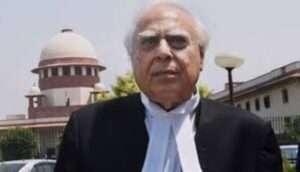
When a senior advocate of the Supreme Court and a former Union Minister says he is “ashamed to live in India,” it is bound to attract attention. The remark becomes even more significant when it comes from Kapil Sibal, a man who has spent decades benefiting from the very democratic institutions he now appears to be questioning. Every citizen has the right to criticise the government, the judiciary, political parties, or public policies. That right is protected by the Constitution. Equally, every citizen has the right to disagree with such criticism. Democracy does not demand uniformity of opinion; it thrives on debate. But before declaring oneself ashamed of an entire nation, some introspection may be in order. India is the same country that enabled Kapil Sibal to rise from a successful lawyer to a Union Minister, parliamentarian, and one of the most recognised legal faces in public life. It is the same democracy that continues to provide him a platform to argue cases, hold political views, contest elections, and criticise those in power without fear of state censorship. What exactly, then, is the source of this shame? If the concern is the health of democracy, India remains one of the world’s most vibrant electoral systems. Governments are voted out. Opposition parties govern several states. Courts regularly hear petitions against the government. Television studios, newspapers, digital platforms, and social media remain filled with criticism of those in power. One may disagree with the present government. One may oppose its policies. One may campaign against it politically. That is legitimate democratic conduct. But equating political disappointment with national failure is a dangerous leap. The timing of such remarks also raises questions. They come amid heightened political tensions in West Bengal and continuing debates over political violence, governance, and law and order in the state. For years, reports of post-election violence, intimidation of political workers, and incidents such as the Sandeshkhali controversy have generated national concern. Critics of the West Bengal government have repeatedly alleged that democratic freedoms are not always protected equally on the ground.
Many Indians, therefore, wonder whether those expressing outrage today displayed similar urgency when victims of political violence sought justice. Were their voices equally loud when allegations emerged against state authorities? Were they equally vocal when citizens complained of intimidation or when opposition workers faced attacks? These are fair questions in a democracy. The larger issue, however, is one of political consistency. Public intellectuals and senior lawyers carry influence. Their words shape perceptions not only within India but internationally. When they pronounce themselves ashamed of the country, they are not merely criticising a government; they risk diminishing the sacrifices and achievements of millions of ordinary Indians who continue to strengthen democracy every day. India is not perfect. No democracy is. Corruption exists. Political violence exists. Institutional failures occur. Governments make mistakes. Courts sometimes err. But the strength of India lies in its ability to correct itself through constitutional mechanisms rather than revolutionary upheaval. Those who genuinely believe the country is moving in the wrong direction are free to challenge it through legal arguments, political campaigns, public discourse, and democratic mobilisation. That is how republics function. But there is a difference between criticising India and condemning India. The first strengthens democracy. The second often serves only partisan narratives. Kapil Sibal is entitled to his opinion. So are the millions of Indians who take pride in a nation that has survived wars, terrorism, separatism, economic crises, coalition instability, and even the Emergency imposed half a century ago. For many citizens, the appropriate response to declarations of shame is simple: India is far from perfect, but it remains a country where even its harshest critics enjoy the freedom to denounce it publicly. That, in itself, is evidence not of democratic failure, but of democratic resilience.



I am watching Kapil Sibal for the last 25 years and never seen him winning any major case of public interest. He is only good for getting bails to all notorious people. He along with his siamese twin Abhishek Manusingvi are good “Bailers” for political class charging astronomical fee beyond the reach of a common man.