The Karnataka Congress’s prolonged succession battle has finally produced a winner. With his swearing-in as Chief Minister, D.K. Shivakumar has secured the biggest prize of his political career. But the real test begins now. The question is no longer whether DKS would become Chief Minister; it is whether he can successfully navigate the formidable political, administrative and electoral challenges that come with the office. Will his elevation cement his legacy as a master strategist and mass leader, or will it prove to be a poisoned chalice?
On the surface, Shivakumar stands at the peak of his political career. A master strategist, skilled negotiator and one of the Congress party’s most dependable fundraisers, he has patiently waited for his turn. His contribution to the Congress revival in Karnataka and his role in helping the party regain power in Telangana are widely acknowledged within party circles.
However, the circumstances under which he may assume office are far from ideal.
Karnataka today faces significant fiscal pressures. The Congress government’s ambitious welfare guarantees, which played a crucial role in its electoral success, have strained the state’s finances. Opposition parties and sections of industry have repeatedly questioned the sustainability of these schemes. Complaints over deteriorating civic infrastructure, poor road maintenance and urban management issues continue to haunt the government, particularly in Bengaluru, the country’s technology hub.
It is in this backdrop that Siddaramaiah’s reported willingness to eventually hand over power assumes significance. Having already crossed the halfway mark of the government’s tenure, he has largely secured his political legacy. More importantly, he may be stepping away before the most difficult phase begins.
For Shivakumar, the challenge would not merely be governing Karnataka. His real test would be leading the Congress into the next Assembly election and securing a second consecutive mandate—something the party has historically struggled to achieve in many states.
Unlike the late Dr. Y.S. Rajasekhara Reddy in undivided Andhra Pradesh, DKS does not enjoy the same mass appeal across every region of the state. Rajasekhara Reddy possessed a rare ability to transcend factional politics and connect directly with voters. Even after winning re-election in 2009, YSR famously described his victory as merely obtaining “pass marks” from the electorate. Such political realism is often absent in contemporary politics.
The national political environment further complicates matters. The BJP remains an electorally formidable force under Prime Minister Narendra Modi and Home Minister Amit Shah. While the Congress currently governs Karnataka, Telangana and Himachal Pradesh, anti-incumbency pressures are becoming increasingly visible. Recent local body election results in Himachal Pradesh have already offered warning signs for the ruling party.
For the Congress leadership, Karnataka is not merely another state. It is arguably the party’s most important remaining southern stronghold. Losing it would severely weaken the party’s national narrative heading into future parliamentary contests.
That is why the stakes for Shivakumar are exceptionally high.
A successful transition could establish him as one of the Congress’s most influential regional leaders. Failure, however, could leave him carrying the blame for any electoral setback while allowing others to distance themselves from responsibility.
Ironically, Siddaramaiah may emerge as the least vulnerable player in this entire equation. Having served as Chief Minister and dominated Karnataka politics for decades, he can afford to watch developments unfold from a position of relative comfort. Whether the government succeeds or struggles in its final years, its place in Karnataka’s political history is already secure.
The Congress high command, meanwhile, faces a larger dilemma. Across India, the party continues to grapple with organisational weaknesses, leadership questions, and regional challenges. Internal rivalries often consume energy that could otherwise be directed toward strengthening the party’s grassroots presence.
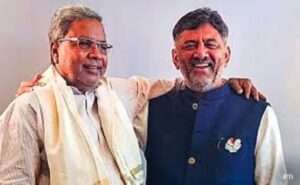
Ultimately, the answer to who will have the last laugh—Siddaramaiah or D.K. Shivakumar—may not emerge immediately after any leadership transition. It will be determined in the next Karnataka Assembly election.
If Shivakumar manages to retain power for the Congress, he will vindicate years of patience and political perseverance. If the party loses, Siddaramaiah’s exit may be remembered as a timely escape from a storm that was always gathering on the horizon.