Special Correspondent
Five years after a scathing judgment, the real question is no longer what happened in 2021. It is what the Hyderabad Cricket Association will do about it now.
Five years is a long time in the life of any institution. It is certainly long enough for a judicial order to be implemented, examined and acted upon. Yet, in the case of the Hyderabad Cricket Association, one important question appears to remain unanswered: what institutional action, if any, followed a Telangana High Court judgment that made serious observations about the conduct of proceedings concerning the appointment of an Ombudsman and Ethics Officer?
On April 6, 2021, the Telangana High Court delivered its judgment in Civil Revision Petition No. 117 of 2021 relating to the appointment of an Ombudsman and Ethics Officer in the HCA.
It was not an ordinary order.
The Court set aside the earlier order that had suspended the appointment and dismissed the underlying proceedings. More importantly, the judgment contained observations that went far beyond the immediate dispute.
The Court described the proceedings as an abuse of the process of the Court, recorded findings of collusion, observed that the parties had not approached the Court with clean hands and had suppressed true facts, and concluded that the proceedings were intended to delay the appointment of the Ombudsman and Ethics Officer.
These are not casual observations. They are judicial findings recorded by a constitutional court.
And that is precisely why the matter cannot simply be reduced to the question of whether the ₹25,000 costs imposed by the Court were eventually paid.
The money is incidental.
The principle is fundamental.
What happened after the judgment?
Five years have passed since the High Court pronounced its judgment.
What happened thereafter?
Was the judgment fully implemented?
Was the entire judgment examined by the HCA?
Were the observations made by the Court brought to the notice of the appropriate governing authorities?
Was the conduct referred to by the Court examined under the HCA’s applicable bye-laws, regulations and governance framework?
If the conclusion was that no further institutional action was necessary, who took that decision?
And, most importantly, where is that decision recorded?
These are legitimate questions, particularly because the judgment did not concern some unrelated private dispute. It concerned the functioning and governance of the Hyderabad Cricket Association itself.
An institution cannot invoke judicial orders when they suit it and then treat uncomfortable judicial observations as matters best left buried in old files.
A judgment cannot become a forgotten file
There is an important distinction that must be made.
A High Court judgment does not automatically mean that every person referred to in the proceedings becomes permanently disqualified from holding office or participating in cricket administration. Any disciplinary consequence must flow from the applicable rules, bye-laws, regulations or a lawful decision of the competent authority. Due process cannot be sacrificed merely because a judgment contains adverse observations.
But the opposite proposition is equally important.
Due process does not mean doing nothing.
When a High Court records findings of collusion, suppression of material facts and abuse of the judicial process in a matter concerning the governance of an association, the institution cannot reasonably pretend that nothing happened.
At the very least, the matter deserves an institutional examination.
If the applicable rules provide for action, the rules must be applied.
If they do not provide for action, that conclusion should be formally recorded.
If the conduct has already been examined by a competent authority, that record should be produced.
If subsequent judicial developments altered the position, those orders should be placed on record.
But silence cannot be allowed to substitute for governance.
Accountability cannot be selective
The HCA expects cricketers to follow discipline.
Clubs are expected to follow rules.
Office-bearers are expected to comply with regulations.
Players can face consequences for misconduct. Clubs can face disciplinary action for violations. Administrators themselves cannot reasonably claim a lower standard of accountability.
The rules must apply upwards as well as downwards.
That is the real test of institutional reform.
For years, Hyderabad cricket has struggled with allegations and counter-allegations involving governance, elections, administration, selection, financial management and the conduct of office-bearers. Whatever one’s position on individual controversies, one principle should be beyond dispute: the credibility of an association depends not merely on what its leaders say about transparency, but on whether they are prepared to apply transparency when the facts are inconvenient.
The 2021 judgment therefore provides an important test case.
What should the SMC do?
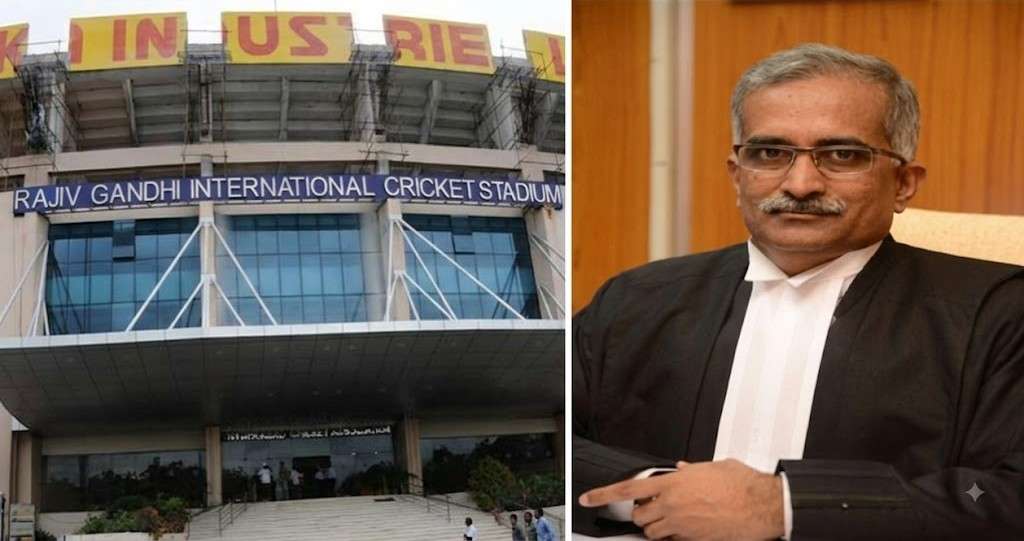
The present Single Member Committee headed by Justice (Retd.) P. Naveen Rao has been entrusted with the difficult task of restoring governance, transparency and confidence in Hyderabad cricket.
That responsibility makes the 2021 judgment particularly relevant.
The SMC need not prejudge anyone. It need not reopen litigation that has already been decided. Nor should it embark on a witch-hunt.
But it can—and arguably should—establish the facts.
At the minimum, it could:
- verify and place on record the status of compliance with the April 6, 2021 High Court judgment;
- ascertain whether the costs ordered by the Court were paid and, if not, what steps were taken;
- examine the serious observations contained in the judgment in the context of the HCA’s applicable bye-laws and governance provisions;
- determine whether any institutional or disciplinary action is warranted, strictly in accordance with due process;
- identify whether any subsequent orders or developments materially altered the position; and
- place the outcome transparently before the HCA membership.
None of this amounts to targeting an individual.
It amounts to institutional housekeeping.
In fact, if the examination concludes that no further action is warranted, that too should be stated clearly. A transparent decision exonerating someone after due examination is far better than a lingering suspicion created by silence.
The ₹25,000 is not the issue
It would be a mistake to allow the debate to get reduced to the ₹25,000 costs mentioned in the judgment.
That is not the real issue.
The real issue is whether a judicial finding concerning the functioning of an institution has any meaning beyond the courtroom.
If a High Court says that a proceeding was an abuse of the judicial process, records collusion and suppression of facts, and concludes that the proceedings were intended to delay an important governance appointment, an institution committed to good governance cannot simply close the file after dealing with the immediate litigation.
There is a larger institutional responsibility.
Judicial findings should prompt introspection.
They should trigger questions.
They should lead to examination of whether existing rules were violated and whether corrective measures are necessary.
Otherwise, the much-repeated words—transparency, accountability and reform—risk becoming nothing more than slogans.
Silence is not governance
The HCA has repeatedly spoken about the need to restore credibility and bring greater transparency to Hyderabad cricket.
That credibility will not be restored through statements alone.
It will be restored when difficult questions are confronted openly.
The easiest cases require no courage.
The real test comes when the record is uncomfortable, when powerful individuals are involved, when old controversies resurface and when an institution has to decide whether its own people are subject to the same standards it expects from everyone else.
This is precisely such a moment.
If the 2021 judgment was fully complied with and its implications were properly examined, let the record show it.
If no institutional action was warranted, let the reasons be recorded.
If action was taken, let the members know what action was taken.
If subsequent judicial orders changed the position, let those orders be placed before the members.
There is nothing threatening about transparency.
In fact, transparency protects everyone—including those who may otherwise find themselves the subject of suspicion.
The question before the SMC
The issue today is not revenge.
It is not about reopening a concluded litigation.
It is not about settling old scores.
And it is certainly not about ₹25,000.
It is about a much larger question:
Does a judicial finding have institutional consequences, or can it simply disappear into the archives once the immediate litigation is over?
If the HCA genuinely wants to turn a new page, this is an opportunity to do so.
The association need not fear its own records. It need not fear judicial observations. And it certainly should not fear transparency.
The Telangana High Court spoke on April 6, 2021.
Five years later, Hyderabad cricket deserves to know whether that judgment was merely complied with on paper—or whether its serious findings were actually examined and acted upon in accordance with the rules.
The question before the SMC is therefore simple: will the 2021 judgment remain a forgotten file, or will it become a test of whether accountability in Hyderabad cricket finally applies to everyone?