



After 59 anxious days of conflict, the prospect of peace finally appears to be emerging in West Asia. For a world held hostage by war, uncertainty, and rising energy prices, this is welcome news. More importantly, it offers an opportunity to acknowledge an unlikely architect behind the breakthrough – US President Donald Trump. If the ongoing negotiations between the United States and Iran eventually culminate in a lasting agreement, Trump deserves considerable credit for steering the region away from a potentially catastrophic escalation. For nearly two months, the world watched with growing concern as threats and counter-threats dominated headlines. Every passing day carried the fear of a wider regional war involving multiple actors. The biggest concern was the Strait of Hormuz, one of the world’s most strategic maritime corridors, through which nearly one-fifth of global oil supplies pass. For Bharat, the stakes were even higher. The country imports nearly 85 per cent of its crude oil requirements, with a substantial portion passing through this narrow waterway. Any prolonged disruption would have severely impacted Bharat’s economy, fuel prices and inflation. Therefore, news of a possible peace agreement naturally triggered optimism in financial markets, with stock exchanges in Mumbai and across the world responding positively. Trump’s detractors often accuse him of being unpredictable and inconsistent in his rhetoric. Those criticisms are not entirely unfounded. His blunt style of diplomacy has frequently unsettled allies and adversaries alike. Yet, leadership is ultimately judged by outcomes rather than perceptions. In this instance, Trump appears to have demonstrated that unconventional diplomacy can sometimes achieve what traditional diplomacy struggles to deliver. Perhaps his biggest achievement has been balancing two competing priorities. On one hand, he has stood firmly by Israel, America’s long-standing ally, and reiterated that Israel has every sovereign right to protect itself from existential threats. On the other hand, he has kept diplomatic channels open with Iran, ensuring that confrontation does not spiral into a full-scale regional disaster. The reported understanding regarding tighter oversight and restrictions on Iran’s nuclear programme, if implemented transparently and under international supervision, could become a major confidence-building measure. Such a development would reassure not just Israel but several Gulf nations that have long feared a nuclear arms race in the region. However, even as optimism grows, fresh developments underscore how fragile this peace process remains. Israel has formally rejected the proposed US-Iran understanding, arguing that it was neither a party to the negotiations nor bound by commitments that, in its view, may compromise its national security. Israeli leaders continue to insist that Iran’s military and nuclear capabilities remain an existential threat that cannot be neutralised merely through diplomatic assurances.
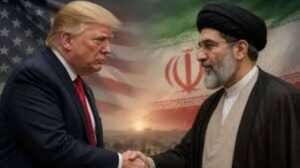
At the same time, Trump himself is facing increasing criticism at home. Some conservative voices within his own political camp have accused him of settling for a deal that falls short of his original objectives, particularly regarding Iran’s nuclear programme and sanctions relief. Others argue that Tehran may be gaining economic breathing space without offering sufficient guarantees in return. Questions are also being raised about whether the agreement represents a genuine peace accord or merely a temporary arrangement that postpones difficult decisions for another day. These criticisms cannot be dismissed outright. Peace in West Asia has repeatedly collapsed under the weight of mistrust and competing strategic interests. Any celebration, therefore, must be tempered with realism. An agreement on paper is only the beginning; implementation will be the true test. Iran must demonstrate transparency, the international community must ensure robust verification mechanisms, and Israel’s legitimate security concerns cannot be brushed aside in the rush to declare victory. At the same time, any international commitment towards rebuilding war-affected areas in Iran would also reflect an important principle: lasting peace cannot be achieved through military victories alone. Reconstruction, economic revival and people-centric diplomacy are equally essential. The celebratory mood seen in various parts of the region, including Lebanon and among certain Palestinian groups, must nevertheless be viewed with caution. Their enthusiasm may reflect hope for regional de-escalation, but unresolved security concerns remain. Israel continues to face threats from Hamas and retains every legitimate right under international law to protect its citizens and territorial integrity. Peace agreements, after all, do not erase decades of mistrust overnight. The larger lesson from this episode is that the world desperately needs practical statesmanship rather than ideological posturing. The international community has often criticised Trump for being disruptive, but disruption is not necessarily destructive if it ultimately produces stability. In a world increasingly divided by wars in Europe, conflicts in West Asia and intensifying geopolitical rivalries in Asia, leaders who can pull adversaries back to the negotiating table deserve recognition, regardless of political affiliation. Should this agreement eventually hold, it will not merely be a diplomatic victory for Washington or Tehran. It will be a victory for global energy security, for developing economies such as India and, above all, for millions of ordinary citizens who pay the ultimate price for wars they neither start nor support. History will eventually decide how Donald Trump is remembered. If he succeeds in converting 59 days of dangerous confrontation into a durable and enforceable peace, he will deserve recognition, even from his fiercest critics. But Israel’s latest rejection is a reminder that the journey towards peace in West Asia is far from over. For now, the world waits cautiously – not for another missile launch, but for signatures that can withstand the harsh realities of geopolitics. If those signatures endure, that will indeed be a triumph worth celebrating – not just for Trump, but for humanity itself.



Biggest US surrender after Vietnam war. Let us see what will happen after the deal from Iran point of view, i) Iran comes out as a brave country who withstood the might of US attacks, even after suffering great damage, ii) The eagerness of Trump for the deal, even at the extent of involving a country like Pakistan, shows his nervousness and acceptance of defeat, iii) US economy is in shambles with such high inflation, iv) World energy crisis, v) US lost its face as it bases in Qatar, Saudi Arabia, Kuwait were attacked, vi) All his allies in Middle East who were living under the impression that US will save them, lost belief in the US for protection, vii) Iran emerged as much stronger hegemon in the Middle East, viii) Iran gets 300 billion dollars investments as a part of reparations and rebuilding the country and who will pay this, US and its allies! ix) Unfreezing of Iranian assets. Iran is living under US sanctions for the last more than 3 decades. It will be Iran’s biggest triumph, x) Trump statement on opening of Hormuz is laughable. People should between the lines. He said, “Strait of Hormuz will be reopened within 30 days for normal traffic “according to the Iranian arrangements”. As if Hormuz was closed before US attacked Iran. Just laughable, xi) None of the original objectives of US were met, for example, no regime change in Iran, still 400 kg of 60% enriched Uranium is lying somewhere deep in the mountains of Asfahan, which US claimed to have bomb with B52 bombers with 2000 kg bombs. This enriched Uranium is still lying there, and Iranians have closed all the outlets and their approach is all mined. US has no heart to go there and get this due to difficult Iranian terrain. If they go, it will be suicide of the US army on an unprecedented scale. Trump is scared, xii) Iran demonstrated that their missiles can breach the Iron dome of Israel as several of their missiles reached Israel. I can go on and on the failures of US who started this war and now go gaga over opening of Hormuz that was closed to bring US on its knees. Trump call it diplomacy. If this is diplomacy, then God save the world politics. US supremacy and face are gone forever. It is just a meek surrender before Islamic Revolutionary Guard Corps (IRGC) and that is why Hamas and Hezbollah are celebrating. In my opinion this is not the end. Let us wait the response of Israel who will keep on attacking Hezbollah and will not keep quiet till 400 kg. sack of enriched Uranium is retrieved, as it is their existential threat and Iran will not rest and start again with the kind of money that is being pumped, 300 billion US dollars!!!
With Israel not yielding, we have to wait and watch how successful will this deal be when it comes to enforcement and implementation. Moreover, Trump carries the reputation of his left hand not knowing what his right hand does.
What you say is indeed true. However, the world was equally desperate to see the war come to an end. Had it escalated further, many economies, including Bharat’s, would have suffered severely. In that context, even if the United States had to compromise or was perceived to have ‘surrendered’, it does not really matter when viewed from the larger perspective of global economic stability and Bharat’s interests in particular, Chadha.