Upadhyayula Lakshman Rao
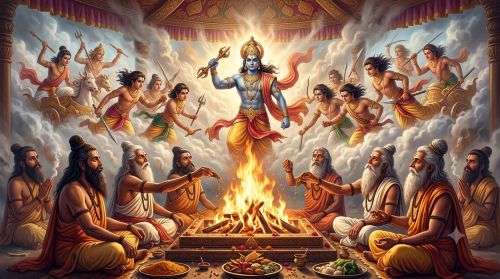
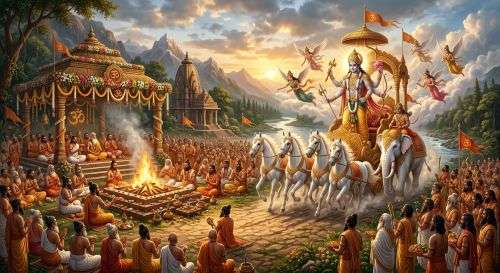
The sage Deerghatama, endowed with penetrating insight, raises a profound hymn woven through diverse Vedic meters—Anushtubh, Trishtubh, Jagati, Gayatri, and Pankti—reflecting not merely poetic variation but the layered rhythm of the cosmos itself. His prayer is not directed to one deity alone but to the manifold expressions of the divine, revealing a universe where multiplicity rests upon an underlying unity. This inquiry is both spiritual and proto-scientific, seeking to understand the nature of existence through observation, symbolism, and contemplation.
The imagery of the cow and calf emerges as a tender yet profound metaphor. The cow, rich with nourishment, bellows in longing and affection for its calf, closing its eyes as if immersed in maternal meditation. The calf, circling its mother, expresses devotion, while the cow responds with gentle murmurs. This natural exchange surpasses human sensitivity, reminding us that instinct and affection in nature often embody a purity that human intellect struggles to attain. The milk, flowing with froth, becomes not only sustenance but a symbol of knowledge offered to the worthy, particularly to the twin deities Ashvins, who represent healing and harmony.
The hymn subtly transitions into the discipline of breath and ritual. The restless human mind, governed by inhalation and exhalation, finds steadiness upon the completion of sacred rites. Here, breath mirrors the cosmic rhythm—expansion and contraction—suggesting an early awareness of physiological and meditative balance. The soul, distinct from the body, receives the subtle offerings of ancestral rituals, indicating a metaphysical continuity beyond physical existence. This distinction aligns with one of the earliest philosophical recognitions of duality between matter and consciousness.
The sage then contemplates the vast cosmic order governed by Aditya, the radiant protector whose presence is seen in the movement of light across space. Though rays may sometimes be veiled, their journey never ceases, symbolizing resilience and continuity. This observation reflects an intuitive grasp of celestial mechanics—the cyclical movement of light and its interaction with atmospheric conditions—framed within a spiritual lens.
A deeper mystery unfolds in the reflection on birth and ignorance. The one who causes conception does not fully comprehend the process, and the being within the womb remains unaware of its own nature. Yet, upon entering the world, growth unfolds under unseen laws, untouched by sin in its origin. This passage echoes a contemplative inquiry into embryology and consciousness, recognizing both biological process and metaphysical innocence.
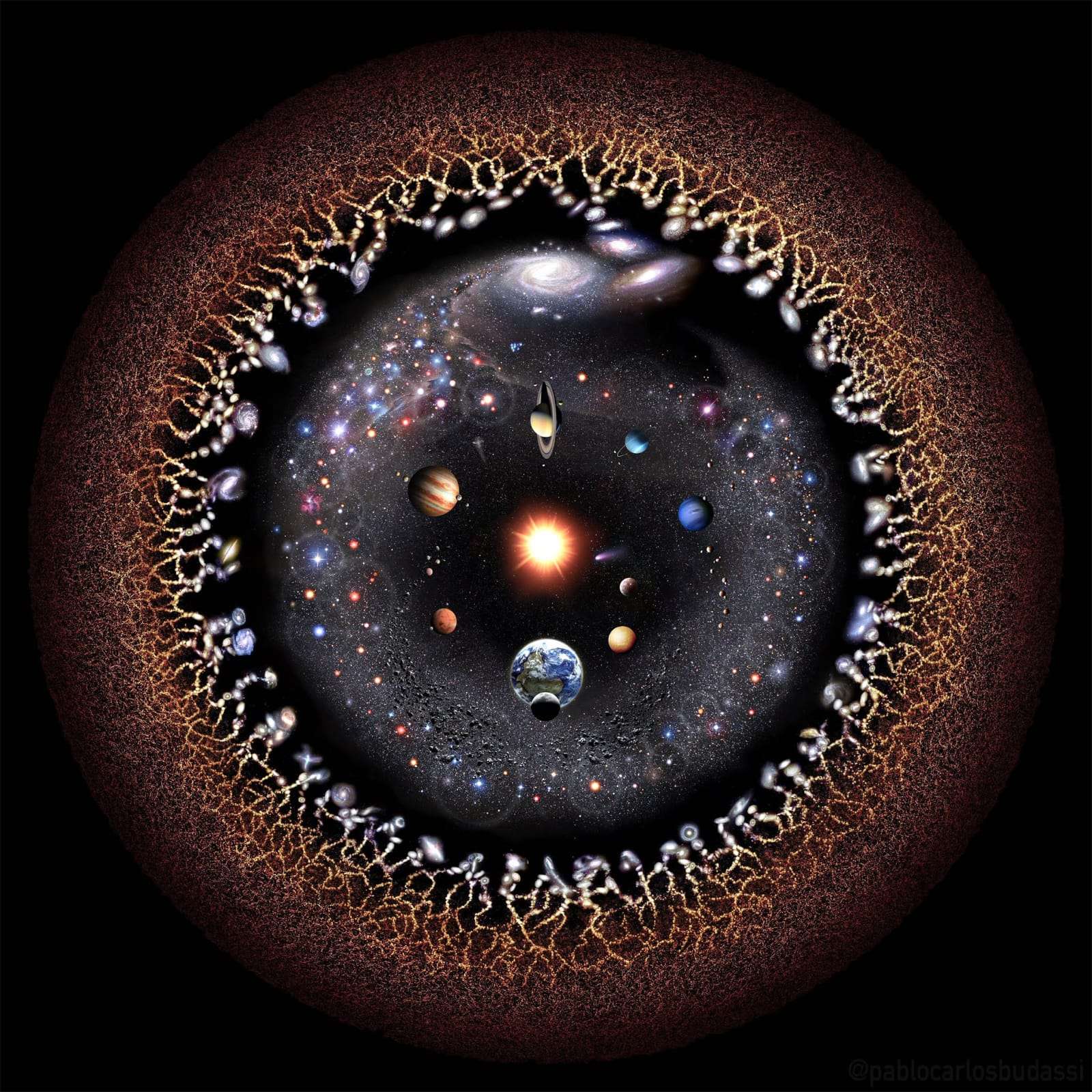
The cosmos is then described as a familial structure: heaven as father, earth as mother, and the vast expanse between them as the field of existence. The question arises—where does creation begin, and where does it end? The answer is given through symbolic equivalence: the Veda as the boundary of knowledge, yajna as the generative force of worlds, soma as the vital seed, and the priestly consciousness as the repository of sacred sound. This reflects a systemic understanding of creation, where knowledge, action, energy, and consciousness form an interconnected cycle.
The reference to seven rays gestating within half a year and later releasing rain reveals an early observation of seasonal cycles and solar influence on climate. Water, described as existing in seed form, suggests an intuitive grasp of transformation and conservation, akin to the modern understanding of the water cycle. The roles of Vishnu and the Adityas emphasize the sustaining and regulating forces of the universe, operating with omniscience and internal presence.
In a moment of existential humility, the sage confesses uncertainty about his own existence, acknowledging the veil of ignorance that clouds the mind. Yet, with the first ray of light, understanding dawns. This symbolizes enlightenment—the transition from भ्रम (illusion) to ज्ञान (knowledge)—and highlights the transformative power of awareness.
The coexistence of the temporary and the eternal within the same body is a striking philosophical insight. These two principles move together, yet the world perceives only the transient. The eternal remains unrecognized, though ever-present. This duality reflects a foundational concept in Indian philosophy, where the आत्मन् (self) is distinct from the शरीर (body), yet both coexist in experience.
The hymn further emphasizes the sanctity of sound and knowledge. All deities are said to reside within sacred syllables, indicating the primacy of vibration and language in creation. The fourfold nature of speech—three hidden and one expressed—suggests layers of communication, from subtle intuition to articulated language. This aligns with the concept of Para, Pashyanti, Madhyama, and Vaikhari forms of speech in later traditions.
Natural elements are observed with scientific curiosity: smoke rising from dried cow dung, the ignition of Agni, and the preparation of soma by priests. The triad of Agni, Vayu, and Aditya is seen descending with rain, each playing a role—fire purifies, wind moves unseen yet perceptible, and the sun illuminates all realms. This triadic interaction reflects an early understanding of energy transformation and environmental cycles.
The classification of words, the naming of the divine as Indra, Mitra, Varuna, and others, points to a unifying principle expressed through विविध नाम (many names). The single truth is articulated in multiple forms, a concept that resonates with the philosophical declaration “Ekam Sat Vipra Bahudha Vadanti.”
Astronomical observations emerge through references to twelve divisions of the zodiac, the lunar year, and the 360 days, indicating a structured understanding of time and celestial motion. The clouds, governed by rhythm, ascend and descend, carrying water across realms, sustaining life in a continuous cycle.
Finally, the hymn culminates in praise of Saraswati, the embodiment of wisdom, prosperity, and eloquence. She is the source of joy and the bearer of all riches, both material and intellectual. The invocation of Aditya as the sustainer of rivers, nourisher of herbs, and regulator of rain encapsulates the Vedic vision of a universe governed by harmony, where spiritual reverence and empirical observation coexist seamlessly.
Thus, the hymn of Deerghatama stands as a timeless synthesis of devotion and inquiry, where poetry becomes philosophy, and observation becomes revelation.