



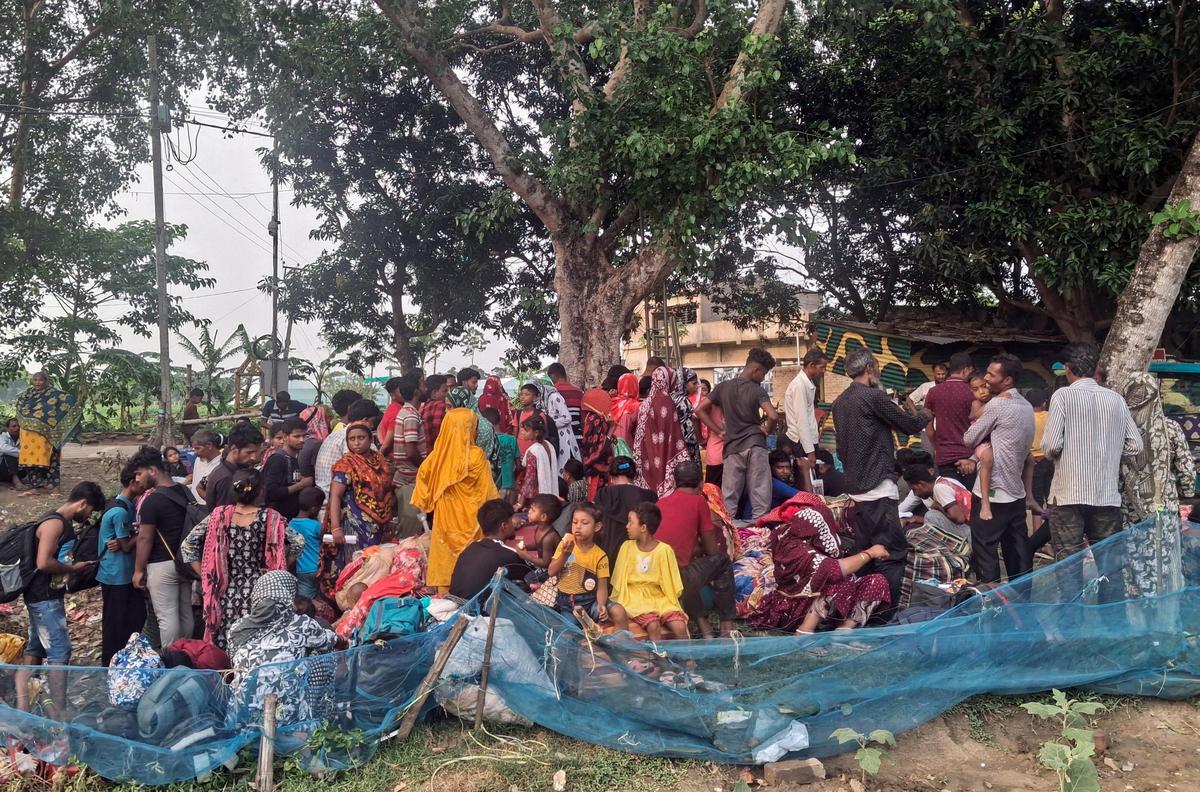
For nearly one-and-a-half decades, West Bengal under Mamata Banerjee and the All India Trinamool Congress was repeatedly accused of turning a blind eye to unchecked illegal infiltration from neighbouring Bangladesh. What was once dismissed by critics as “political rhetoric” now appears to have exploded into a national security concern. Reports emerging from the border districts indicate that thousands of illegal infiltrators are now fleeing back to Bangladesh every day as the new administration cracks down hard on undocumented residents, fake identity networks, and political protection rackets.
The political message from the new dispensation led by Suvendu Adhikari is loud and unmistakable — Bengal will no longer be allowed to function as a haven for illegal infiltration and vote-bank politics. The slogan echoing across border districts, “Bhago, nahi tho bhagadeyinge,” may sound harsh to some ears, but for lakhs of ordinary Bengali Hindus who claim to have lived under fear, intimidation and political violence for years, it symbolizes the collapse of what they describe as Mamata Banerjee’s “jungle raj.”
The allegations against the Mamata regime were never small or isolated. Opposition parties and several investigative agencies repeatedly claimed that illegal migrants were systematically provided ration cards, Aadhaar documents, and even voter identity cards. These infiltrators allegedly became a captive vote bank that helped the Trinamool Congress dominate every layer of democracy — from panchayat elections to civic bodies, Assembly polls, and even Lok Sabha seats. Border districts witnessed dramatic demographic shifts over the years, raising serious concerns about national security and social stability.
Election violence became almost institutionalized under the Trinamool era. Bengal witnessed repeated accusations of booth capturing, intimidation of opposition workers, targeted attacks, and post-poll violence. The 2021 Assembly elections alone saw widespread reports of clashes, killings, and displacement. Many opposition workers openly alleged that fear was deliberately cultivated among the majority Hindu communities to discourage active participation in the democratic process. The result was a political machinery that appeared invincible and unchallengeable.
Equally disturbing were allegations that the regime protected a deeply compromised bureaucratic structure. From senior police officers to top administrative officials, accusations repeatedly surfaced that sections of the state machinery functioned more like political enforcers than neutral constitutional authorities. Even when corruption charges surfaced against influential bureaucrats, accountability remained elusive. Critics argued that loyalty to the ruling establishment mattered more than integrity or governance.
The Sandeshkhali episode became a turning point in Bengal’s political narrative. Explosive allegations involving land grabbing, intimidation of women, and political terror shook the conscience of the nation. Women openly accused local Trinamool strongmen of atrocities while the administration initially appeared reluctant to act decisively. The gruesome rape and murder of a young doctor at Kolkata’s RG Kar Medical College and Hospital further intensified public outrage. The incident triggered nationwide protests and exposed the alarming collapse of law and order in a state where Mamata Banerjee herself held both the Home and Health portfolios.
Today, the crackdown unfolding across Bengal is being projected as the fulfillment of a long-standing promise made by the Bharatiya Janata Party and Prime Minister Narendra Modi — to secure India’s borders and dismantle illegal infiltration networks. Union Home Minister Amit Shah, arriving in Bengal to review border security, sends a clear signal that the Centre considers the issue not merely political, but strategic and national in character.
The fear visible today within Trinamool ranks perhaps stems from one realization — that the political ecosystem built on appeasement, intimidation, and unchecked infiltration is beginning to collapse. Bengal’s voters, exhausted by years of violence and administrative decay, appear to have chosen “Parivartan” not merely as a slogan, but as a desperate necessity for survival, stability, and national security.
Whether history ultimately judges this political transition as corrective justice or political overreach will depend on how fairly and lawfully the current crackdown proceeds. But one fact is undeniable: the Bengal that once seemed politically untouchable is now witnessing a dramatic and irreversible churn.


