Ganesh Temple, popularly known as Ganesh Mandir, is located near the main entrance of the historic Jhansi Fort in Jhansi, Uttar Pradesh. Situated within the fort complex, the temple occupies a prominent position overlooking the city. Its location near the gateway symbolizes Lord Ganesha’s role as the divine guardian and protector of the fort and its people.
The temple is believed to have been built during the Maratha period around the 1760s CE, making it over 250 years old. Historians attribute its construction either to Vishwas Rao Lakshman, a Maratha Subedar of Jhansi, or to Raghunathrao Newalkar, founder of the Newalkar dynasty that ruled Jhansi. For more than two centuries, the temple has remained an important center of worship and devotion.
The presiding deity is Lord Ganesha, worshipped as the remover of obstacles, the bestower of wisdom, and the giver of success and prosperity. The sanctum houses a beautiful marble idol of Lord Ganesha. Local tradition regards the deity as the guardian of Jhansi Fort, the royal family, and the city itself. Devotees visit the temple seeking blessings for new beginnings, education, marriage, career growth, and overall well-being.
The temple reflects a blend of Maratha religious architecture and fort-style construction. Unlike grand temple complexes with towering shikharas, this shrine has a simple yet elegant design suited to its location within a military fort. The structure features thick walls, traditional arches, and a dome-like superstructure. The sanctum housing the marble idol forms the spiritual center of the temple. The architecture beautifully combines devotion with the defensive character of the surrounding fort.
Jhansi Ganesh Temple occupies a special place in Indian history because it witnessed the marriage of Raja Gangadhar Rao Newalkar and Manikarnika Tambe in 1842 CE. According to Marathi custom, Manikarnika received the name Lakshmibai after marriage. She later became the legendary Rani Lakshmibai, remembered for her heroic role in the Revolt of 1857. The queen is believed to have worshipped regularly at this temple and sought Lord Ganesha’s blessings for the welfare and protection of her kingdom. Because of this connection, the temple is both a sacred shrine and a monument of historical significance.
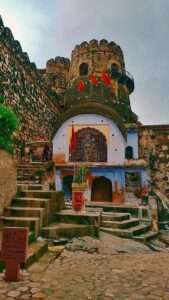
According to local tradition, when the Maratha rulers established their authority in Jhansi, they installed Lord Ganesha near the entrance of the fort as the Kshetrapalaka, or guardian deity of the kingdom. In Maratha culture, Lord Ganesha is worshipped before every important undertaking, and the rulers believed that his blessings would protect the fort, remove obstacles, and bring prosperity to the kingdom. Over time, the deity came to be revered as the divine protector of Jhansi and its people.
The temple gained even greater sacred importance in 1842 when the marriage of Manikarnika Tambe and Raja Gangadhar Rao was solemnized before Lord Ganesha. Local belief holds that the deity blessed the young bride and destined her for greatness. After receiving the name Lakshmibai at this temple, she would go on to become one of India’s most celebrated warrior queens. Many devotees believe that Lord Ganesha’s blessings strengthened her courage, determination, and devotion to duty.
Traditional accounts also state that Rani Lakshmibai frequently visited the temple to offer prayers before making important decisions concerning the administration and defense of Jhansi. During times of uncertainty, she sought spiritual strength from the deity. Because of these associations, the temple is regarded as a place where divine grace and historical destiny came together.
Another popular belief among devotees is that Lord Ganesha stood as the unseen protector of Jhansi Fort during periods of conflict. Since the shrine is located near the fort entrance, the deity is considered the first guardian encountered by anyone entering the royal stronghold. Even today, devotees visit the temple seeking protection, courage, success, and the removal of obstacles from their lives.
The most important festival of the temple is celebrated with special abhishekams, pujas, bhajans, and large gatherings of devotees seeking Lord Ganesha’s blessings.
Sankashti Chaturthi is observed every month with fasting and special prayers dedicated to Lord Ganesha for the removal of difficulties and obstacles.
Special worship and offerings are performed on every Chaturthi dedicated to Lord Ganesha, attracting local devotees throughout the year.