



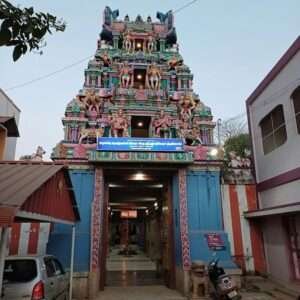
Sri Kuberapureeswarar Temple, also known as Sri Thanjapureeswarar Temple, is an ancient and Shiva temple situated on the banks of the Vennar River in Thanjavur, Tamil Nadu. The temple is particularly sacred to Lord Kubera, the divine treasurer of the gods and guardian of the northern direction, who is believed to have regained his lost wealth and divine position through worship at this holy place. The association of Goddess Mahalakshmi with Lord Kubera makes this temple especially significant for devotees seeking prosperity, financial stability and divine blessings.
The temple is traditionally believed to be over 1,000 years old, with some local traditions suggesting an antiquity of nearly 2,000 years. It is regarded as a Thevara Vaippu Sthalam, associated with the hymns of Saint Sundarar. The existing architecture reflects Chola-period influences, although its exact foundation date is uncertain.
The presiding deity is Lord Kuberapureeswarar (Thanjapureeswarar), worshipped as a west-facing Shiva Lingam. Goddess Anandavalli Amman has a separate south-facing sanctum. A significant feature is the representation of Lord Kubera worshipping Shiva, along with the association of Goddess Mahalakshmi in the forms of Dhanalakshmi and Dhairyalakshmi. Representations of Ashtalakshmi are also associated with the temple.
The temple follows traditional South Indian architecture, featuring a west-facing sanctum, stone mandapams and carved pillars. Sculptures of Ganesha, Subramanya, Dakshinamurti, Brahma, Durga and Nataraja are found within the complex. The representation of Lord Kubera is particularly significant. The sacred waters are associated with the Vennar River and Sivagangai Theertham.
Sri Kuberapureeswarar Temple is traditionally considered older than the Brihadeeswarar Temple. Local tradition associates this region with Alakapuri, the celestial city of Lord Kubera. The name Thanjapureeswarar is linked to the Tamil word Thanjam, meaning refuge, symbolising Lord Shiva’s protection of those who surrender to him.
According to the temple’s Sthalapurana, Lord Kubera, the son of Sage Vishrava and half-brother of Ravana, was an ardent devotee of Lord Shiva. Through severe penance and unwavering devotion, Kubera received immense wealth, the magnificent golden kingdom of Lanka and the celestial Pushpaka Vimana. He was also blessed with the position of Dhanadhipati, the divine treasurer of the gods, and became the guardian of the northern direction.
However, Kubera’s fortunes changed when his powerful half-brother Ravana, who had acquired extraordinary powers through penance, challenged him. Ravana defeated Kubera, seized the golden kingdom of Lanka and took possession of the Pushpaka Vimana. Kubera, who had once possessed immeasurable riches and authority, suddenly found himself deprived of his kingdom, wealth and former glory.
Deeply distressed by his misfortune, Kubera realised that even the greatest material wealth and power could disappear. Rather than seeking revenge against Ravana, he decided to surrender himself completely to Lord Shiva, believing that only divine grace could restore his prosperity and position.
Kubera began visiting several sacred Shiva temples, offering prayers and performing penance. During his pilgrimage, he reached a peaceful place on the banks of the Vennar River, in present-day Thanjavur. Here, he discovered a sacred Shiva Lingam and began worshipping Lord Shiva with complete faith and devotion.
Day after day, Kubera continued his prayers, seeking forgiveness, divine protection and the restoration of his lost fortunes. His devotion was not merely for recovering material riches but also for gaining the strength and wisdom necessary to fulfil his divine responsibilities.
Pleased with Kubera’s sincere prayers and unwavering devotion, Lord Shiva appeared before him and granted his blessings. Through Shiva’s divine grace, Kubera regained his lost prosperity and his position as the treasurer of the gods. Although Ravana’s conquest of Lanka remained part of the larger sacred tradition, Kubera’s divine status and prosperity were restored.
Since Kubera received refuge and protection at this sacred place, Lord Shiva came to be worshipped as Thanjapureeswarar, derived from the Tamil word Thanjam, meaning refuge. As the Lord restored Kubera’s wealth and prosperity, he also became known as Kuberapureeswarar.
Temple tradition also associates Goddess Mahalakshmi with Kubera’s restored prosperity through Dhanalakshmi, representing wealth, and Dhairyalakshmi, representing courage and inner strength.
According to local belief, Kubera received these divine blessings on Aipasi Amavasya, the new moon day in the Tamil month of Aipasi (October–November). A special Kubera Yagam is traditionally performed at the temple in remembrance of this sacred occasion.
Maha Shivaratri, Karthigai Deepam, Margazhi Thiruvathirai and Deepavali are observed at the temple. The Kubera Yagam on Aipasi Amavasya holds special significance. Devotees offer prayers to Lord Kuberapureeswarar and Lord Kubera seeking prosperity, financial stability and relief from difficulties.
Although Dhanteras is not traditionally the temple’s principal festival, its sacred association with Lord Kubera and Goddess Mahalakshmi makes it especially meaningful on this auspicious occasion.

