



The judiciary is fast losing the moral authority and public confidence that are indispensable to its credibility. Across the country, people are increasingly questioning whether the institution entrusted with upholding the Constitution and ensuring equality before the law is willing to apply the same yardstick to its own fraternity. When judges appear to enjoy a different set of rules from those they are expected to hold accountable, the damage to public faith is enormous. Judicial independence cannot become a convenient shield for judicial privilege.
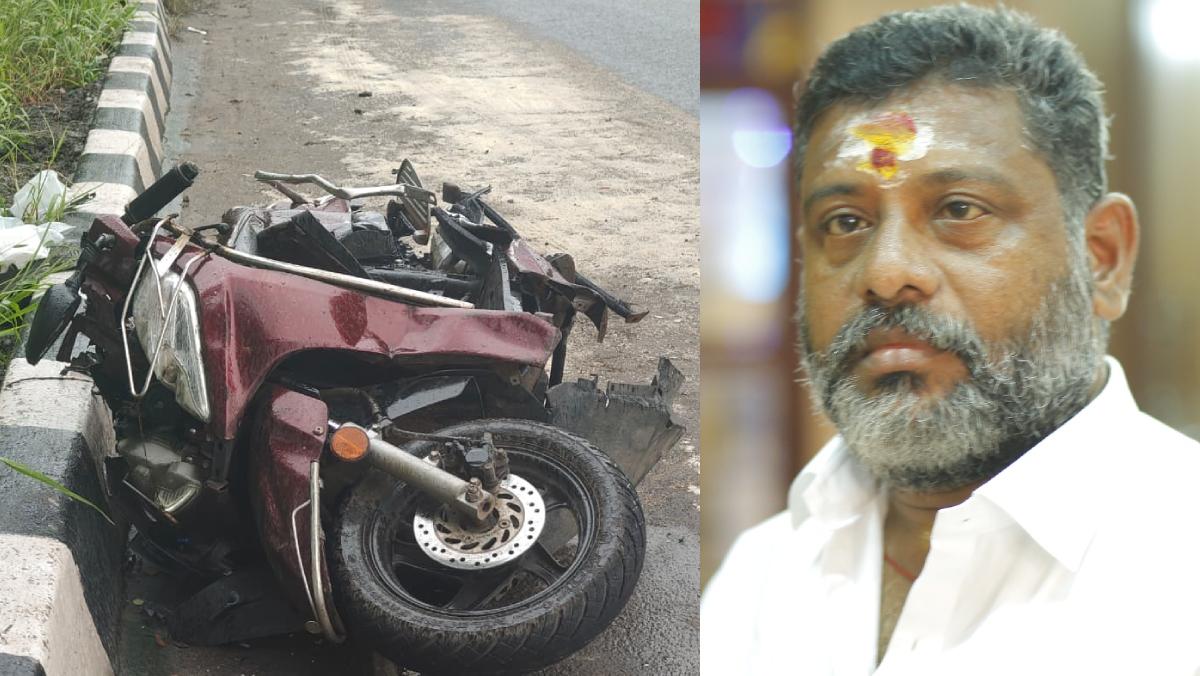
Consider the latest developments in Kerala. A 17-year-old, allegedly driving his father’s Mercedes-Benz at excessive speed, was involved in a fatal accident in Kochi on October 25, killing a 55-year-old roadside eatery owner, Jayabalakrishnan. The father, an Additional District Judge, was subsequently named as an accused under provisions of the Motor Vehicles Act relating to a guardian’s or vehicle owner’s responsibility when a minor commits an offence. The initial handling of the case raised serious questions. Four police personnel were suspended, and the Kochi Police Commissioner was transferred. Now, the Kerala High Court has granted anticipatory bail to the judicial officer.
Nobody is suggesting that a judge should be denied bail merely because of his profession. Equally, nobody should be granted protection merely because he occupies a judicial chair. The question is whether every aspect of this investigation, including the conduct of the accused and the circumstances surrounding the incident, is being examined with the same rigour that an ordinary citizen would face. The victim was a working-class man whose life was cut short. Does his family deserve anything less than an uncompromising investigation?
The controversy inevitably brings back memories of the March 2025 cash discovery at the official residence of then Delhi High Court judge Justice Yashwant Varma. Following a fire, bundles of currency, some partially burnt, were reportedly discovered. A Supreme Court-appointed in-house committee subsequently held him responsible for misconduct, citing his implied responsibility for the material found at the premises. Yet the episode exposed serious questions about the opacity and adequacy of the mechanisms for investigating allegations against members of the higher judiciary. The public should not have to depend on internal institutional processes alone to understand whether accountability has been delivered.
This is hardly the only occasion when the judiciary has had to confront questions about its own credibility. In January 2018, four senior-most Supreme Court judges publicly raised concerns about the administration of the country’s highest court, including the allocation of sensitive cases. An unprecedented public rupture within the institution itself exposed how even the highest judicial establishment was not immune to questions of transparency and institutional propriety.
More troubling was the Supreme Court’s own May 2022 direction in the Bilkis Bano remission matter, which enabled Gujarat to consider the premature release of 11 convicts. In January 2024, another bench of the same institution overturned that position, declaring the earlier order a nullity and holding that the Gujarat government had no jurisdiction to grant the remission. The convicts had to return to prison. If even the country’s highest court can pass an order subsequently declared legally unsustainable, should it not be equally forthcoming about institutional accountability?
Then there is the larger scandal of delayed justice. Countless victims wait years, sometimes decades, for their cases to reach a conclusion. For an ordinary citizen, obtaining justice is frequently an exhausting battle against adjournments, procedural complications and mounting legal expenses. Yet the judiciary rightly expects citizens to respect its authority and abide by its verdicts.
The irony is difficult to miss. Political parties are routinely criticised for undermining institutions, but what happens when institutions begin undermining their own credibility through inconsistency, opacity and perceived double standards? Public confidence, once lost, cannot be restored through sermons about constitutional morality.
The Chief Justice of India and the Supreme Court’s Collegium must recognise that this is a moment for introspection, not institutional defensiveness. Judicial accountability mechanisms must be transparent, credible and capable of ensuring that allegations against judges receive independent scrutiny. Equally, investigations involving judicial officers must proceed without political interference, intimidation or preferential treatment.
The judiciary cannot be above the law while interpreting the law for everyone else. Nor can the prestige of the institution be protected by shielding individuals from scrutiny. The poor vendor killed in Kerala deserves justice just as much as any influential citizen. The Constitution promises equality before the law, not equality with exceptions.
Wake up, judiciary! Before public confidence becomes another casualty of institutional complacency, demonstrate through action that the law is indeed blind — even when the accused happens to wear the robes.


