

Our Science Reporter
Hyderabad: Scientists from Hyderabad have identified two novel and rare genetic variants in the MYH7 gene associated with hypertrophic cardiomyopathy (HCM), an inherited heart condition that causes abnormal thickening of the heart muscle and can potentially lead to heart failure and sudden cardiac death.
The discovery could strengthen efforts towards early diagnosis, genetic screening and more personalised management of inherited cardiovascular diseases, particularly among Indian and South Asian populations.
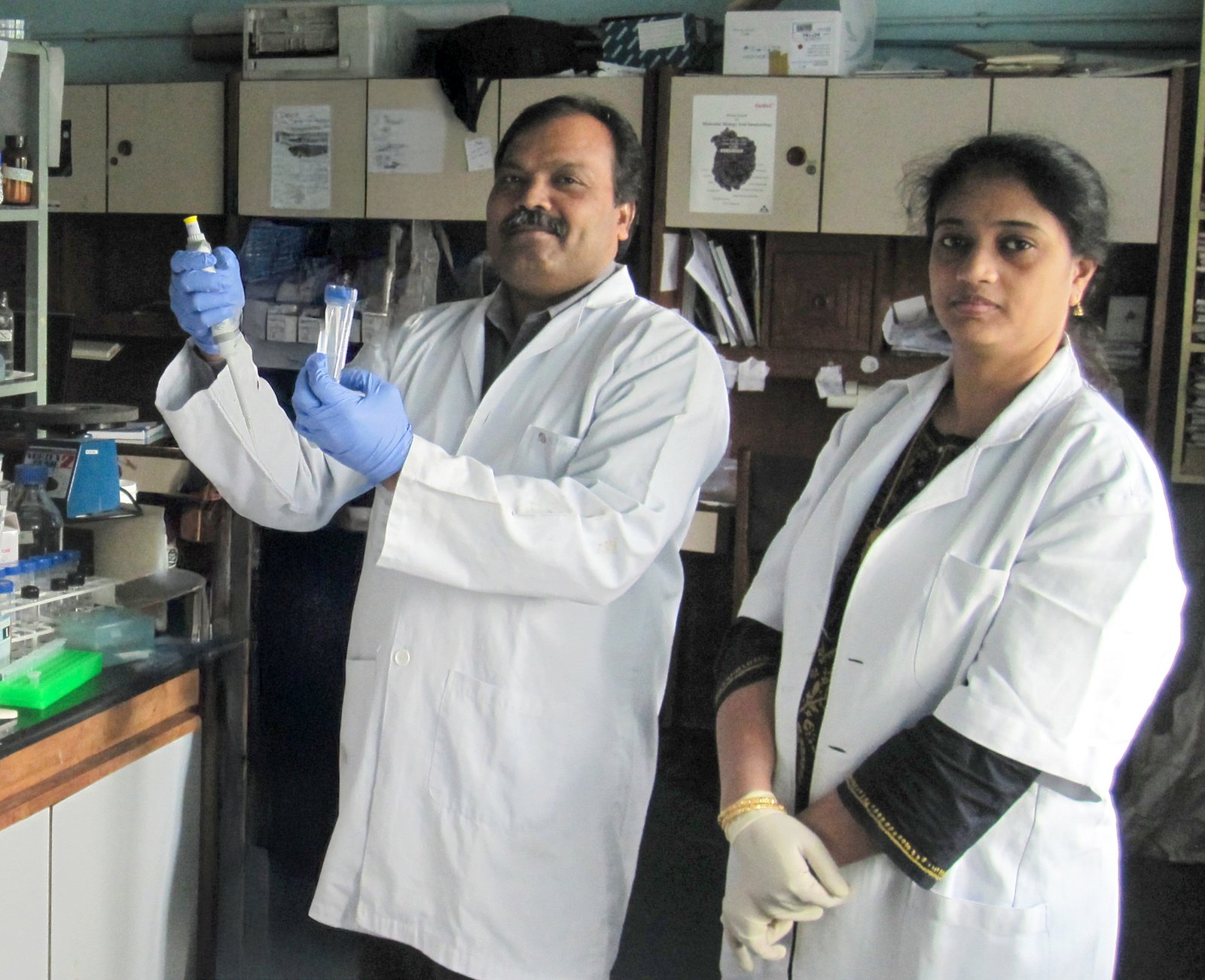
The research was conducted by Dr. Kumarasamy Thangaraj and Dr. Deepa Selvi Rani of the CSIR-Centre for Cellular and Molecular Biology (CSIR-CCMB), Hyderabad, in collaboration with Dr. Pratibha Nallari of Osmania University and Dr. Calambur Narasimhan of AIG Hospitals. The findings have been published in the November issue of the Journal of the American College of Cardiology: Asia.
Hypertrophic cardiomyopathy is characterised by an abnormal thickening of the heart muscle, which can interfere with the heart’s ability to relax and fill with blood. In some patients, the thickened muscle also obstructs blood flow from the heart. The condition can cause breathlessness, chest pain and abnormal heart rhythms, and in severe cases may result in heart failure or sudden cardiac death.
The heart’s pumping action depends on specialised proteins that generate the force required for muscle contraction. One of the most important is beta-myosin heavy chain, produced by the MYH7 gene. Acting as a molecular motor, this protein interacts with another protein called actin to enable the heart muscle to contract and pump blood efficiently. Changes in the MYH7 gene can disrupt this process and contribute to cardiac disorders.
As part of the study, Dr. Deepa Selvi Rani, the lead author, analysed the coding regions of the MYH7 gene in 160 patients diagnosed with hypertrophic cardiomyopathy and 178 ethnically matched healthy individuals from Telangana. The analysis identified 34 genetic variants, of which two emerged as particularly significant.
Both variants were located in highly conserved regions of the myosin protein, indicating their importance for normal protein function.
The first variant, identified as p.Met684Arg, was detected in a 52-year-old woman with significant thickening of the heart muscle. Her 26-year-old son, who carried the same genetic alteration, exhibited only mild thickening. The second variant, p.Leu725Pro, was identified in a 58-year-old man suffering from obstructive hypertrophic cardiomyopathy. He also had a family history of sudden cardiac death. His 24-year-old daughter, who carried the same variant, showed mild thickening of the heart muscle.
The differing severity of symptoms among family members carrying the same genetic variants points to age-dependent disease expression, highlighting the importance of genetic testing and monitoring of relatives of affected individuals.
“Based on integrated clinical, genetic and structural evidence, both variants were classified as likely pathogenic. These variants were absent in healthy individuals and in major global population databases. Our findings suggest that these variants are rare and may be enriched in Indian or South Asian populations,” said Dr. Kumarasamy Thangaraj, senior author of the study.
He emphasised that identifying rare disease-associated genetic variants could facilitate early diagnosis and improve the clinical management of hypertrophic cardiomyopathy.
Dr. Vinay Nandicoori, Director of CSIR-CCMB, said the study strengthened scientific understanding of the genetic basis of cardiovascular diseases, particularly hypertrophic cardiomyopathy. He noted that such findings could support precision diagnosis and population screening, helping combat inherited cardiovascular diseases and protect future generations.
The researchers believe that further studies involving larger populations will be important to establish the prevalence and clinical significance of these variants and translate the findings into broader genetic screening and preventive healthcare programmes.