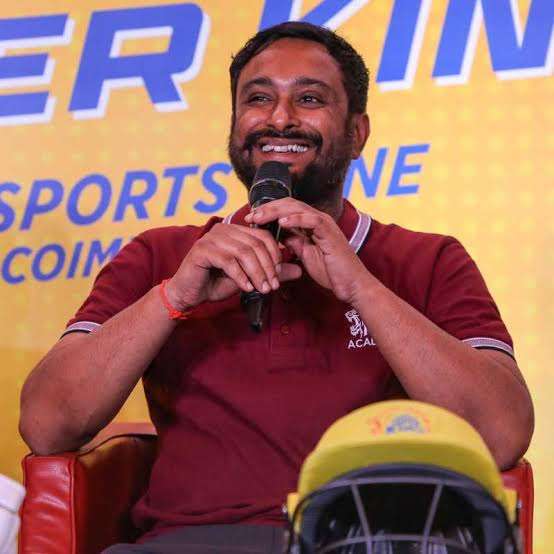
Dear Rayudu,
Let me begin by saying something that should leave no room for doubt: I am your fan. Not because of CSK or the Asia Cup, but because I have followed your cricketing journey from your childhood days in Hyderabad. So, please read this not as an attack, but as a heartfelt complaint from someone who wanted you to succeed perhaps as much as you wanted to succeed yourself.
I still remember August 2002 at Taunton. India Under-19s were chasing 304 against England and had slumped to 137 for six. The match appeared all but lost. Then came a 16-year-old boy from Hyderabad, who produced a breathtaking 177 not out off just 114 balls to script a remarkable victory. The comparisons with Sachin Tendulkar began almost immediately. Then came that extraordinary Ranji Trophy performance at 17, when you scored a double century and a hundred in the same match. Hyderabad believed it had discovered another Azharuddin or VVS Laxman.
But what followed was hardly the fairy tale anyone had imagined. You experienced first-hand the power games, factionalism and alleged manipulation within the Hyderabad Cricket Association (HCA). Forced to look beyond your home state for opportunities, you represented other teams and even ventured into the rebel league when doors appeared closed here. Some of your most productive formative years were lost in administrative battles that had little to do with cricket.
Yet you fought back. The IPL, Mumbai Indians, Chennai Super Kings, trophies and eventually an India cap. You proved your worth on the field. And when you openly spoke out against corruption and politicised selections in HCA in 2019, many of us applauded. You had articulated what countless aspiring cricketers, unable to speak out for fear of consequences, had long wanted to say.
That is precisely why your appointment as Head of Cricket Operations in May generated such optimism. Here was someone who had suffered the system, understood its weaknesses and, hopefully, possessed the credibility and experience to change it. You spoke of merit-based selections, automation to eliminate human interference, transparent trials, player contracts, a players-first approach and, above all, separating cricket from administration.
Your stated ambition was equally compelling: bring trophies back to Hyderabad.
Six months down the line, however, the optimism is giving way to disillusionment. The Vinoo Mankad campaign has ended in disappointment, the Under-23 performances have raised concerns, and the Ranji Trophy remains one of the few remaining opportunities to salvage the season. More importantly, there is little visible evidence of the structural change that people expected.
The question being asked in club circles, cricket grounds and WhatsApp groups is increasingly uncomfortable: Where is Rayudu? What is happening to the cricket operations that were entrusted to him? And why does the old confusion continue?
Here are some issues that deserve your attention and, more importantly, your answers.
1. Is the Hyderabad League Being Marginalised?
The Hyderabad league has traditionally been the backbone of the state’s cricketing structure. Clubs have invested their money, time and energy in nurturing players and sustaining the competition for decades.
Yet, this season, very few league matches were played, while selection matches went ahead and provided opportunities to a much larger pool of players. If league performances are no longer central to the selection process, what incentive remains for clubs and their players?
There is also a growing perception among club representatives that the league structure is being deliberately weakened because of differences with certain club secretaries. I sincerely hope this is misplaced. But perceptions do not disappear through silence.
The league is not an inconvenience to cricket operations. It is their foundation. Why undermine an institution that has served Hyderabad cricket for generations?
2. Rules Cannot Be Changed Midstream
One of the biggest complaints concerns the repeated changes in rules governing league competitions and selection procedures.
Players are left guessing, club secretaries are unable to guide their teams, and coaches are uncertain about the criteria that will ultimately determine selection. Changing rules in the middle of a season is neither professional nor fair.
This is precisely the kind of arbitrary functioning you once criticised.
The remedy is simple: finalise the rules before the season, communicate them transparently to every stakeholder and adhere to them. A cricketing administration cannot expect discipline from players when it cannot demonstrate discipline in its own functioning.
3. Twelve Teams in Under-19 Selection Matches: Who Decided and Why?
The sudden increase to twelve teams in the Under-19 selection matches has raised eyebrows.
Traditionally, the number of teams is determined by the available talent pool and the requirements of the selection process. This time, however, there are allegations that the expansion followed an individual request. Questions are also being raised about the inclusion of certain players and possible personal interests involved in the decision.
I am not making accusations. But transparency demands answers.
Who proposed twelve teams? Was the request formally submitted? What was the cricketing rationale for accepting it? Who selected the additional players?
And, most importantly, did anyone involved in recommending, approving or implementing the decision have a son or close relative among the beneficiaries? If so, was that relationship declared, and did the individual concerned recuse himself or herself from the decision?
These are not unreasonable questions. They are elementary safeguards against conflicts of interest. If you genuinely want a different HCA, such declarations should become mandatory for everyone, including those closest to you.
4. Why Are Selection Matches Clashing with League Cricket?
Scheduling one-day tournament matches alongside Mushtaq Ali selection matches is difficult to defend.
A player is effectively forced to choose between representing his club and pursuing a place in the state team. The club loses an important player, while the youngster risks missing either a league opportunity or a selection trial.
Consider the inequity. One player performs well in the one-day competition and earns consideration for the Vijay Hazare Trophy. Another is directed to T20 selection matches, misses league games in the process and subsequently finds himself outside the reckoning.
How is that fair?
This is not a complicated administrative problem. It requires a properly prepared season calendar, with league fixtures and selection matches scheduled separately. Every club should receive the calendar well in advance.
Even a school or district association can coordinate such basic scheduling. Why should HCA struggle with it? Whether the problem is poor coordination or a failure of leadership, the players are ultimately paying the price.
5. Where Is the Logic in Selections?
This is perhaps the most disturbing issue.
Questions are being raised about players who appear insufficiently prepared being entrusted with Ranji Trophy opportunities, while others with impressive runs and wickets in the league competition are not even finding places in standby lists.
Several names appearing in selection matches have also surprised those who have followed the league closely. The most straightforward way to settle this debate would be to place the season’s leading run-getters and wicket-takers alongside the selection lists and explain the choices.
The Under-19 and Under-23 performances have only intensified these concerns.
If selections are genuinely merit-based, publish the performance data and explain the criteria. If a player is selected over someone with better credentials, there should be a defensible cricketing reason.
That was your own promise. Why not demonstrate it?
The recent Under-23 squad episode is particularly embarrassing.
Last Saturday, HCA announced its squad for the C.K. Nayudu Trophy match against Maharashtra, including V. Yashveer Goud, who has already been selected for India’s Under-19 Asia Cup squad.
Barely eight minutes later, another communication described his inclusion as a “typographical error” and named Ghazi Abbas as his replacement. An hour later, a third communication asked stakeholders to hold the announcement because the team was under review.
Three communications in one evening for a single team announcement!
How does a player’s name become a typographical error in a selection list? Was the original team not properly vetted? Was there a subsequent intervention? Who authorised the changes?
These questions need answers.
Think of the two youngsters involved. One is told he has made the team, then informed that his inclusion was an error. Another is named as his replacement, only to find the announcement put on hold. Young cricketers deserve better than this administrative uncertainty.
This is not merely a communication failure. It raises serious questions about the selection process, decision-making, and accountability.
6. When Will You Spend Time with Hyderabad’s Players?
This is perhaps the most personal disappointment.
Your greatest contribution need not come from meetings, circulars or administrative announcements. It can come from being present at the nets, interacting with youngsters and sharing the lessons of a career that has seen extraordinary highs and frustrating setbacks.
How many Ranji, Under-23 and Under-19 players have actually had meaningful interactions with you this season? How often have you visited the grounds, watched them practise and offered guidance?
You know better than most what it takes to survive the uncertainties of a cricketing career. That experience is invaluable to young players.
As a cricketer, your credentials are beyond question. But as the person entrusted with cricket operations, your performance so far has been disappointing. The cricketing community expected your presence to be felt on the ground, not merely through your designation.
7. You Were Given the Mandate. Who Authorised Your Team?
HCA entrusted Ambati Rayudu with the responsibility of overseeing cricket operations. That mandate cannot automatically be interpreted as a licence for an informal circle of friends, associates or personal contacts to exercise authority without clearly defined responsibilities.
Questions are being raised about the manner in which the people assisting you were brought into the system. Were they selected through an open and transparent process? What are their designations, qualifications and specific responsibilities? Who holds them accountable?
They are neither elected representatives of the clubs nor necessarily part of the court-appointed supervisory structure. Yet, stakeholders appear uncertain about who actually makes decisions.
If a selection goes wrong or a player is treated unfairly, who takes responsibility? Whom should a club secretary approach? Who addresses a genuine grievance from a coach or a player?
There is another concern: your apparent inaccessibility. A person heading cricket operations cannot remain largely unreachable to the very stakeholders whose interests he is expected to protect.
Cricket administration cannot function behind closed doors.
At the very least, publish a clear organisational chart identifying everyone involved in cricket operations, their designations, qualifications, responsibilities, appointment process and contact details. Establish a regular monthly interaction with clubs, coaches and players.
HCA has also put in place an Anti-Corruption and Security Unit. Why should the functioning of cricket operations and those exercising authority within it not be subject to appropriate scrutiny and accountability?
Otherwise, the danger is obvious: HCA could end up with a bigger mess than the one you were brought in to clean up. The faces may have changed, but the system would remain the same.
8. And What About Women’s Cricket?
I will not attempt to catalogue the problems confronting women’s cricket here. That deserves a separate, detailed examination.
Suffice it to say that the concerns are substantial, and the girls deserve far greater attention, infrastructure, opportunities and administrative commitment.
A players-first policy cannot apply selectively. Women’s cricket must receive the same seriousness and priority as the men’s game.
Rayudu Garu, There Is Still Time
Nobody expected miracles in six months. But we certainly expected a sense of direction, a visible change in working culture and a clear departure from the practices that you yourself once fought against.
Instead, we are hearing the familiar complaints: confusion over rules, questions over selections, uncertainty over authority, marginalisation of clubs and an administration that appears increasingly inaccessible.
Please do not become another name on the long list of individuals who arrived at HCA promising change but eventually became part of the very system they had pledged to reform.
You still have more than two years. The Ranji Trophy campaign is underway, and there is time to set things right.
Come to the grounds. Meet the clubs. Prepare a season calendar and stick to it. Freeze the rules before competitions begin. Publish selection criteria and performance data. Introduce mandatory conflict-of-interest declarations. Establish accountability within your team. And, above all, spend time with the boys and girls who represent the future of Hyderabad cricket.
We stood by you when the HCA establishment was ranged against you. We applauded when you spoke out against the system. We celebrated when you returned to the game and reached the highest levels.
We are still hoping that you will deliver the change you once demanded.
But please remember one thing: the goodwill you enjoy today is built on what you endured yesterday and what people expect you to deliver tomorrow. It cannot survive indefinitely on past achievements.
We do not want to see you fail. We want to see Hyderabad cricket win.
And that is why this letter has been written.
With respect, disappointment, and a still-unshaken hope,
A lifelong fan of Rayudu and Hyderabad cricket