
The Congress leadership may call it a fight for democracy, Rahul Gandhi may project himself as the defender of constitutional institutions, and the INDIA bloc may boast of mobilising lakhs of people in the national capital. But there is one uncomfortable question that the Congress must answer: Why is it so desperate to hold its November 1 mega-rally at Ramlila Maidan, even when traders have pleaded for a postponement, and the date falls just a day before a crucial hearing in the National Herald money-laundering case involving Sonia Gandhi and Rahul Gandhi?
Is this merely a coincidence, or is there a carefully calculated political script behind the timing?
The November 2 hearing before the Delhi High Court is significant. The Enforcement Directorate (ED) has challenged the trial court’s December 2025 decision declining to take cognisance of its prosecution complaint against Sonia Gandhi, Rahul Gandhi and others in the alleged National Herald money-laundering case. The trial court’s decision was primarily based on the legal question of whether the ED could proceed under the Prevention of Money Laundering Act (PMLA) without an FIR in the scheduled offence. The ED has challenged that interpretation, while the Gandhis have strongly contested the agency’s position.
The High Court is now seized of this crucial legal question. If it accepts the ED’s arguments and overturns the trial court’s order, the consequences could be substantial, potentially paving the way for the trial court to take cognisance and proceed against the named individuals. The attached assets, reportedly valued at approximately Rs 752 crore, are another significant dimension of the dispute.
This is precisely why November 2 assumes political importance. An adverse judicial development could provide the Congress leadership with an opportunity to revive its familiar political-vendetta narrative, portray its leaders as victims and turn a legal setback into a political campaign. The November 1 mobilisation, therefore, raises legitimate questions about whether the party is preparing its political ground in anticipation of the court proceedings.
The Congress, however, cannot expect the country to accept political rhetoric as a substitute for legal arguments. If the Gandhis believe the ED’s case is legally untenable, they have every right to defend themselves before the judiciary. But attempting to create a political spectacle around an impending judicial hearing does little to strengthen the argument that they respect independent institutions.
There is another dimension that makes the November 1 rally particularly insensitive. Delhi’s trading community has repeatedly appealed to Rahul Gandhi, Sonia Gandhi and other Opposition leaders to postpone the gathering until after Diwali. The Chamber of Trade and Industry has warned that the rally could disrupt business across nearly 20 major markets, with potential losses estimated at Rs 10,000 crore or more. Traders have pointed out that the festive season is crucial for thousands of small businesses, employees and their families. Yet their concerns appear to have fallen on deaf ears.
Equally disturbing is the choice of November 1, a date associated with the horrific anti-Sikh violence of 1984. Sikh representatives have also appealed against holding the rally on a day that carries such painful historical memories. Political mobilisation cannot be divorced from sensitivity towards the sentiments of communities and the economic interests of ordinary citizens.
Meanwhile, the Congress has little reason to be complacent about its political standing. In the recent Legislative Council elections across four states, the party managed to win just one of the 28 seats contested, while failing to win any of the four seats in its own-governed Karnataka. The BJP and its allies made significant gains. These results underline the organisational challenges confronting the party, even as Rahul Gandhi continues to position himself as the principal challenger to the NDA.
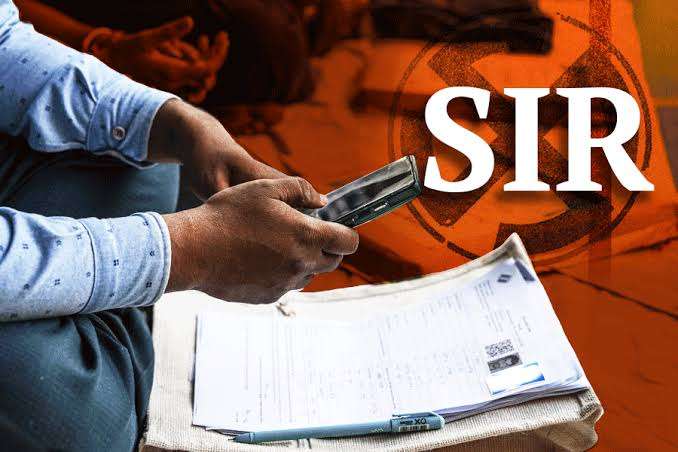
The Opposition’s campaign against Chief Election Commissioner Gyanesh Kumar and its demand for his resignation also deserve scrutiny. The Election Commission has submitted an affidavit before the Supreme Court clarifying that Form 6 was not altered and that the additional SIR declaration was a separate document. The Commission has also explained the corrective steps taken. The Supreme Court has sought further clarification, and the matter remains under judicial consideration. Why, then, should a political rally be projected as a substitute for the judicial process?
Rahul Gandhi must understand that India is not a political stage on which every legal challenge can be converted into a victimhood narrative. Neither the Enforcement Directorate nor the judiciary can be expected to bend to street pressure. The Congress cannot demand institutional independence when it suits its politics and question institutions whenever their decisions become inconvenient.
The real test of leadership is not the ability to mobilise crowds, shout slogans or manufacture political drama. It is the willingness to respect institutions, answer allegations through due process and demonstrate sensitivity towards citizens who bear the economic and social consequences of political adventurism.
November 1 may be presented as a show of Opposition strength. But with November 2 looming, the question that refuses to disappear is this: Is the Congress fighting for democracy, or preparing a political defence against an impending legal battle?
The country deserves answers, not another carefully choreographed victimhood spectacle. (The author is Chief Spokesperson and Media In-charge of the BJP Telangana unit.)