Lakshmanrao Upadhyayula
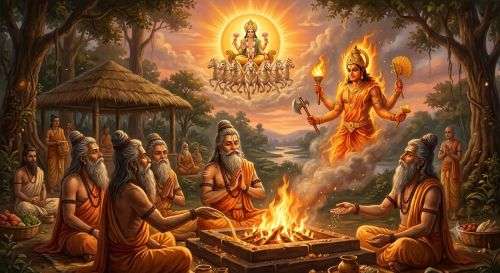
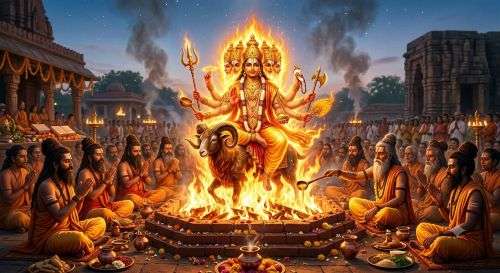
The sacred performers of the Vedic homa invoke Agni, the eternal divine flame, with unwavering devotion. As the visible presence of the invisible Supreme, Agni shines brilliantly among the gods and humankind alike. Responding to the heartfelt calls of the sages, he hastens towards the sacrificial altar with the swiftness and strength of a galloping horse, carrying the aspirations of worshippers to the celestial realm. His movement symbolizes the dynamic flow of energy that unites the earthly and the divine, reminding humanity that sincere effort and disciplined action naturally attract higher grace.
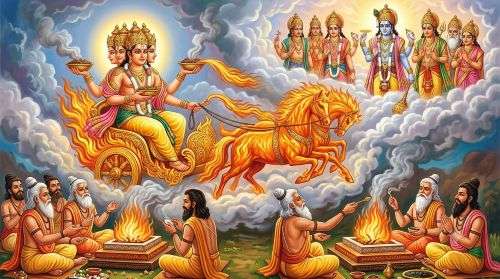
Agni is the divine bearer of nourishment prepared for the gods. Every sacred offering placed into the fire is transformed into subtle energy through his radiant power. Thrice each day, like a perfectly guided chariot following its ordained course, he journeys through the sacred rituals of the yajna, preserving the eternal rhythm between nature, humanity, and the cosmic order. This daily discipline reflects the Vedic understanding that harmony in the universe is sustained through regularity, responsibility, and reverence for natural law.
As the sovereign of food, vitality, and prosperity, Agni governs the cycle through which nourishment becomes life. His brilliance is not merely physical illumination but the light of wisdom that dispels ignorance. At the time of sacred oblations, he blesses generous patrons with prosperity, noble wealth, and enduring honour. The offerings entrusted to him spread symbolically in all four directions, signifying that righteous actions never remain confined but radiate blessings throughout society, inspiring collective welfare and universal goodwill.
The celestial Srunjaya was regarded as a blessed son favoured by divine grace. For his sacred rites, Agni was established upon the eastern altar, the direction associated with sunrise, awakening, and spiritual enlightenment. The northern altar, adorned with holy kusa grass, represented purity, discipline, and readiness for divine communion. As the destroyer of darkness and hostile forces, Agni flourished with resplendent light, while noble-minded seekers gathered around him in reverence, recognising that true victory is achieved through purity of thought and steadfast devotion rather than through violence alone.
The ever-radiant Agni embodies brilliance, fulfils worthy aspirations, and moves ceaselessly like the living forces of nature. The Vedic sages taught that this immense power should be approached with knowledge, discipline, and self-control. Fire serves humanity only when wisely governed; without restraint it can become destructive. This profound insight reflects an early scientific temperament, demonstrating an understanding of energy as a force that yields immense benefits when guided by wisdom and responsibility. The Vedic vision harmoniously united spiritual reverence with practical observation of the natural world.
Agni is celebrated as the divine carrier of oblations, swift as a noble horse and radiant like the Sun, the glorious son of the heavens. Through his luminous presence, the prayers of humanity ascend to the celestial realms. His ever-burning flame represents purity, transformation, and the continuity of life itself. For this reason, devoted patrons constantly honoured Agni, recognising him as the sacred mediator who linked human endeavour with divine blessings.
The noble Somaka, son of the sage Sahadeva, became renowned for his generosity and fidelity to sacred vows. Having promised a pair of magnificent horses, he fulfilled his word without hesitation, and they were received on that very day. In the Vedic tradition, horses symbolised vitality, strength, disciplined energy, and the power to advance both material and spiritual pursuits. By honouring his promise promptly, Somaka demonstrated that truthfulness and integrity are the highest forms of sacrifice, earning respect among both sages and society.
The radiant Aswini Kumaras, the divine twin physicians of the heavens, were invoked with deep devotion. Pleased by the sincere rituals, offerings, and unwavering faith of the son of Sahadeva, they were prayed to bless him with a full span of a hundred years. As divine healers, the Aswins represent health, renewal, balance, and the restoration of harmony in body and mind. Their blessings affirm the Vedic conviction that longevity is sustained not merely by physical well-being but through righteous living, disciplined conduct, and reverence for the sacred order governing the universe.
This sacred narrative beautifully weaves together devotion, ethics, natural philosophy, and disciplined inquiry. Agni symbolises the transformative energy that converts material offerings into spiritual merit, while the Aswini Kumaras embody the healing intelligence present in creation. Together they reveal the Vedic worldview in which scientific observation, moral responsibility, and spiritual aspiration coexist in perfect harmony, guiding humanity toward wisdom, prosperity, health, and enduring enlighten