The Court sent the SMC to put systems in place. A year on, too many remain on paper. With the obstruction gone and the runway clear, members are waiting for the surgeon to operate.
Special Correspondent
Ask why the coach of Hyderabad’s women’s senior team, who was removed midway through the season following serious complaints, is back in charge. Nobody has explained either decision.
Ask for HCA’s selection policy. There is none available to read.
Ask where a player can appeal against a selection. There is no established grievance mechanism.
Ask how coaches and selectors are assessed before being retained for another season. No appraisal, no performance review, no documented accountability.
Ask what the Anti-Corruption Unit has uncovered this season. Members have heard nothing.
Start with the first question. If the complaints warranted the coach’s removal, what justified her reinstatement? If they did not, why was she removed in the first place? What message does this send to players who spoke up—and to every girl wondering whether raising a complaint is worth the risk?
These are not trivial administrative gaps. They go to the heart of fairness, transparency and institutional credibility.
This is Hyderabad cricket a year into court supervision. There has been progress. Leagues are running on time, open trials have replaced closed doors, and trophies have arrived. But results on the field cannot substitute for rules off it. What members are still waiting for is the institutional machinery that will keep HCA fair long after the Single Member Committee (SMC) leaves.
The High Court was explicit about its purpose: there was a “need to put systems in place to avoid mismanagement”, and the SMC was expected to “undertake structural reforms and put in place systems and procedures”.
For much of the year, that mandate ran into a wall. The High Court itself recorded the Apex Council’s “non-cooperative approach and attitude” towards the SMC. Members had reason to extend the benefit of the doubt while the obstruction persisted.
The council’s term has now ended. The runway is clear.
The question is no longer who obstructed the operation. It is why the operation has yet to be completed.
Announcements Are Band-Aids. Working Systems Are Surgery.
Five systems still waiting to work
- Anti-Corruption Unit: Established, but members are yet to see tangible outcomes. Complaints may be lodged, but what action follows remains unclear.
- POSH Committee: Its announcement was welcome. But where are the written policy, accessible complaint mechanism and report on its functioning?
- Selection guidelines: The Court’s mandate demands systems. Where are the published, enforceable selection rules?
- Conflict-of-interest declarations: Accepted by the General Body in 2023, yet no declarations are available on record.
- Grievance redressal: Players and parents still lack a clearly established, dependable mechanism to challenge decisions.
An announcement is not implementation. A committee is not accountability. And a policy that nobody can read cannot protect anybody.
Also read: https://orangenews9.com/they-had-a-rulebook-but-never-used-it-the-tragedy-of-hca/
The Girls Who Have No League
The High Court’s mandate covers “men’s and women’s league matches for all divisions and categories”. Yet Hyderabad still lacks a regular women’s league, meaningful formal selection matches and a clearly accountable head for women’s cricket.
How, then, are women’s teams selected? Who evaluates the players? What criteria govern the choices? Who answers when those choices are challenged?
Nobody has provided convincing public answers.
The U-19 side has won two matches and lost two. The U-23 and senior squads have attracted controversy even before their campaigns begin, particularly over the senior captaincy. Parents have raised questions publicly. No satisfactory response has followed.
Women’s cricket cannot be built on occasional camps, disputed selections and administrative silence. Without a regular league, players lack the competitive platform to establish their credentials. Without published criteria, selection becomes difficult to distinguish from discretion. And without accountability, controversy becomes inevitable.
A women’s team cannot be developed without a women’s cricket structure.
Champions Dismantled, Questions Unanswered
Last season, Hyderabad won the Vinoo Mankad Trophy. The squad was subsequently rebuilt wholesale for the Cooch Behar Trophy, and the new side performed poorly.
Who authorised the overhaul of a winning combination? What performance data, cricketing rationale or succession strategy justified it? Nobody has publicly explained the decision.
This season’s disappointing U-23 and age-group results have only intensified concerns over selection decisions.
Appointing selectors is not the same as establishing a selection system. HCA must publish written criteria making clear how league and TG20 performances count, how competing candidates are assessed and how reputation is prevented from overshadowing current form.
Selectors, too, need measurable targets fixed before every season. Their performance should be reviewed after each tournament, covering team results, representation of leading league performers, opportunities for district players and explanations for significant selection changes.
These reviews need not compromise confidential player information. They must, however, establish that decisions are reasoned, consistent and accountable.
Selectors cannot demand trust while refusing to explain their choices. Those unable to justify their decisions should not enjoy automatic tenure.
The Academy Brand in the Selection Room
Private academies can provide valuable coaching. The problem arises when an academy’s brand appears to carry more weight than a player’s performance.
Members allege that some coaches and selectors have links with academies whose players they assess. These allegations require verification, not assumption. Yet without declarations of interest, neither members nor players can determine whether safeguards exist.
HCA must register and regulate academies operating within its ecosystem, prohibit misleading claims of guaranteed State selection, and require coaches and selectors to declare their professional and financial associations.
Where a conflict exists, recusal should be mandatory and documented.
A State cap must be earned on the field, not sold as a promise in an academy brochure.
The Age Clock That Never Stopped
In November 2024, HCA listed players with “age discrepancies and under investigation”. It is learnt that some subsequently obtained relief on technical grounds, after which the relief was extended to others on the list, without further investigation.
If that sequence is accurate, it demands scrutiny. Technical relief for an individual case cannot automatically substitute for verification of every other case.
Age eligibility is fundamental to fair competition. Doubt over age records damages genuine players, distorts age-group cricket and undermines confidence in results.
HCA must reopen unresolved cases through a fair, documented process, verify birth records at source and provide every player with a securely maintained digital identity linked to authenticated records.
The objective must be to protect genuine players, not prejudge those whose cases require examination.
Also read: https://orangenews9.com/the-best-surgeon-but-only-band-aids/
The Coach Who Also Votes
It is learnt that the State team’s coach, along with at least one age-group coach, also serves as a voting representative of a member institution in HCA elections.
If confirmed, this overlap raises legitimate questions about governance. Those involved in shaping teams should not occupy positions that create avoidable conflicts between cricketing responsibilities and institutional politics.
HCA must publish its conflict-of-interest rules and establish clear safeguards, including recusal where necessary. It should also consider whether coaches and selectors should be barred from voting as institutional representatives while holding those roles and for a defined cooling-off period afterwards.
Cricketing authority must not become political currency.
Thirty-Three Districts. Where Are Their Selectors?
Telangana has 33 districts. District talent cannot be developed if selection visibility begins and ends in Hyderabad.
Three questions demand answers:
- Why is there no meaningful representation of district-based coaches or selectors in the selection structure?
- Have selectors systematically visited districts to watch players, or must every aspiring cricketer travel to Hyderabad simply to be noticed?
- Why are more league matches and competitive fixtures not being organised in the districts, giving players the opportunity to build records that selectors cannot ignore?
District representation should not become a quota divorced from merit. It should be a means of expanding the talent pool and ensuring that merit is assessed wherever it exists.
Without structured scouting, district visits and a wider competition calendar, HCA risks confusing the players it sees most often with the best players available.
Who Is in the Operating Theatre?
No surgeon operates alone. The appointment of a Head of Cricket Operations for the men is a positive start. But where is the equivalent leadership for women’s cricket? Where is the high-performance manager, the analytics team, the defined division of responsibilities and the published development plan?
Training remains another unfinished task.
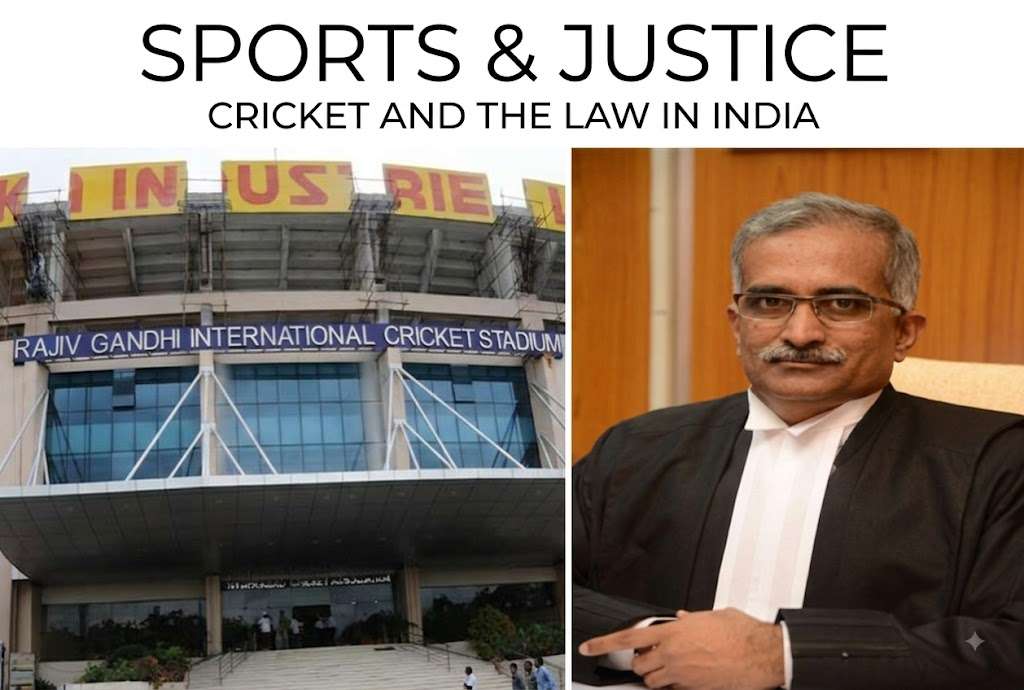
Justice L. Nageswara Rao found the HCA Academy “literally closed from 2017” and revived it in 2023. Yet a truly functional academy must be more than a facility that opens its doors. It needs a year-round programme, strength and conditioning, video analysis, qualified support staff and sufficient multi-day cricket to prepare U-23 players for the senior game.
The Ranji side has shown strength this season. But with senior players eventually making way, where is the visible succession plan? Which emerging players are being groomed to take over, and how will their progress be measured?
Winning today matters. Building the team that wins tomorrow matters just as much.
Somewhere to Complain—and Someone Who Must Answer
Players and parents need an independent grievance mechanism they can trust, not another committee whose existence is known only through an announcement.
It should have an independent head, a defined acknowledgement period, a time-bound decision process, the authority to recommend or direct a fresh review of disputed selections within its mandate, and safeguards against retaliation for good-faith complaints.
A grievance system must not promise every complainant a favourable decision. It must promise something more fundamental: a fair hearing, a reasoned response and a process that applies equally to everyone.
Silence is not dispute resolution. Nor is it evidence that the system is working.
The Clock Starts Now
The SMC should publish a time-bound implementation roadmap, with responsibilities assigned and progress reported to the appropriate stakeholders.
Within 30 days:
- Publish selection policies and selector performance criteria.
- Disclose conflict-of-interest declarations, subject to legitimate privacy protections.
- Establish a functioning grievance mechanism.
- Identify accountable heads for men’s and women’s cricket.
- Publish the status and operating procedures of the Anti-Corruption Unit and POSH Committee.
During the current season:
- Put a regular women’s league and district-level competitive fixtures on the calendar.
- Organise transparent district trials and structured scouting.
- Introduce academy registration and conflict-of-interest safeguards.
- Review unresolved age-verification cases through documented procedures.
Within a year:
- Establish a year-round HCA Academy development programme.
- Implement a measurable Ranji succession plan.
- Publish periodic reports on reforms, selections, grievances and cricket development.
These are proposed accountability benchmarks, not claims that the Court has prescribed these exact deadlines. The SMC should adopt them, or publish equally specific alternatives, and report progress against them.
The Boy Is Still Waiting
Remember the boy from Part 2A who topped his league’s run charts but never received a call-up? He is still waiting.
His case captures the larger problem. Open trials may open the door, but only transparent criteria, consistent evaluation and a credible appeals process can ensure that the right players walk through it.
The diagnosis is known. The instruments are available. The obstruction has eased. Members have reason to believe the surgeon can deliver.
But faith cannot be the final measure of performance. Systems must be visible, decisions must be defensible and reforms must survive the departure of the person supervising them.
The surgeon has the mandate. The runway is clear. The patient cannot wait indefinitely. It is time to demonstrate the specialisation—not merely announce the operation.
Coming in Part 3: Twenty Reforms. Three Years. Who Dropped the Ball?
How Justice L. Nageswara Rao’s twenty recommendations of 2023 were handed to the elected Apex Council—and what became of them.